



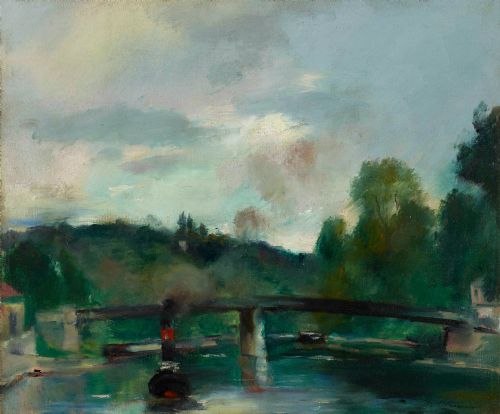
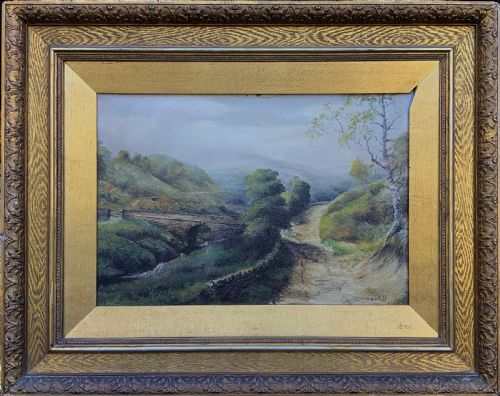
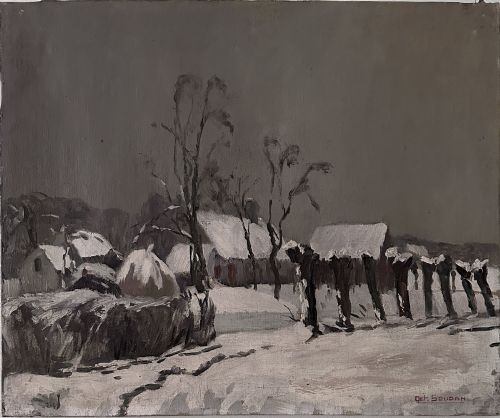


Vintage Countryside Scene Canvas
A vintage countryside scene canvas brings the quiet pastoral life of past centuries directly into a room through oil paint and fabric.
Vintage Countryside Scene Canvas
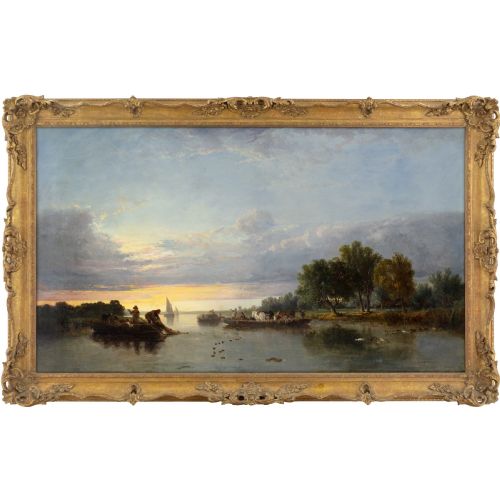
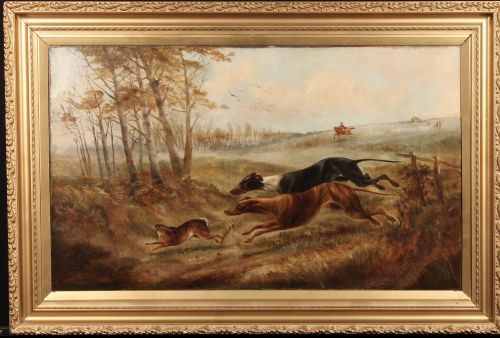
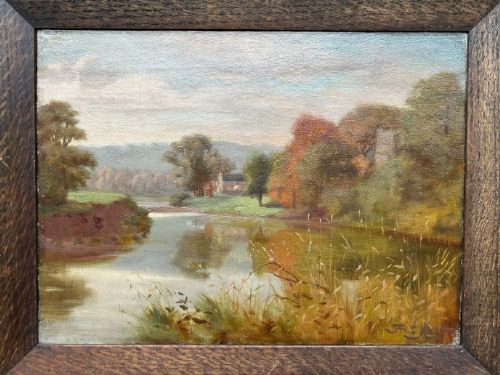
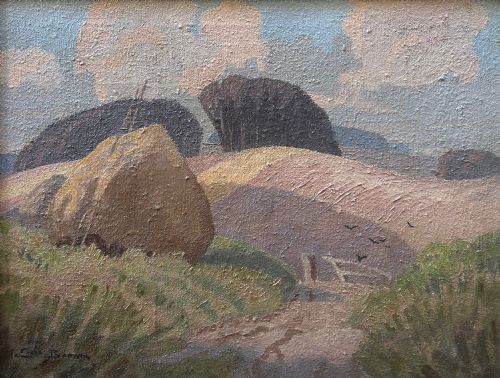
A vintage countryside scene canvas typically portrays rural life, open fields, rivers, and farmsteads created across the nineteenth and twentieth centuries. These pieces capture quiet moments in agricultural settings, from haymaking to winter feeding.
The selections available here lean heavily toward British Impressionism, Victorian realism, and early twentieth-century pastoral views. Buyers find everything from intimate village studies to large framed farming landscapes.
The subjects range from tranquil rivers and thatched cottages to working horses and livestock in rural pastures. Each piece serves as a visual record of changing rural trades and landscapes over the decades.
Materials and construction
Artists painted these works primarily using oil paint applied to woven canvas substrates. The combination of oil pigments allows for rich texture, subtle blending, and visible brushwork that defines impressionist and realist styles.
Many of these canvases sit within period wooden surrounds, occasionally finished with gilt or ebonised details. The physical structure relies on traditional stretcher frames that support the taut fabric over time.
Several canvases faithfully record the daily routines of ducks, sheep, and heavy shires ignoring the artist entirely.
Judging the work
Quality rests upon the artist's command of light, shadow, and atmospheric depth within the rural setting. Stronger pieces display confident brushwork and a balanced composition that draws the eye naturally across the pastoral view.
The condition of the canvas and the preservation of the original oil pigments dictate the visual integrity of the piece. Works that retain their original frames and stable paint layers without extensive restoration hold greater artistic merit.
George Armfield·William H Myers·Frederick Marriott·Eric Brown·Henri Ottmann·Herbert Royle·John Sanderson Wells·J Phipps·M C Hider·Giulio Cecchini·William Greaves·Charles Vickers·James William Booth·Benjamin Williams Leader·Helmut Reuter·Walter Williams·Thomas Spinks·Claude Cardon·Ernest Higgins Rigg·Owen Bowen·Joseph Paulman
The Vintage Countryside Scene Canvas Glossary
- Canvas
- A heavy woven fabric stretched across a wooden frame to serve as a support for oil painting. It provides the characteristic texture seen beneath the layers of pigment.
- Oil paint
- A slow-drying medium made by mixing pigments with oils such as linseed. This material allows artists to build rich layers and create deep colour variation.
- Impressionism
- An art style characterised by relatively small, thin yet visible brush strokes and an open composition. It prioritises accurate depiction of light and its changing qualities.
- Giltwood
- Wood that has been covered with a thin layer of gold leaf or gilt paint. It frequently forms the decorative frame surrounding nineteenth-century landscape paintings.
- Stretcher
- The internal wooden framework that keeps the canvas taut. Traditional corners allow for adjustments to maintain proper tension over the years.
Vintage Countryside Scene Canvas: Frequently Asked Questions
How do I date a vintage countryside canvas?
Dating relies on stylistic clues, artist signatures, framing materials, and the weave of the canvas itself. Nineteenth-century works often feature darker, more traditional varnishes and heavier gilt frames.
Later twentieth-century pieces shift toward brighter palettes and mid-century framing styles. Comparing the subject matter to known periods of the artist's output provides further confirmation.
Where should I hang an oil painting?
Select a wall away from direct sunlight and excessive moisture to protect the delicate oil pigments and canvas substrate. Stable indoor temperatures prevent the fabric and wood frame from warping.
Allow enough space around the piece so the composition can breathe without competing with surrounding decor. Proper lighting from a picture lamp enhances the visible brushwork.
How do I clean an antique canvas?
Dust the surface gently with a soft, dry artist's brush to remove loose particles without disturbing the paint layer. Avoid using water, household cleaners, or chemical solvents on the delicate oil surface.
Professional conservators should handle deeper cleaning or the removal of old, darkened varnish. Any aggressive rubbing can permanently damage the original artist's marks.
What defines a British Impressionist landscape?
British Impressionism combines the French focus on light and plein-air observation with a distinctly domestic rural subject matter. Artists prioritized capturing the fleeting atmospheric conditions of fields, rivers, and skies.
These works feature looser brushwork than strict Victorian realism while retaining a grounded sense of place. They celebrate the everyday beauty of farms, villages, and countryside labour.