
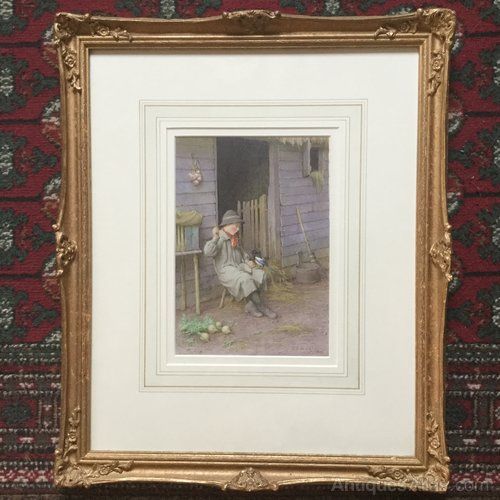


Vintage Cottage Scene
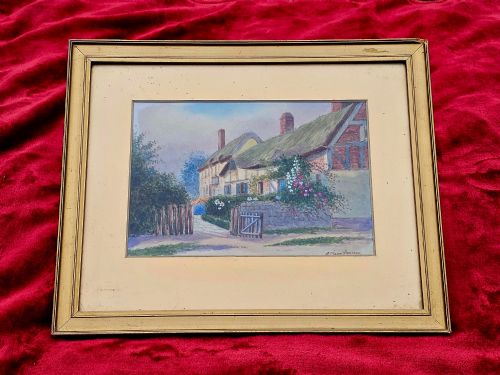
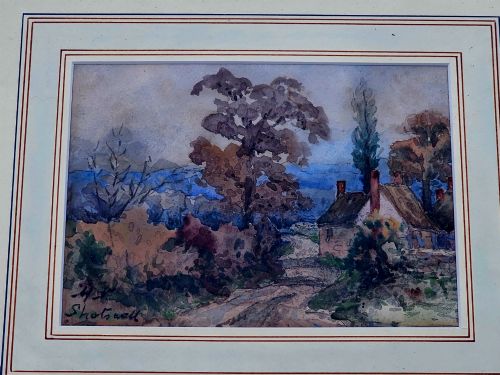
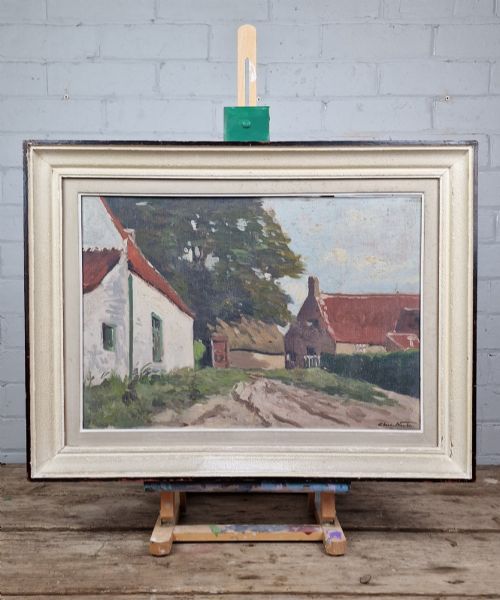
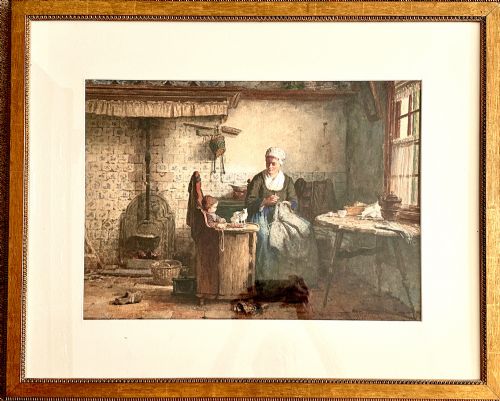
When you search for a vintage cottage scene, you are looking at pastoral watercolours, oils on canvas, and framed works capturing rural life from the nineteenth and twentieth centuries.
Vintage Cottage Scene
A vintage cottage scene encompasses framed paintings, watercolours, and mixed media works that depict rural houses, farms, and country lanes. These pieces typically date from the Victorian era through to the mid-twentieth century, spanning periods such as Edwardian, Post-Impressionism, and British Impressionism.
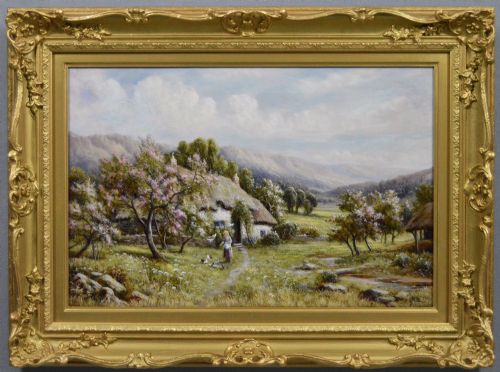
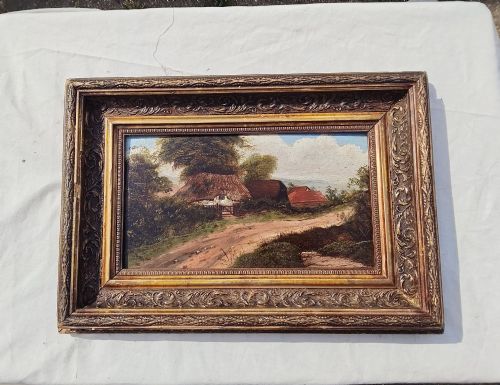
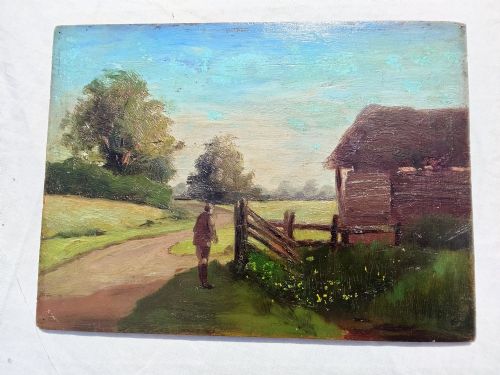
The selections on this page lean heavily towards traditional British and European landscapes, often featuring thatched cottages, riverscapes, and figures outside rural dwellings. You will find both intimate watercolours on paper and larger oil paintings executed on canvas, board, or card.
Makers and artists range from listed regional painters to school works and indistinctly signed pieces from the nineteenth and twentieth centuries. The common thread is a focus on pastoral tranquillity, agrarian life, and traditional domestic architecture.
How they were made
The works utilise traditional media including oil paint, watercolour, and occasionally mixed media applied to canvas, wooden board, card, or heavy paper. Canvases and boards are frequently housed in period gilt wood frames that complement the pastoral subject matter.
Techniques vary from detailed academic watercolours to looser Impressionist and Post-Impressionist brushwork, capturing natural light and outdoor atmospheres. Support materials range from nineteenth-century wooden panels to mid-century canvas and even leaded glass.
Ducks, geese, and cows frequently make uninvited appearances, treating the cottage threshold as their personal stage.
What varies in quality
Quality rests upon the confidence of the brushwork and the artist's ability to render light, atmosphere, and architectural proportion within a landscape. Stronger examples display a distinct compositional balance and assured handling of medium, whereas weaker pieces can feel formulaic or heavy-handed.
The integrity of the original support and framing also dictates the standing of a piece. Works retaining their period frames and stable, untouched surfaces hold greater visual and historical coherence.
A. Marie Parsons·Robert John Hammond·Charles Houben·Hendrik Valkenberg·Charles Edward Wilson·Alexander Rosell·Arthur Tucker·James Hardy Junior·Frederick James Knowles·George Smith·William Greaves·Charles Vickers·Donald McIntyre·Helmut Reuter·Harry Sylvester Stannard·Robert Gemmell Hutchinson·B. Kaufmann·David Woodlock·Ernest Walbourn·Ernest Cox·Herbert Royle·J.V.R. Parsons·Ingrid Rydbeck-Zuhr
The Vintage Cottage Scene Glossary
- Oil on Canvas
- Pigment mixed with drying oil applied to a stretched woven fabric support. This method allowed artists rich texture and deep colour layering.
- Watercolour
- A painting method in which fine pigment is suspended in a water-based, translucent solution. It is typically executed on paper to achieve luminous, delicate effects.
- Impressionism
- A nineteenth-century painting style focusing on accurate depiction of light and ordinary subject matter. It relies on small, thin yet visible brush strokes.
- Post-Impressionism
- An extension of Impressionism that rejected its limitations while continuing to use vivid colours and thick application. Artists explored bolder personal expression and distinct geometric forms.
- Genre Painting
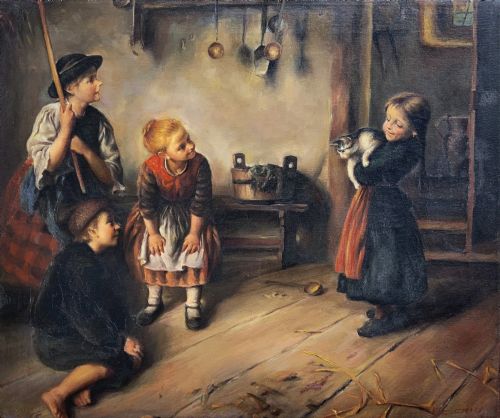
- The pictorial representation of scenes from everyday life, typically involving ordinary people in domestic or rural settings. These works often tell a subtle narrative story.
Vintage Cottage Scene: Frequently Asked Questions
What periods do these cottage scenes cover?
The works span from the nineteenth century through the Victorian, Edwardian, and mid-twentieth-century periods. Many examples originate from the early decades of the nineteen hundreds.
You will encounter styles ranging from traditional nineteenth-century British landscape to post-impressionist interpretations from the nineteen fifties and sixties.
How should I care for an antique watercolour?
Watercolours are sensitive to light and moisture because they utilise paper supports and water-soluble pigments. Keep them away from direct sunlight to prevent fading.
Ensure they are framed behind glass with adequate spacing between the art and the glass to avoid condensation damage.
Are all the paintings signed by the artist?
Many pieces carry signatures or attribution to known artists and regional schools, while others are indistinctly signed or anonymous. Unsigned works are often attributed through style and period characteristics.
Both signed and unsigned pieces offer authentic representations of historical rural life.
What framing is typically found on these works?
Many paintings retain their period frames, such as gilt wood mouldings that match the age of the canvas or board. These original surrounds enhance the character of the artwork.
Subsequent reframing is also common, particularly for works that have passed through multiple collections over the decades.