
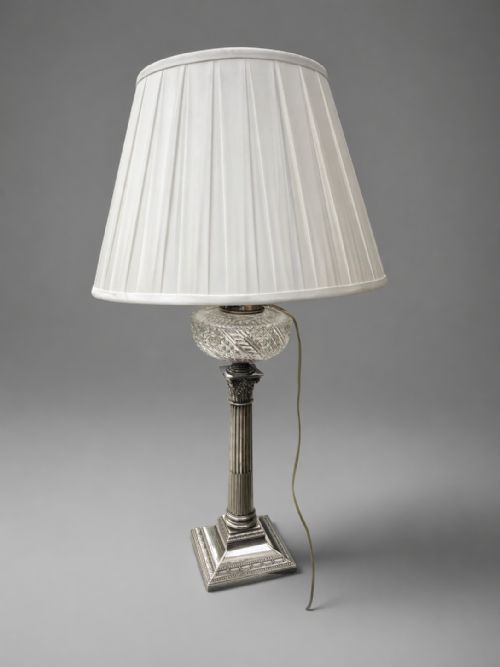


Vintage Corinthian Lamp Base
A vintage corinthian lamp base brings neoclassical proportion and classical architectural order to a room, channelling ancient stone columns into domestic lighting.
Vintage Corinthian Lamp Base
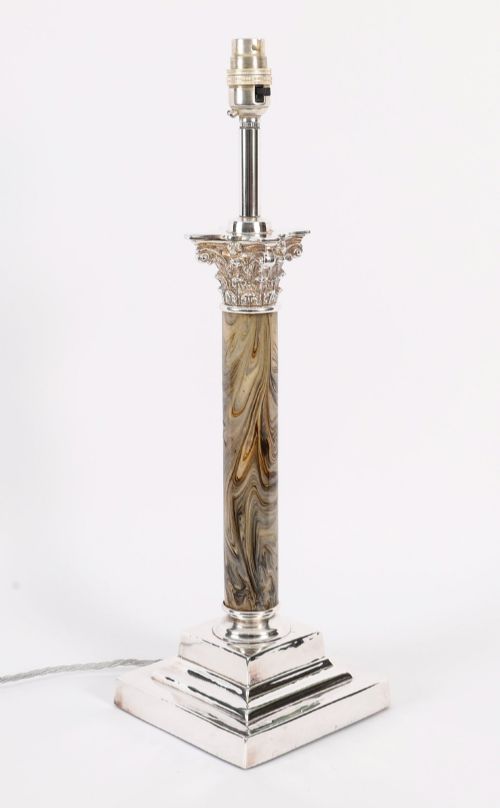
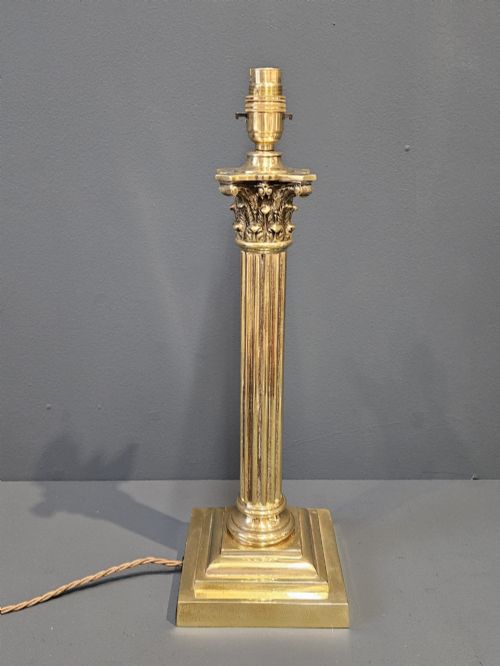
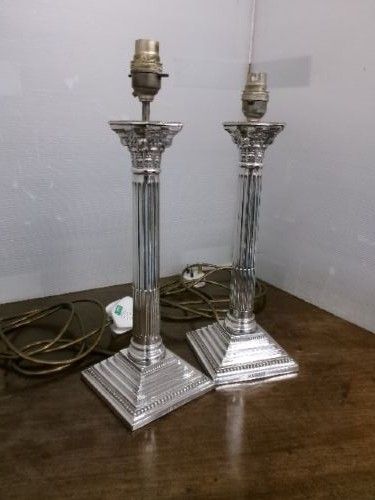
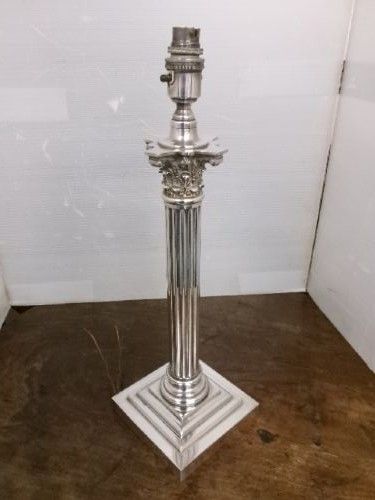
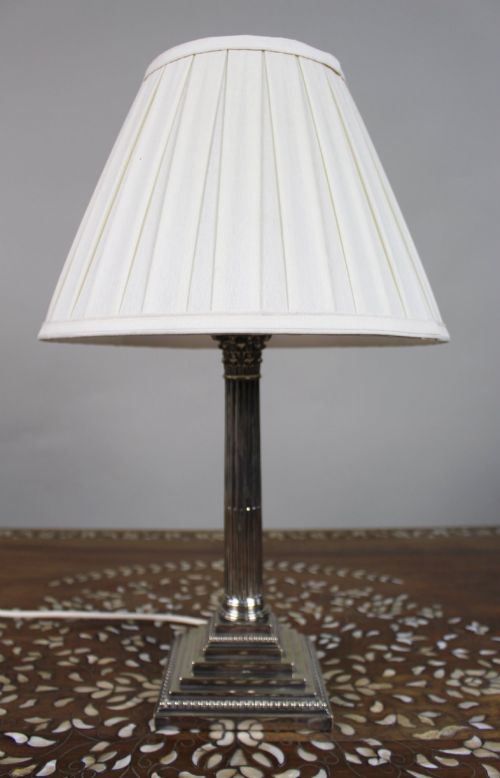
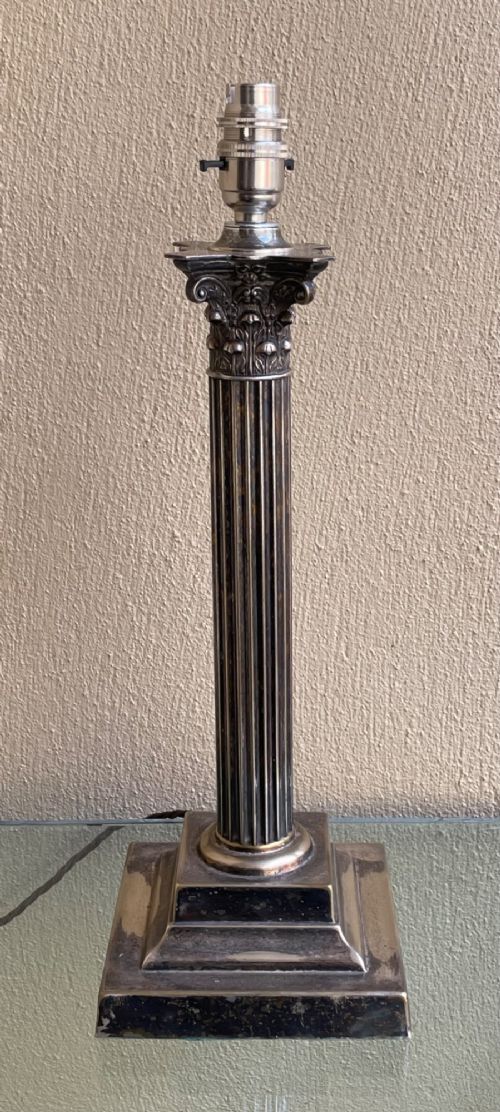
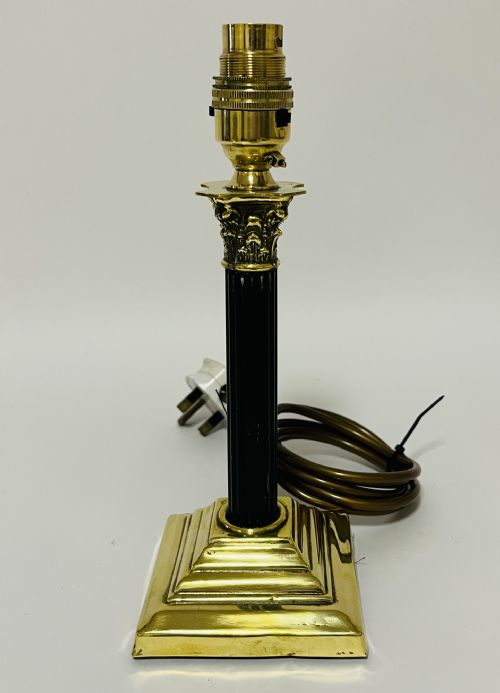
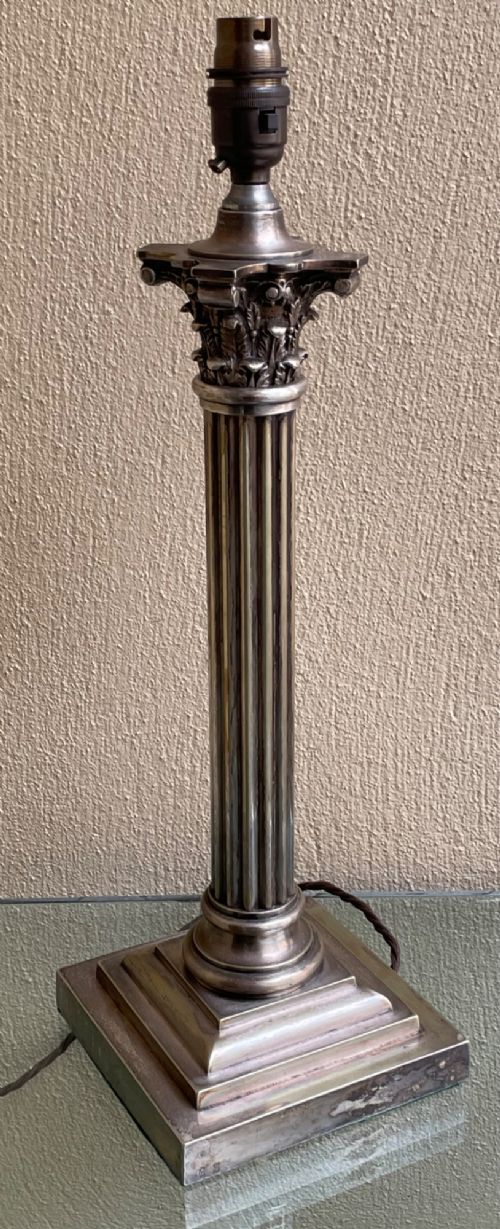
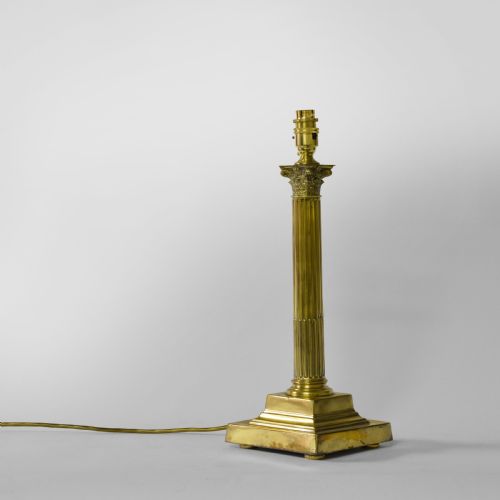
A vintage corinthian lamp base takes the iconic fluted shaft and ornate capital of classical architecture and scales it down for the table or floor. Most examples encountered here originate from the Victorian, Edwardian, and early twentieth-century periods.
The form derives closely from antiquity, utilising the characteristic acanthus leaves and scroll motifs of the Corinthian order. These pieces often began life as oil lamps before conversion to electricity, or were manufactured specifically as electric table lamps and tall standard lamps.
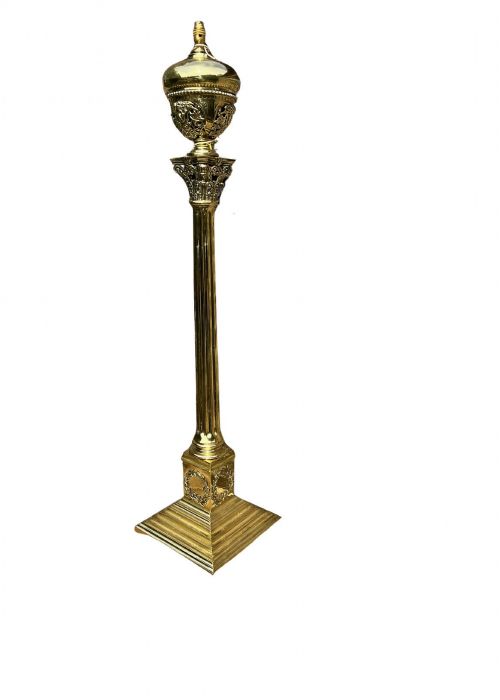
Makers drew on Neoclassical and Classical Revival styles, producing standard table lamps alongside monumental floor-standing variations. The resulting objects bridge the gap between antique decorative hardware and functional interior illumination.
How they were made
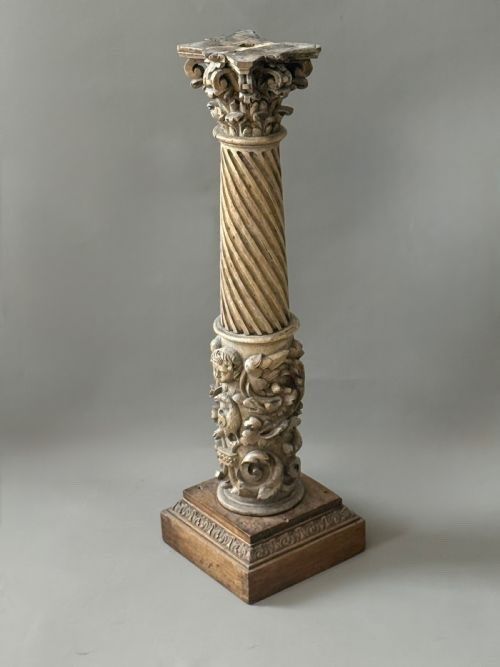
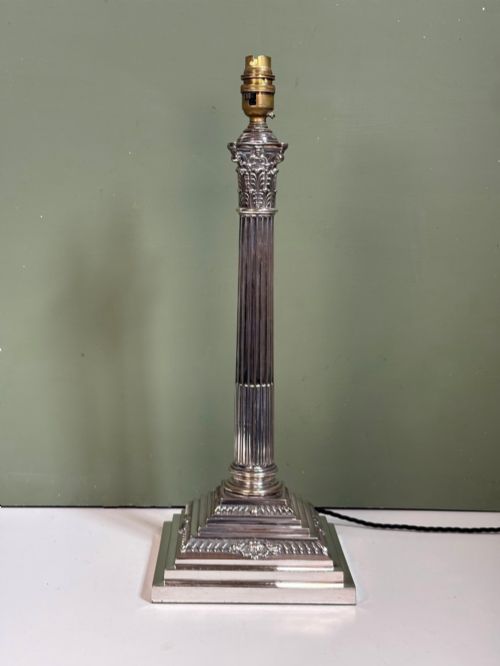
Metalworking techniques dictate the construction of these pieces, relying heavily on cast brass, silver plate, and electroplated metals shaped into fluted columns and stepped square bases. Some variants incorporate cut glass reservoirs, onyx sections, or carved wooden pillars.
Details such as lion's paw feet and intricate acanthus leaf capitals demonstrate precision casting and hand-finishing. Silver plating was frequently applied over base metals, while specific examples utilise solid brass or gilt bronze.
Some steadfast columns stand upon tiny lion's paw feet, bravely holding up the weight of the classical world.
What varies in quality
The crispness of the casting in the capital separates standard production from superior examples, as worn moulds yield soft, muddy foliage instead of sharp acanthus definition. Weight and gauge of the metal also dictate quality, separating hollow, thin constructions from substantial, heavy brass or thick silver plate.
Proportion and scale distinguish the finer pieces, particularly where the fluted column meets the stepped plinth with architectural harmony. Maker marks, such as those by stamped makers like Walter Latham & Son or Palmer & Co, elevate the standing of an individual piece.
Walter Latham & Son·Palmer & Co
The Vintage Corinthian Lamp Base Glossary
- Corinthian column
- An architectural order featuring an ornate capital decorated with acanthus leaves and scrolls, translated here into a lamp shaft.
- Silver plate
- A thin layer of silver applied to a base metal such as brass or copper, common in nineteenth-century domestic metalwork.
- Neoclassical revival
- A style reviving the architectural forms and decorative motifs of classical Greece and Rome, prevalent throughout the Victorian and Edwardian eras.
- Standard lamp
- A tall floor-standing lamp designed to illuminate a room from a vertical position.
- Cut glass reservoir
- The glass container originally intended to hold lamp oil, often faceted or patterned, positioned beneath the burner assembly.
Vintage Corinthian Lamp Base: Frequently Asked Questions
How do I date a brass lamp base?
Dating relies on stylistic clues, manufacturing techniques, and the transition from oil-burning mechanisms to early electrical wiring components. Victorian and Edwardian examples often display distinct patination and construction methods.
Heavier cast brass and specific plate marks help narrow the era down to the nineteenth or early twentieth century.
Were these originally oil lamps?
Many surviving columns started as oil lamps before being converted to electricity during subsequent decades. The presence of a burner gallery or a glass reservoir often indicates this past.
Other examples were built specifically as electric table lamps or tall standard lamps as domestic electrical supply spread.
How do I choose a lampshade for a column lamp?
Traditional silk or fabric shades complement the formal neoclassical proportions of a classical column without overwhelming the detailed capital. The scale of the shade should balance the height and width of the metal shaft.
Proportions remain key to ensuring the completed light sits harmoniously on a side table or floor.
What is the difference between table and standard lamps?
Table lamps are proportioned for placement on sideboards, desks, or occasional tables, featuring shorter shafts. Standard lamps are floor-standing versions designed to provide ambient room illumination from a standing height.
Both formats employ the same architectural column and capital vocabulary.