
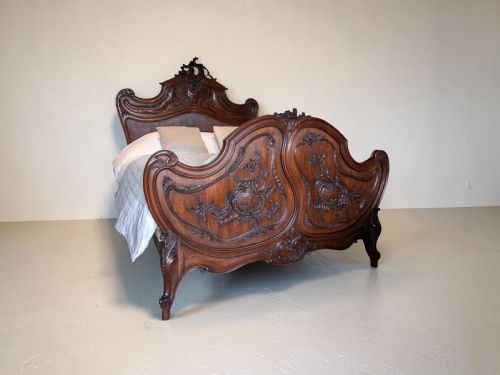


Vintage Corbeille Bed
A vintage corbeille bed brings curved, enveloping French design into a bedroom through distinct barrel-shaped headboards and footboards.
Vintage Corbeille Bed
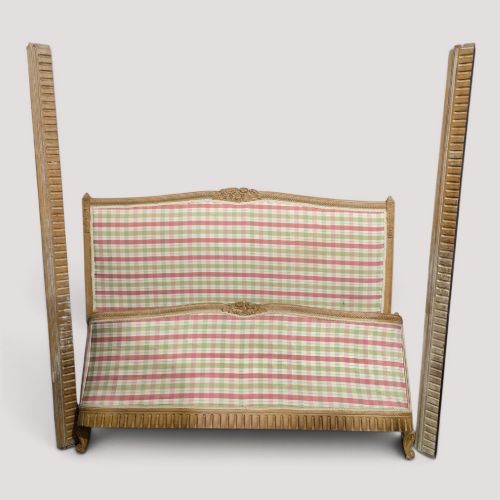
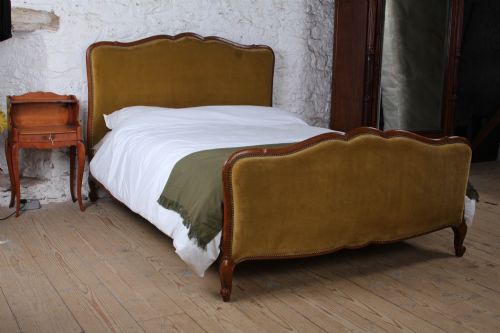
A vintage corbeille bed takes its name from the French word for basket, describing the curved, rounded shape that embraces the mattress. These pieces typically arrive from the nineteenth and early twentieth centuries, spanning periods from Victorian and Edwardian eras through the nineteen-thirties.
Buyers browsing this selection encounter various French stylistic influences, notably Louis XV and Louis XVI revivals, alongside French provincial and chateau interpretations. The forms range from single beds and daybeds to large double, king, and super king frames.
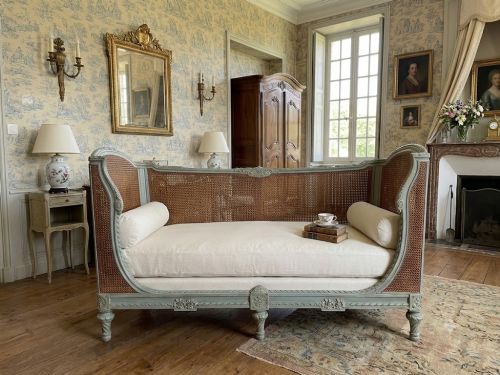
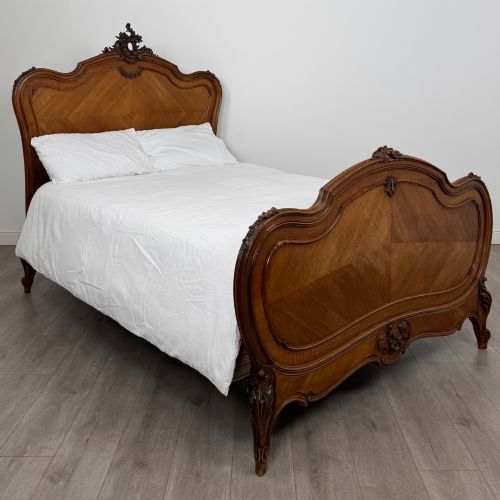
Painted wood and walnut dominate the offerings, often complemented by textile upholstery, cane, and beech components. Many examples appear in painted finishes or limed wood, while others retain exposed carved walnut.
How they were made
Cabinetmakers constructed these frames primarily from solid hardwoods such as walnut, beech, and general timber, employing traditional joinery to support the sweeping curves of the corbeille shape. Carved ornamentation on the crests and rails required skilled hand-chiselling, particularly on pieces reflecting Louis XV and Louis XVI styles.
Surface treatments combine painted or limed finishes with exposed wood grain, whilst textural elements like woven cane panels and upholstered textiles are integrated into the headboards and footboards. Textiles range from newly applied fabrics to original covers.
Some beds arrive with matching bedside cabinets or chairs, proving that eighteenth-century matching habits simply refused to sleep alone.
What varies in quality
The distinction between tiers rests upon the depth and crispness of the hand-carved woodwork along the curved crests and rails. Superior examples display fluid, deeply undercut foliage and scrollwork rather than shallow, mechanical milling.
Proportion and structural integrity also separate the grades, as wider king and super king frames require substantial timber scantlings to maintain the sweeping barrel curve without distortion. The integration of fine materials, such as closely woven natural cane panels and high-grade textile upholstery, elevates the standing of individual pieces.
The Vintage Corbeille Bed Glossary
- Corbeille
- Basket-shaped in French, describing a bed with a curved, enveloping headboard and footboard. This shape creates a sheltered sleeping enclosure.
- Canapé
- A French term often used interchangeably with a daybed or sofa bed. These frames function for both resting and reclining.
- Cane
- Woven rattan material used for decorative panels in headboards and footboards. It offers a lightweight, textured contrast to solid wood.
- Louis XV Style
- A design movement characterised by asymmetrical rococo curves, cabriole legs, and naturalistic floral carvings. It heavily influences many twentieth-century French beds.
- Limed Wood
- A specialist wood finish created by rubbing white pigment into the grain. This technique highlights the natural porous texture of timber.
Vintage Corbeille Bed: Frequently Asked Questions
What is a corbeille bed?
A corbeille bed is a traditional French bed featuring a curved, rounded headboard and footboard that wraps around the mattress like a basket. This distinctive shape creates an enclosed, cocooning sleeping space.
Most examples date from the Victorian and Edwardian eras up to the nineteen-thirties, drawing heavily on classic French design motifs.
Will a standard mattress fit?
Many vintage French beds do not conform to modern standard UK or international mattress dimensions precisely. Sizing can vary between double, king, and bespoke proportions depending on the specific nineteenth or twentieth-century workshop.
Buyers should measure the internal wooden rails carefully before sourcing a mattress to ensure a correct and secure fit.
How do I care for painted wood?
Painted wooden frames require gentle cleaning with a soft, dry cloth to remove dust. Avoid harsh chemical cleaners or abrasive pads that can damage the historic painted finish.
Keep the bed away from direct heat sources and strong sunlight to prevent the timber from warping and the paint from cracking over time.
How do I identify Louis XV style?
Louis XV style pieces are identified by flowing, serpentine lines, asymmetrical rococo carvings, and naturalistic floral motifs. The woodwork often lacks straight edges, favouring gentle curves throughout the frame.
In contrast, Louis XVI style pieces display a return to straight lines, symmetrical fluting, and neoclassical geometry.