




Vintage Copper Measuring Jug
These vintage copper measuring jug examples are practical vessels shaped from warm metal, offering centuries of utilitarian function and domestic utility to modern collectors.
Vintage Copper Measuring Jug
When you search for a vintage copper measuring jug, you encounter robust kitchenalia and tavern measures spanning the Georgian, Victorian, and Arts and Crafts periods. These pieces range from small individual tankard measures to large multi-gallon flagons and haystack measures.
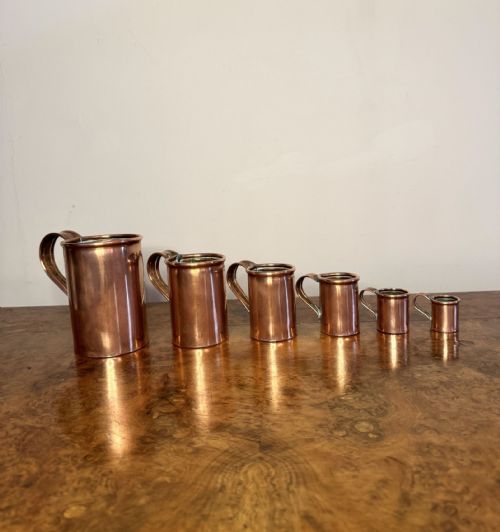
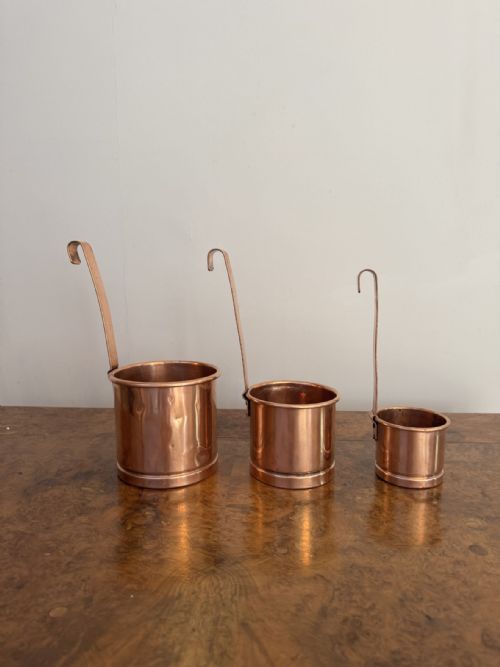
The versions most likely to meet you on this page are Victorian and Georgian graduated sets, often featuring seamed construction and specific capacity markings. Scottish and English provincial examples frequently appear alongside larger agricultural and tavern variants.
Construction and Materials
These vessels rely primarily on heavy gauge copper, combined with brass for handles, rims, and reinforcement bands. Lead and tin appear in solder joints and internal linings, ensuring the containers held liquids securely.
Makers shaped the heavy metal sheets by hand or machine, forming seams that were soldered and hammered. Graduated sets demonstrate meticulous metalworking skills, where each vessel fits precisely inside the next.
Vintage Copper Measuring Jug Retail Price Guide 2026
Typical asking prices for vintage copper measuring jug among the pieces listed under this phrase on Sellingantiques today, from the lower quarter to the upper quarter. They describe what is for sale here now, not the wider market.
Listings feature copper and brass materials across Georgian and Victorian periods, incorporating styles from rustic farmhouse to Arts and Crafts.
Judging Quality
The distinction between ordinary utility items and superior examples lies in the weight of the copper and the crispness of capacity stamps. Thicker metal gauge and clean, dovetail or folded seams indicate superior workshop production.
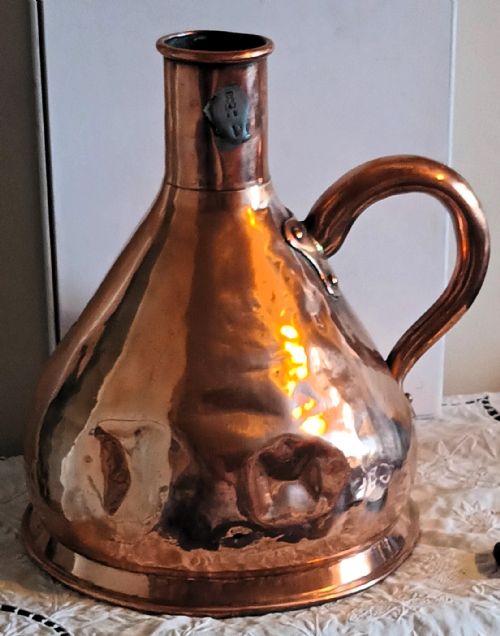
Makers' marks, royal cipher stamps such as VR markings, and named establishments elevate certain pieces above anonymous domestic kitchenware. Complete graduated sets show a level of original curation that single surviving jugs lack.
Joseph Sankey·J Bower·Loftus of Oxford Street London·S Hancock
The Vintage Copper Measuring Jug Glossary
- Haystack measure
- A distinctive British liquid measure with a bulbous lower body tapering towards the rim, resembling a traditional hayrick. These items often feature heavy brass scroll handles.
- Imperial measure
- A capacity standard established by British weights and measures legislation, governing the exact volume these jugs were legally certified to hold. Stamped capacity marks often reflect this standard.
- Tankard measure
- A cylindrical drinking or pouring vessel fitted with a flat bottom and a sturdy side handle. These frequently appear in graduated sets spanning multiple pint sizes.
- Flagon
- A large vessel designed for holding and pouring liquids, often possessing a capacity of one or more gallons. These heavy pieces served commercial or institutional rather than domestic roles.
Vintage Copper Measuring Jug: Frequently Asked Questions
What were these jugs used for?
These vessels functioned primarily as standard liquid measures in taverns, markets, and domestic kitchens. They ensured accurate commercial transactions of ales, spirits, and other liquids before decimalisation.
Over time, many transitioned into decorative kitchenalia displays, appreciated for their warm metallic tones and historical utility.
How do I clean old copper?
Most collectors prefer to maintain a mellow, aged patina rather than polishing the metal to a bright shine. Gentle washing with mild soap and warm water removes surface dust without harming the historic surface.
Harsh chemical abrasives strip away centuries of oxidation and can damage soft soldered seams, diminishing the character of the piece.
How do I tell Georgian from Victorian pieces?
Georgian examples often display hand-beaten characteristics, simpler handle attachments, and distinct capacity stamps associated with eighteenth-century standards. They typically emerge from earlier tavern and domestic contexts.
Victorian pieces frequently feature standardised imperial verification marks, such as royal cyphers, and more uniform industrial manufacturing techniques including machine rolling and neat seaming.
Are graduated sets original?
Many sets assembled over time share similar patination and styling, reflecting how households and taverns gathered working collections. True manufactured sets display matching maker marks, consistent wear patterns, and proportional sizing.
Single jugs often survive independently after other sizes in a graduated set were lost or damaged through centuries of heavy commercial use.