



Traditional Copper Water Pitcher
A traditional copper water pitcher brings heavy, warm metal and practical utility into a room.
Traditional Copper Water Pitcher
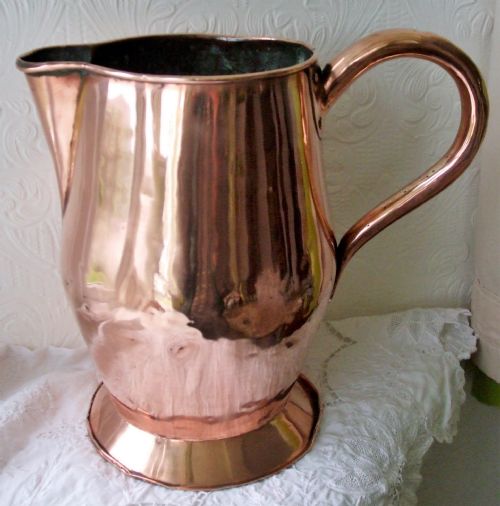
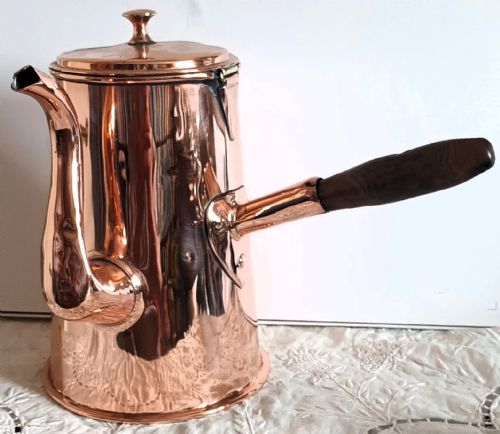
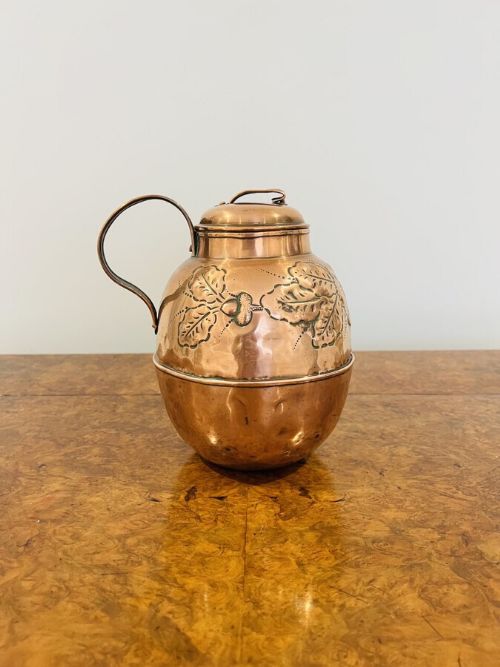
When you search for a traditional copper water pitcher, you are looking at utilitarian vessels spanning the eighteenth, nineteenth, and Victorian periods, alongside regional Ottoman and Middle Eastern pieces. These items range from domestic jugs and measuring vessels to coffee pots, ewers, and watering cans.
The versions you are most likely to meet on this page include English Georgian jugs, Victorian measuring cans, and Middle Eastern coffee pots. They appear in forms varying from modest two-pint sizes up to colossal lidded pitchers and four-gallon measures.
Originating from English workshops and overseas foundries alike, these items serve as both functional containers and decorative objects. Their forms reflect the practical liquid transport needs of past centuries.
Materials and construction methods
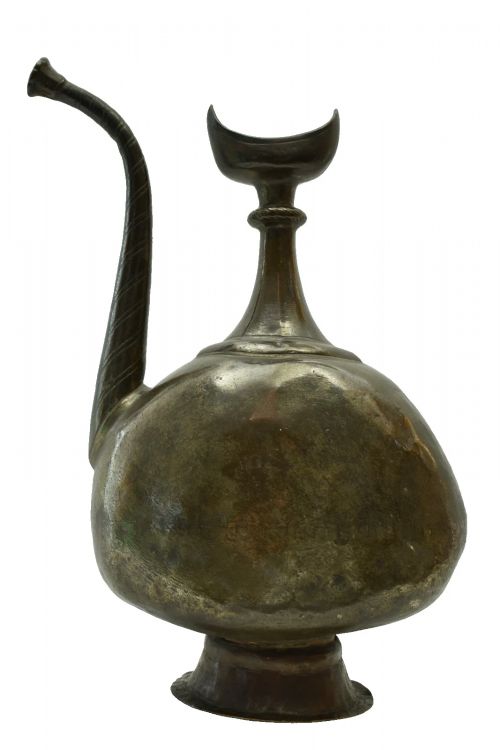
Construction relies on traditional metalworking techniques, utilising visible seams and rivets to join the heavy metal panels together. Surface finishes range from plain hammered textures to ornate decorative elements such as crescent moon finials.
Traditional Copper Water Pitcher Retail Price Guide 2026
Typical asking prices for traditional copper water pitcher among the pieces listed under this phrase on Sellingantiques today, from the lower quarter to the upper quarter. They describe what is for sale here now, not the wider market.
Separating everyday utility from finer examples
Quality in these vessels is dictated by the weight of the metal and the integrity of the construction. Heavier gauges and robust seaming distinguish substantial utility pieces from lighter decorative items.
Refinement in the handle attachment, spout formation, and any applied brass detailing marks the difference between standard utilitarian workshop production and exceptional domestic or regional craftsmanship.
The Traditional Copper Water Pitcher Glossary
- Ewer
- A large jug with a wide spout, traditionally used for pouring water. These often appear in Middle Eastern and Ottoman metalwork.
- Measure
- A container calibrated for holding exact volumes of liquid. Marked examples often bear royal ciphers or capacity stamps.
- Finial
- A decorative ornament fixed to the top of a lid. On certain Islamic ewers, this takes the form of a crescent moon.
- Seamed
- Joined along an edge where separate pieces of metal meet. Visible seams are characteristic of older hand-beaten construction.
Traditional Copper Water Pitcher: Frequently Asked Questions
How old are these pitchers?
The pieces span the eighteenth and nineteenth centuries, including Georgian and Victorian eras.
Dates are established through construction styles, maker marks, and material characteristics typical of those periods.
Are they safe for water?
Many historical vessels were designed to hold liquids, though inner linings may vary.
Buyers intending daily use should check whether the interior retains a protective tin coating.
What is a Jersey can?
A Jersey can is a tall, cylindrical metal container traditionally used for storing and carrying milk or water.
They are easily recognised by their narrow vertical profile and sturdy side handles.
How do I clean copper?
Traditional copper develops a natural dark patina over decades of exposure to air.
Some collectors prefer this aged appearance, while others choose proprietary metal cleaners to restore a bright finish.