


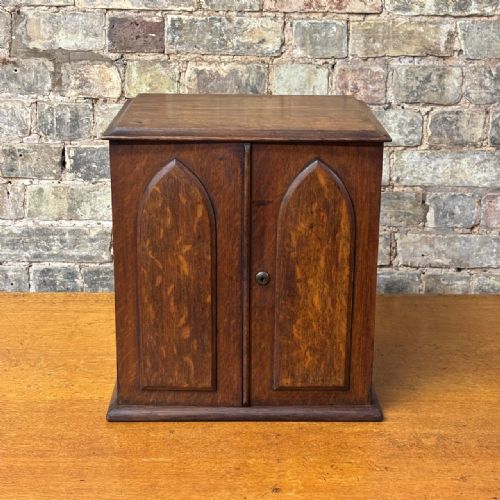


Vintage Collector Table
These vintage collector table options combine mahogany, glass and brass to protect and display small treasures.
Vintage Collector Table
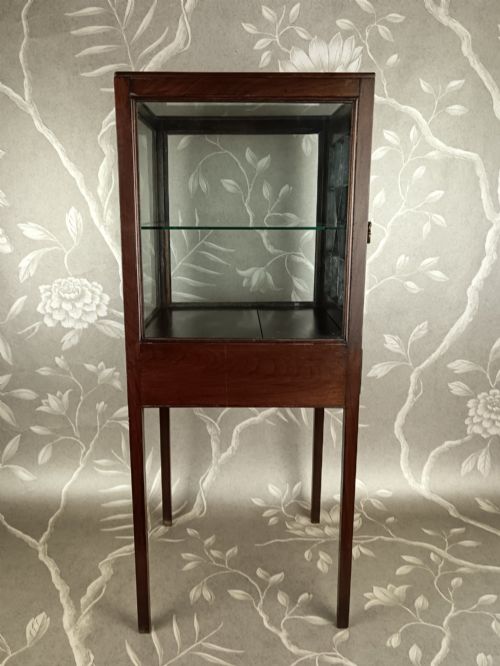
A vintage collector table serves to exhibit small objects, jewellery and curiosities beneath glass tops or within fitted cabinet compartments. The primary forms seen here include bijouterie display tables, vitrines and table cabinets originating from periods such as the Edwardian era, Victorian times and the Georgian period.
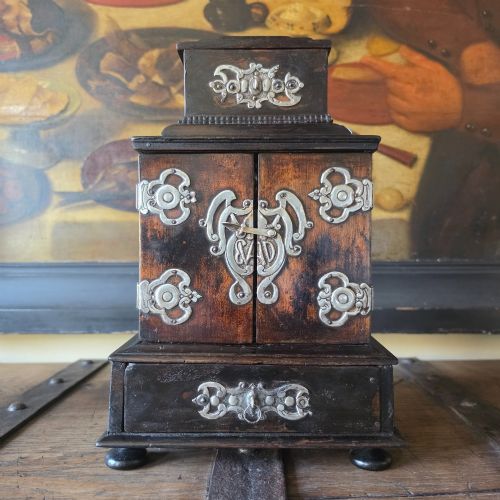
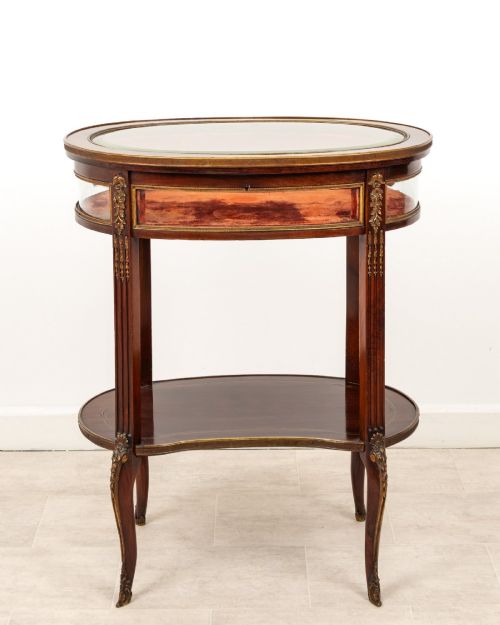
Most examples encountered on this page take the form of Edwardian or turn-of-the-century mahogany display tables featuring glazed panels and velvet or fabric linings. Alongside these, buyers find compact table cabinets in walnut, oak and black lacquer designed for placement on larger surfaces.
Materials and construction
Cabinetmakers utilised dense timbers including mahogany, walnut and yew wood, frequently applying decorative veneers, subtle marquetry inlays and carved details. Structural framing supports inset glass panels on hinged or lift-top lids designed to permit a clear view of the interior.
Metal mounts in brass and ormolu accent the corners, hinges and lock plates of many display cases and bijouterie tables. Interiors are commonly lined with soft velvet or similar fabric to cushion delicate items placed inside.
Several vintage display tables bear later sign-written details for Breitling watches, suggesting past service inside jewellers' shops.
Distinctions in quality
Quality rests upon the selection of timber grain, the precision of cabinet joinery and the integrity of the original glass and brass mounts. Superior pieces display refined carving, harmonious veneer matching and well-fitted doors or lids that operate smoothly.
The sophistication of internal lining materials and the crispness of applied ormolu or cast brass detailing further separate standard examples from finer specimens. Proportion and balance in the initial design govern the visual weight of the finished cabinet.
The Vintage Collector Table Glossary
- Bijouterie table
- A glass-topped display table created specifically for holding small valuable items, trinkets and jewellery. These tables typically feature hinged lids and fabric-lined interiors.
- Vitrine
- A glass-sided cabinet or display case designed to showcase porcelain, silver and curiosities from multiple angles. They appear in both standing and table-top formats.
- Ormolu
- Gilt bronze ornamentation cast and applied to the mounts and feet of furniture. It provides a bright metallic contrast to dark woods.
- Kodansu
- A small Japanese tabletop cabinet fitted with multiple internal drawers and compartments. They often feature decorative lacquer finishes.
- Inlay
- A decorative technique where contrasting pieces of wood or other materials are inserted into recessed portions of the primary surface. Edwardian and Georgian makers utilised this for linear banding.
Vintage Collector Table: Frequently Asked Questions
What fits inside a vintage collector table?
These tables suit small personal items such as pocket watches, medals, coins, rings and delicate silver pieces. The shallow glazed compartments keep contents visible while protecting them from dust and handling.
Dealers often note that the velvet or fabric lining cushions these objects securely against movement when lids are opened.
How do I care for the wood and glass?
Maintenance involves dusting timber surfaces with a soft, dry cloth and avoiding direct sunlight that might fade mahogany and walnut tones. Glass panels require standard non-ammonia window cleaner applied to a cloth rather than sprayed directly.
Checking brass hinges and locks periodically ensures the moving parts of lids and doors remain properly aligned.
Where should I place a table cabinet?
Table cabinets and small vitrines rest easily upon sideboards, desks or dedicated stands where eye-level viewing is possible. Their compact footprints allow them to function within studies, living rooms or hallways without dominating the floor space.
Placing them away from active heat sources prevents timber shrinkage and veneer lifting.
How do I distinguish Edwardian from Victorian pieces?
Edwardian examples tend to exhibit lighter mahogany tones, simpler inlaid stringing lines and airier proportions suited to twentieth-century interiors. Victorian pieces often display heavier carved decoration, darker finishes and more robust structural framing.
Cabinet hardware and internal fabric choices also offer clues regarding the specific decade of manufacture.