



Vintage Coffee Spoon Set
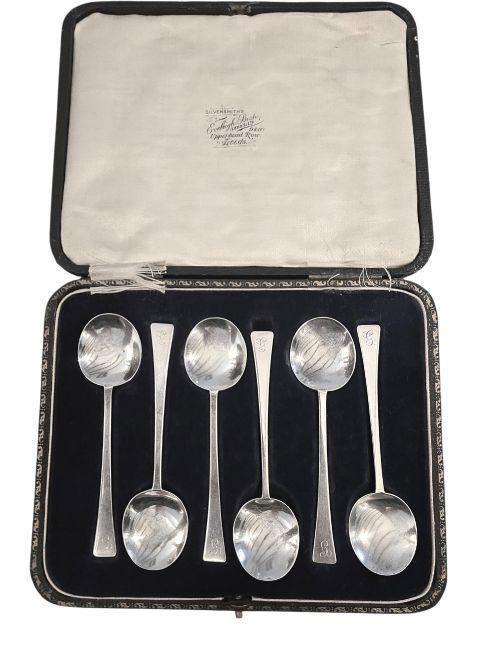
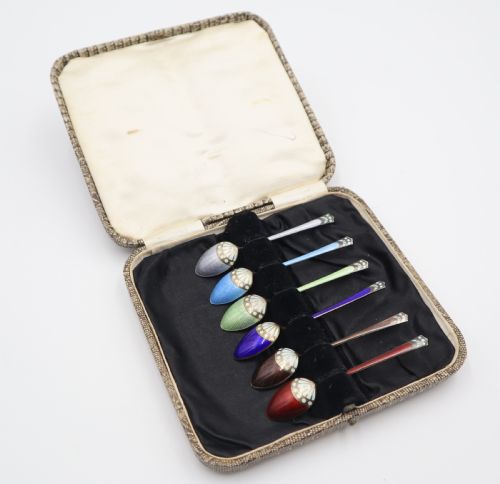
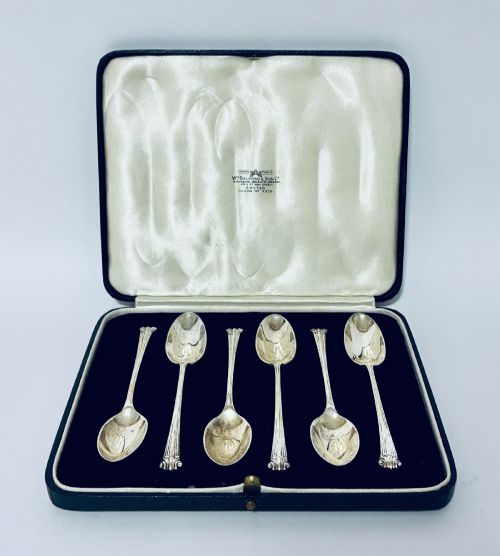
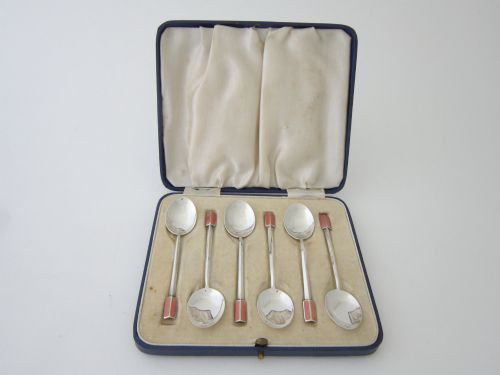
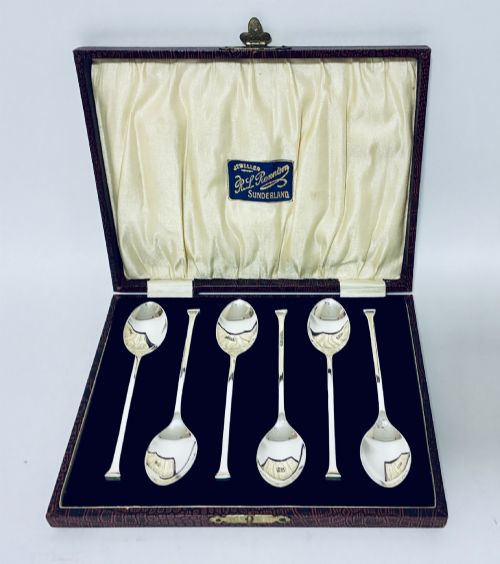
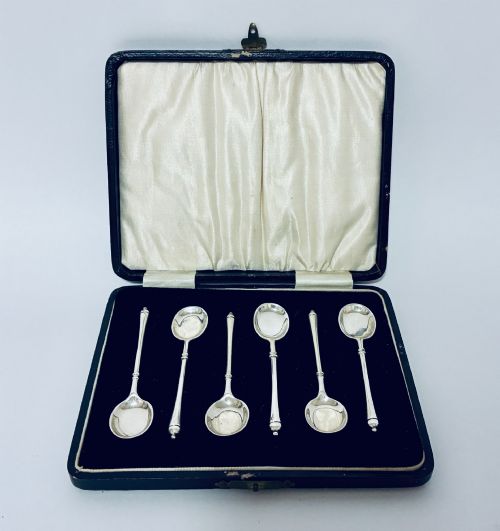
A vintage coffee spoon set brings small scale and fine detail to the table, often housed in fitted cases lined with satin, velvet, or silk.
Vintage Coffee Spoon Set
When you search for a vintage coffee spoon set, you encounter matched groups of small utensils designed for after-dinner service. These sets span the Victorian era through the mid-century, with Art Deco designs appearing frequently alongside earlier Edwardian and George V examples.
Most sets comprise six pieces, though four-piece and twelve-piece configurations occur. They often arrive in original leatherette or fitted presentation boxes, complete with matching sugar tongs or coffee cans.
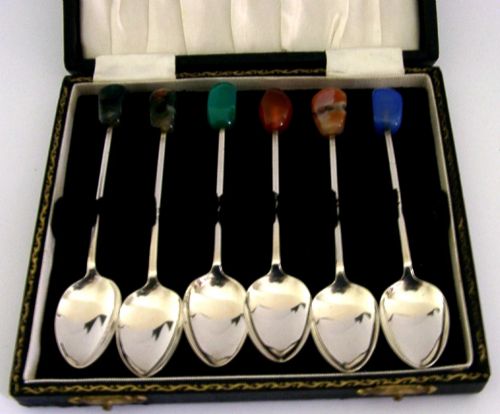
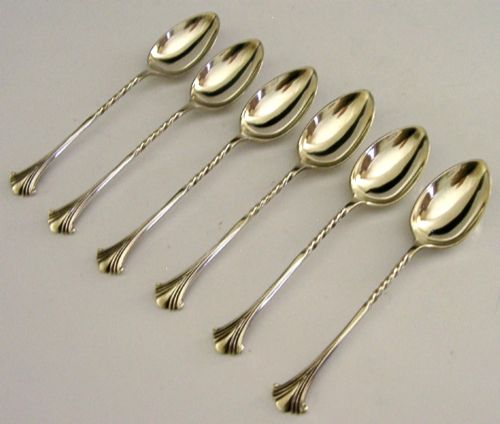
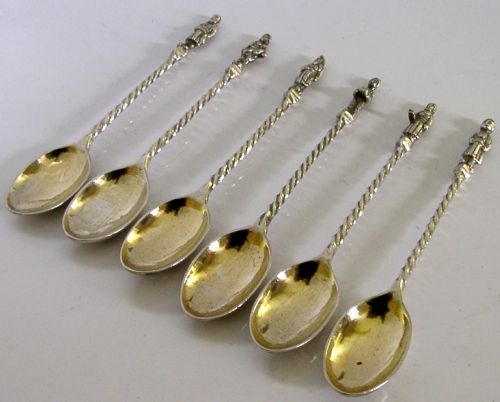
The forms range from plain silver bowls to figural designs, bean knops, card suits, and yacht club commemoratives. Makers and hallmarks identify regional workshops across Britain, Scandinavia, and continental Europe.
Materials and Construction
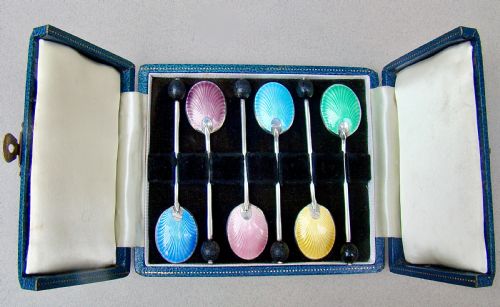
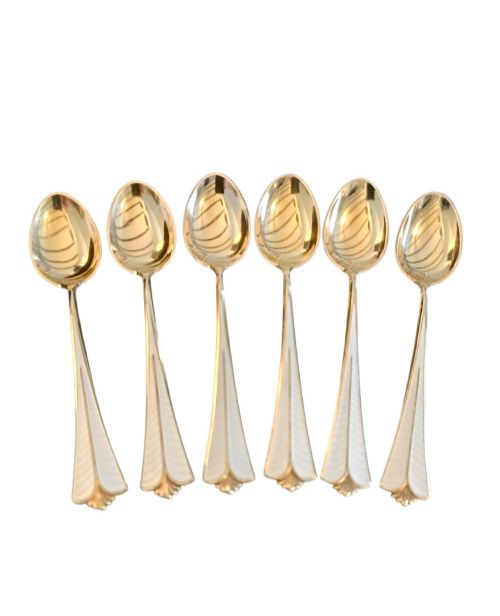
Makers utilised sterling silver and solid silver for the bowls and stems, frequently applying gold washes known as silver-gilt to the interiors. Enamel work, particularly guilloché patterns, adds vibrant colour to the handles and backs of the bowls.
Bakelite and agate appear as handle materials, while fitted presentation cases employ timber frames covered in leatherette and lined internally with velvet, satin, or silk to protect the metalwork.
Vintage Coffee Spoon Set Retail Price Guide 2026
Typical asking prices for vintage coffee spoon set among the pieces listed under this phrase on Sellingantiques today, from the lower quarter to the upper quarter. They describe what is for sale here now, not the wider market.
Listings feature sterling silver sets spanning the Victorian era through the mid-century modern period, complete with enamel, Bakelite, and agate accents.
Assessing Quality
Quality rests on the crispness of the hallmarks, the weight of the silver, and the condition of any applied enamel or gilding. Pieces with intact guilloché work free from chips represent higher tiers of craftsmanship.
The presentation case matters greatly, as original fitted boxes lined in clean silk or velvet elevate a set above loose items found without housing.
Turner and Simpson·David Andersen·Georg Jensen·Walker and Hall·Liberty and Co·Robert Stebbings·Cooper Brothers and Sons
The Vintage Coffee Spoon Set Glossary
- Guilloché enamel
- Enamel applied over a mechanically engraved metal surface. This technique creates geometric patterns that show through translucent coloured layers.
- Silver-gilt
- Silver that has been coated with a thin layer of gold. This process protects the underlying metal and provides a rich two-tone appearance.
- Bean knop
- A finial shaped like a coffee bean. It appears frequently on the terminal of twentieth-century coffee spoons.
- Seal top spoon
- A utensil featuring a flat, circular terminal resembling a signet seal. This traditional form echoes seventeenth-century prototypes.
- Leatherette
- A synthetic material embossed to imitate leather. It forms the protective exterior shell of many fitted presentation cases.
Vintage Coffee Spoon Set: Frequently Asked Questions
What are coffee spoons used for?
These small utensils are sized specifically for stirring sugar into demitasse cups of after-dinner coffee. Their diminutive bowls measure considerably smaller than standard teaspoons.
They appear alongside matching sugar tongs in fitted boxes intended for formal entertaining and gift giving.
How do I clean tarnished silver spoons?
Silver polish applied with a soft cloth removes everyday tarnish safely from the stems and bowls. Care must be taken around enamel sections to avoid scratching the glass surface.
Storing the items inside their original lined cases helps prevent rapid re-tarnishing when the sets are not on display.
Are these sets safe to use daily?
Solid silver items withstand regular washing by hand in warm soapy water without issue. Enamelled pieces require gentler handling to preserve the coloured glass.
Hand drying immediately after washing prevents water spots from forming on the polished silver surfaces.
How can I date an unmarked set?
Hallmarks stamped onto the back of the stems provide assay office marks, maker's initials, and date letters for British pieces. Stylistic markers such as geometric enamel point toward specific decades like the nineteen-twenties or thirties.
Case construction and interior lining materials also offer clues to the manufacturing period.