
Vintage Coal Holder
A vintage coal holder brings practical fireside utility and solid metal or timber character to a hearth.
Vintage Coal Holder
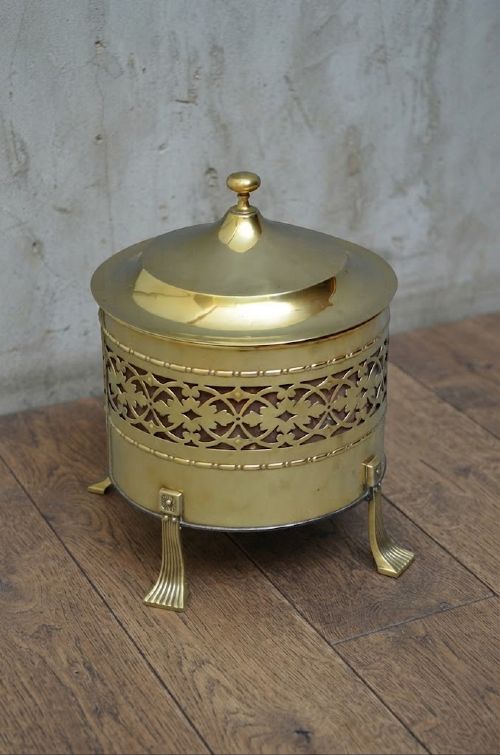
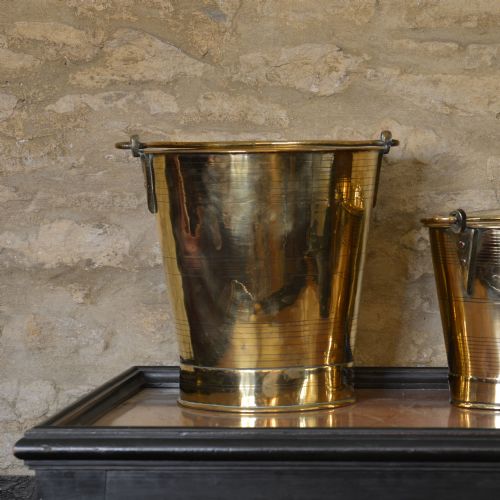
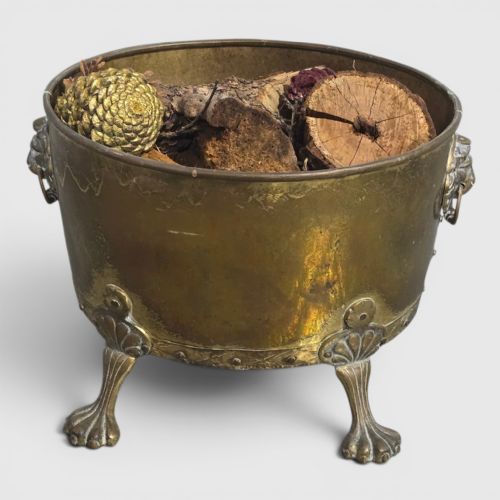
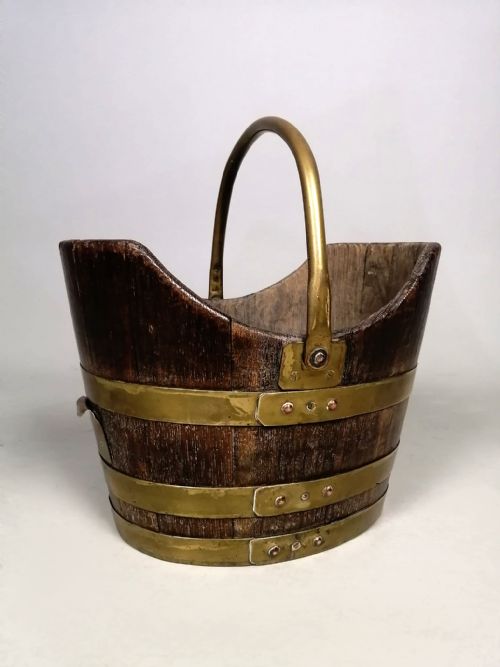
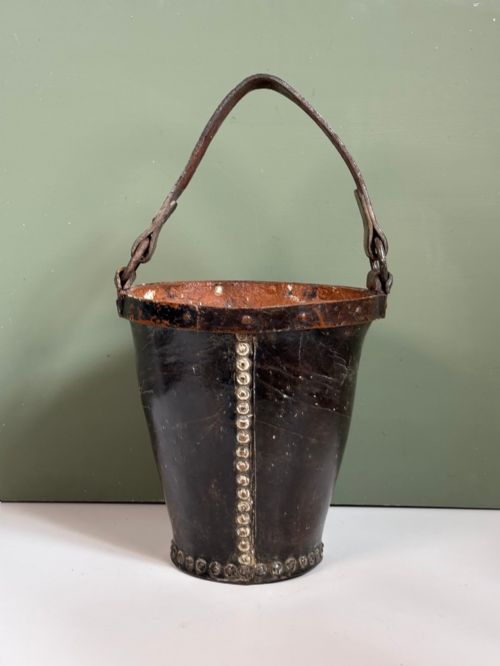
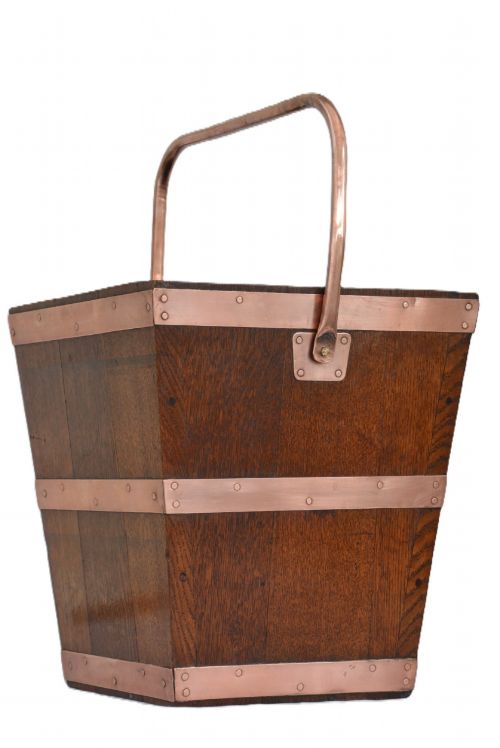
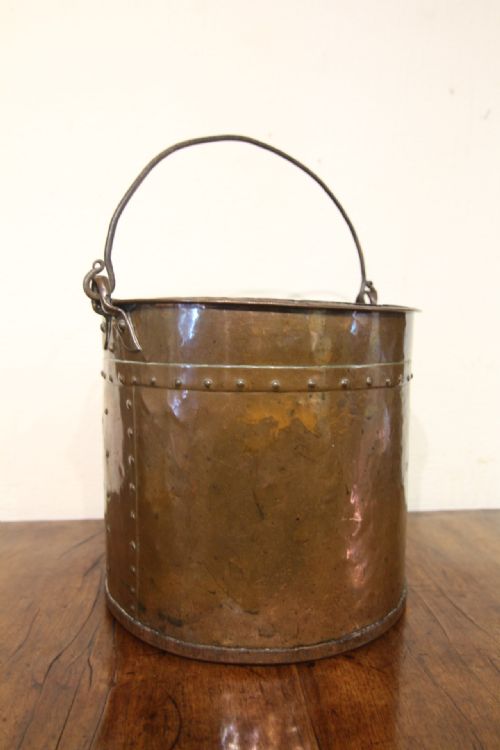
A vintage coal holder serves as a functional fireside container for fuel, appearing primarily in copper, brass, and oak across this selection. These pieces originate from nineteenth-century, Victorian, Edwardian, and early twentieth-century periods.
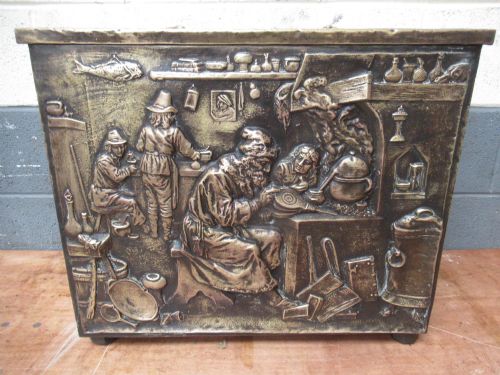
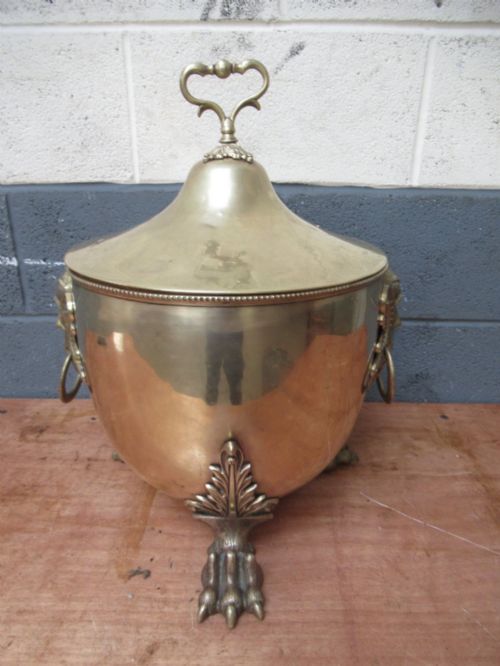
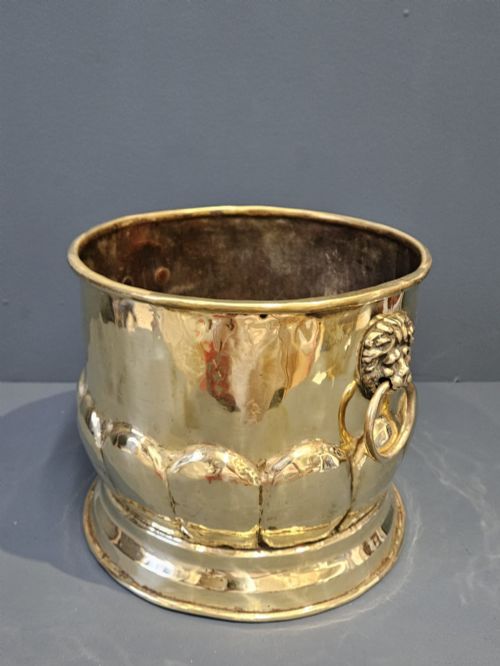
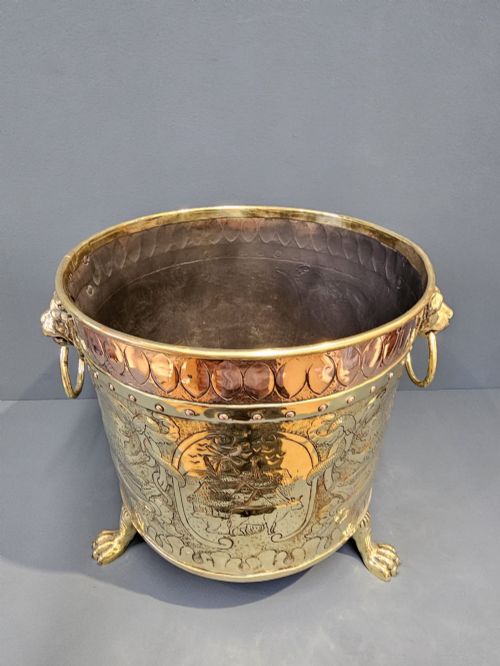
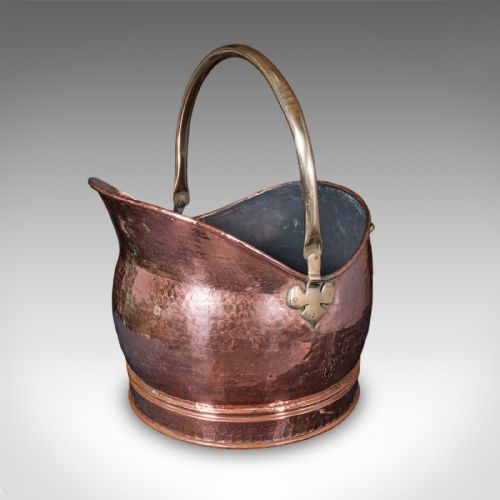
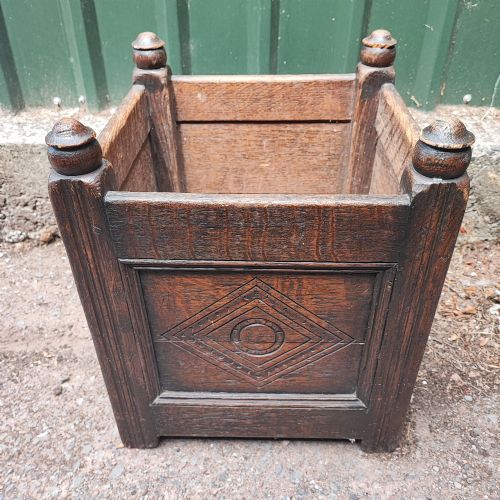
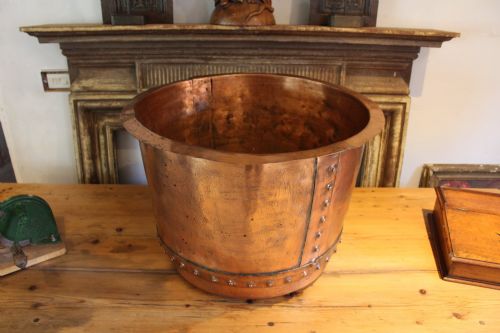
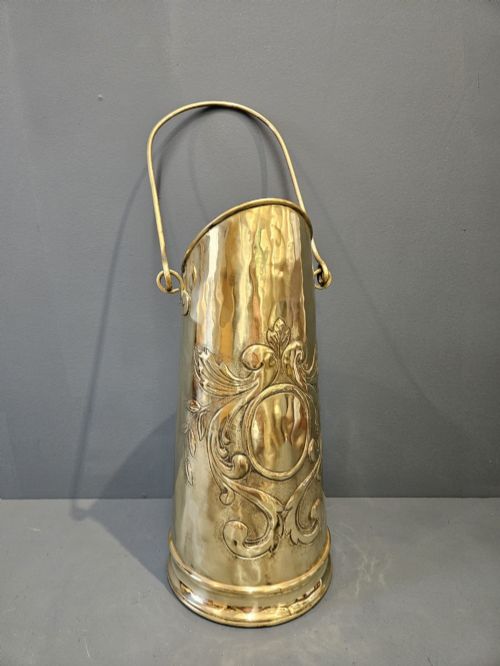
The forms range from traditional helmet scuttles and lidded log bins to open buckets, riveted vessels, and planters. Many items double as log stores or umbrella stands while maintaining their sturdy hearth utility.
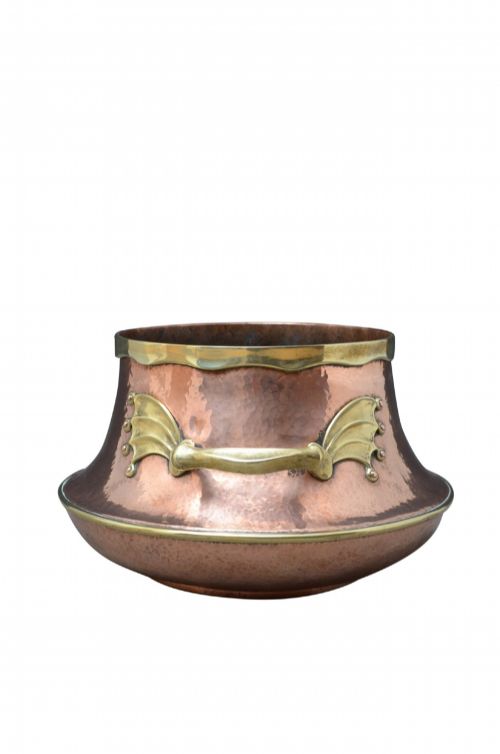
Victorian and Edwardian examples dominate the selection, often displaying embossed brass, hand-finished details, or Art Nouveau styling. Simpler rustic country oak and coopered wooden buckets also provide alternative fireside storage options.
How they were made
Makers utilised sheet copper and brass, joining panels with visible rivets or smooth seams to form durable cylindrical and helmet shapes. Wrought iron and zinc often provided internal structural support or protective liners for heavy daily use.
Wooden varieties relied on traditional cooperage techniques, binding seasoned oak staves with tight metal bands to create sturdy liquid-tight or dry storage buckets. Hand-hammered surface textures and fretwork designs added decorative relief to the finished metal bodies.
What varies in quality
The substance of the metal gauge and the weight of the timber dictate the overall durability and tactile presence of each piece. Thicker copper and solid oak staves indicate higher manufacturing standards suited to heavy domestic service.
Finishing details distinguish standard utilitarian containers from finer decorative works, notably hand-riveted joints, carefully hammered surfaces, and original swing handles with brass mounts. The integrity of internal linings and the tightness of coopered joints further define the standard of execution.
The Vintage Coal Holder Glossary
- Helmet scuttle
- A traditional coal container featuring a shaped flared rim and a hinged handle, designed for easy pouring into a grate. This form became particularly popular during the Victorian period.
- Coopered
- A method of construction where tapered wooden staves are joined side by side and bound with metal hoops, traditionally used for buckets and barrels.
- Jardiniere
- An ornamental pot or receptacle for holding plants and flowers, often adapted from metal coal buckets or log bins in domestic settings.
- Art Nouveau
- A decorative style characterised by flowing organic lines and stylised plant motifs, frequently seen on brass and copper fireside accessories from the late nineteenth and early twentieth centuries.
Vintage Coal Holder: Frequently Asked Questions
How do I clean a copper coal scuttle?
Wash the surface gently with warm soapy water and a soft cloth to remove accumulated dust and soot. Avoid harsh abrasive cleaners that strip the historic patination from the metal.
Dry the vessel thoroughly after washing to prevent water spotting. Leave the natural aged surface intact rather than polishing it to a bright modern shine.
Can these holders store logs instead of coal?
Many of these containers served multiple solid fuel purposes from the beginning and easily accommodate logs. Larger buckets and bins provide ample space for firewood near the hearth.
Check the internal width and depth of the specific vessel before loading large logs. Lined wooden and metal bins protect surrounding floors from bark and debris.
Are these items waterproof for plant use?
Some metal and coopered wooden bins retain original internal liners that hold moisture safely. Others require a separate plastic or ceramic insert to prevent water damage to the historic structure.
Inspect the base of the container for historical leaks or corrosion before using it as a planter. Placing a saucer inside protects the bottom from standing water.
How do I identify a Victorian coal bucket?
Victorian examples often display heavy gauge copper or brass construction with hand-beaten riveted seams. Stylistic cues include embossed floral motifs, swing handles with cast brackets, and traditional helmet shapes.
Examine the construction methods and patination for signs of nineteenth-century manufacture. Oak versions frequently feature traditional coopered staves bound with iron bands.