



Vintage Coal Helmet Bucket
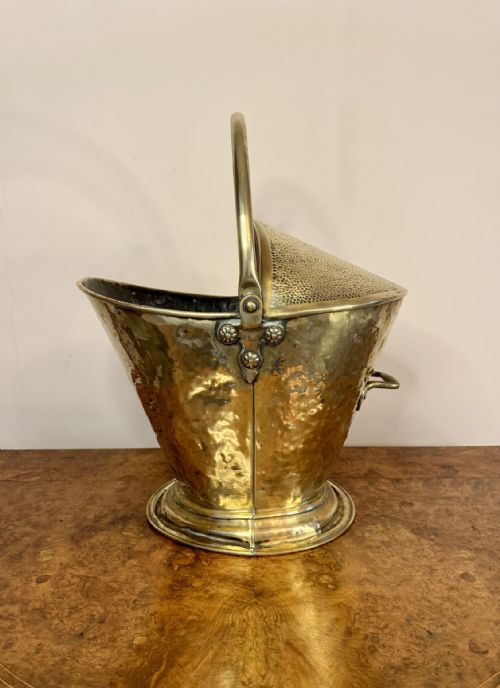
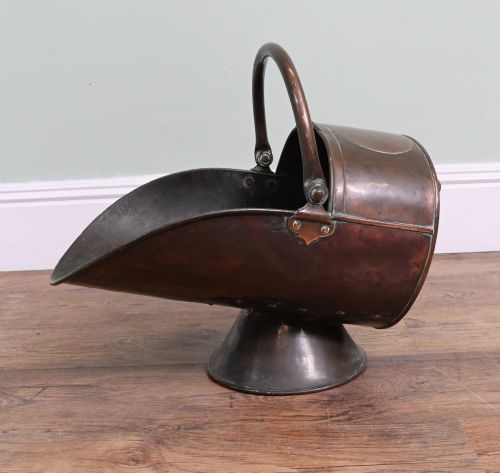
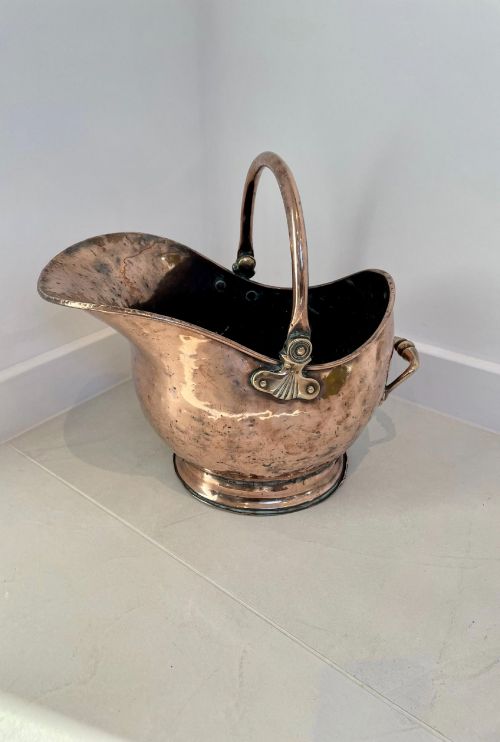
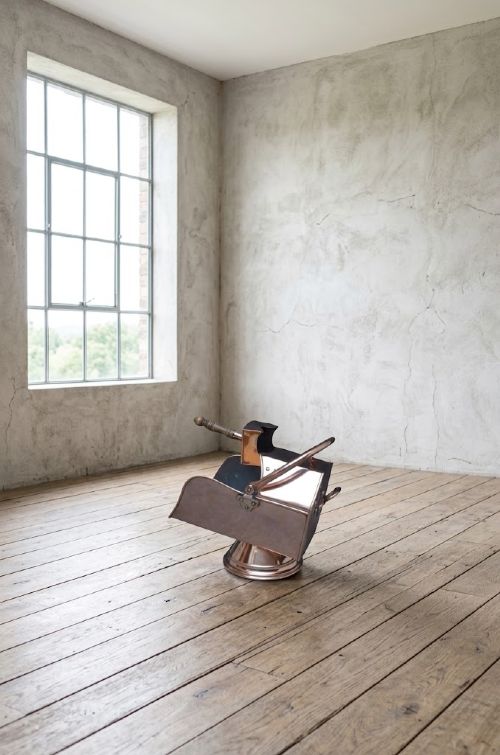
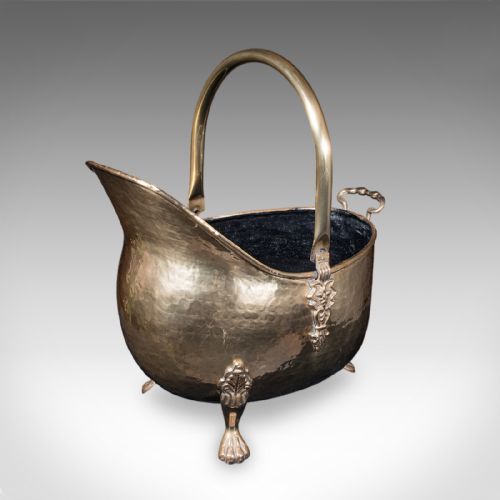
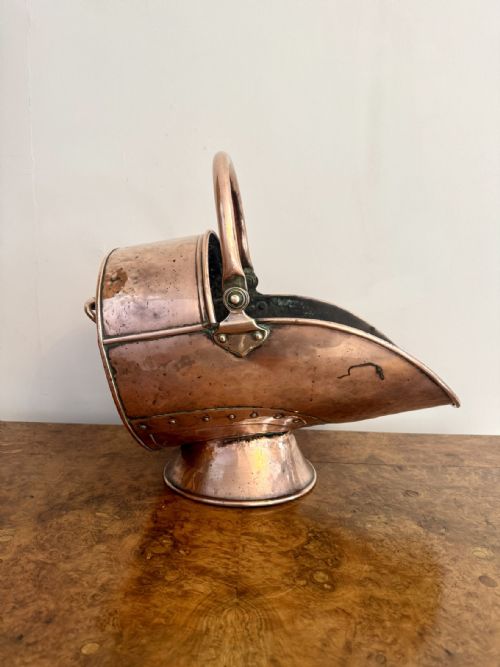
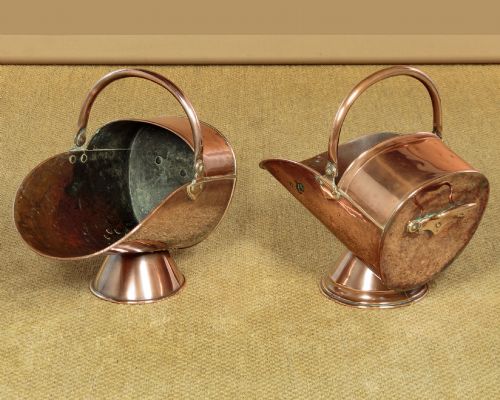
A vintage coal helmet bucket brings functional hearthside metalwork into the room, offering a distinct flared shape designed for carrying fuel.
Vintage Coal Helmet Bucket
When you search for a vintage coal helmet bucket, you encounter fireside vessels shaped with a wide mouth and a sloping brim that resembles a classical helmet. These pieces served a purely practical purpose beside the open hearth, holding the coal or logs needed to keep the fire burning throughout the day.
The versions most common on this page date from the nineteenth century, encompassing Victorian and Edwardian examples alongside earlier George III and Regency pieces. Makers shaped them primarily as coal scuttles and buckets, often pairing them with matching shovels for tending the grate.
How They Were Made
Metalworkers utilised sheet brass and copper as the primary materials, shaping the body by hand or employing hammer-beaten techniques to create textured surfaces. Iron and wrought iron appeared in structural elements and handles, providing the necessary weight and durability for daily fireside use.
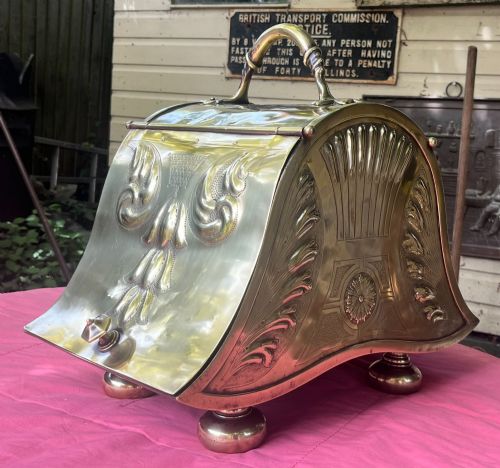
Artisans often combined metals on a single vessel, mounting polished brass handles and rims onto deep copper bodies, and occasionally incorporating ebonised wood for grip insulation. Embossed detailing and applied mounts completed the construction, marking the transition from utilitarian container to decorative hearth accessory.
Vintage Coal Helmet Bucket Retail Price Guide 2026
Typical asking prices for vintage coal helmet bucket among the pieces listed under this phrase on Sellingantiques today, from the lower quarter to the upper quarter. They describe what is for sale here now, not the wider market.
Listings feature materials spanning copper, brass, iron, and ebonised wood.
What Varies in Quality
The gauge of the metal sets the baseline for quality, distinguishing heavy, substantial copper and brass vessels from lighter, thinner alternatives. A well-constructed bucket retains its structural integrity at the handle joints and base, where the daily strain of carrying heavy fuel is concentrated.
Refinement in the hand-beating and embossing demonstrates the skill of the maker, with sharper detailing and balanced proportions separating standard production pieces from finer workshop examples.
Benham and Froud·Henry Loveridge
The Vintage Coal Helmet Bucket Glossary
- Coal Helmet
- A fireside bucket featuring a flared, sloping brim reminiscent of a traditional helmet. This specific silhouette allowed fuel to be poured directly onto the fire with minimal spillage.
- Coal Scuttle
- A portable container designed to hold solid fuel for domestic hearths. These vessels typically incorporate a hinged carrying handle and a fixed handle at the base.
- Regency
- An architectural and decorative style spanning the early nineteenth century. Metalwork from this period leans towards classical restraint and clean geometric lines.
- Ebonised Wood
- Timber treated to resemble ebony, providing a dark, dense contrast against polished brass or copper mounts. It frequently appears on handles and knobs.
Vintage Coal Helmet Bucket: Frequently Asked Questions
How were these buckets actually used?
These vessels sat beside the fireplace to store coal or peat for daily refuelling. The wearer carried fuel from the cellar or coal bunker directly to the hearth.
The sloping helmet mouth directed the fuel cleanly into the grate, while the integrated shovel handled smaller pieces and embers.
How do I clean polished brass and copper?
Maintenance depends on the finish you prefer to keep on the metal. Traditional care involves gentle cleaning agents that remove dirt without stripping the historic character.
Avoid abrasive compounds that can damage hand-beaten textures or remove aged patination built up over decades of use.
Can I use these for logs instead of coal?
Many of these metal buckets accommodate smaller logs, kindling, or peat briquettes just as easily as coal. Their robust construction handles wood storage safely beside the hearth.
Ensure the interior remains dry to prevent moisture from settling against the base seams over time.
How do I tell Victorian pieces from Georgian ones?
Georgian and George III pieces generally display simpler, heavier proportions with restrained decorative elements. They rely on the natural weight and finish of the metal rather than elaborate surface stamping.
Victorian examples often introduce more varied silhouettes, including embossed detailing and mixed brass and copper combinations influenced by later design movements.