

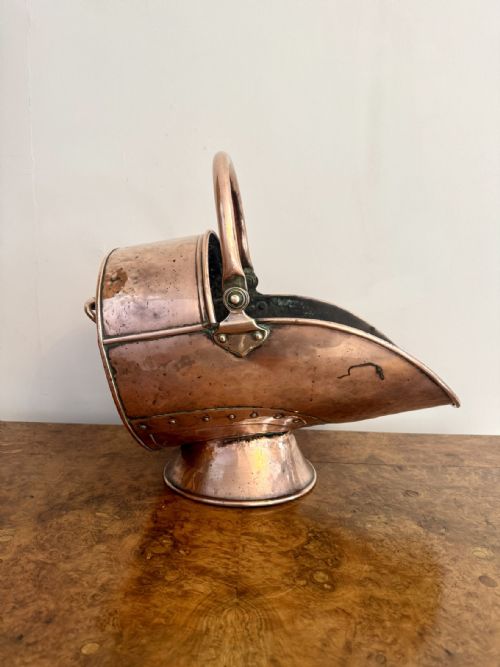


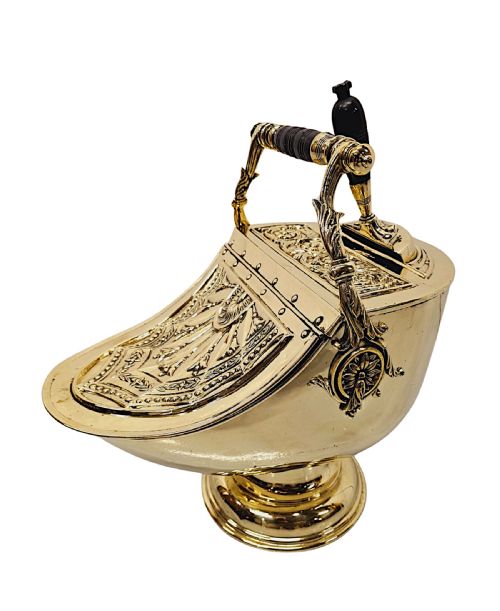
Pedestal Brass Scuttle
These pedestal brass scuttle designs are practical hearth accessories that bring polished metallic warmth to a fireplace.
Pedestal Brass Scuttle
A pedestal brass scuttle is a fireside accessory designed for holding and transporting coal to an open fire. Buyers searching for this phrase encounter various forms intended for everyday domestic use alongside the hearth.
The pieces listed on this page predominantly date from the nineteenth century, including Victorian, Regency, and George III periods. Common forms range from classic helmet shapes to lidded buckets, coal hods, and purdoniums.
How they were made
These items are constructed primarily from sheet brass and copper, shaped by hand or mechanical means to form the bodies of the scuttles and buckets. Metalworkers joined seams securely to handle the heavy weight of fuel.
Makers integrated various secondary materials, such as wood handles and ebonised details, to provide contrast and insulation against heat. Polished finishes highlight the warm metallic tones characteristic of the period.
Pedestal Brass Scuttle Retail Price Guide 2026
Typical asking prices for pedestal brass scuttle among the pieces listed under this phrase on Sellingantiques today, from the lower quarter to the upper quarter. They describe what is for sale here now, not the wider market.
Listings span the nineteenth century, featuring Victorian, Regency, and George III periods alongside Edwardian examples.
What varies in quality
Quality in these pieces depends on the weight and thickness of the brass or copper used in the body, as well as the rigidity of the pedestal base. Heavier gauge metal ensures greater durability and stability during daily use.
Refinement in the construction of handles, lids, and decorative mounts distinguishes finer examples. Maker attributions, such as work by Benham and Froud, also elevate the standing of a piece within the range.
Benham and Froud
The Pedestal Brass Scuttle Glossary
- Coal scuttle
- A container specifically designed to hold coal for a domestic fireplace. These vessels often feature a wide mouth and a carrying handle for ease of pouring.
- Helmet scuttle
- A container shaped with a flared rim resembling a traditional helmet, designed to direct coal smoothly into the hearth. This form is common among nineteenth-century examples.
- Coal hod
- A deep metal bucket used for storing and carrying solid fuel. They are typically heavier in construction to support bulk quantities of coal.
- Purdonium
- A box-style coal container, often fitted with a sloping front and a shovel compartment. These Victorian variants kept fuel neatly enclosed by the fireside.
- Pedestal base
- A raised foot or stand supporting the main body of the vessel. This elevates the metal container off the hearth floor.
Pedestal Brass Scuttle: Frequently Asked Questions
What is a pedestal brass scuttle used for?
These vessels were designed to store and transport coal to an open fireplace efficiently. They sat beside the hearth as both a practical container and a decorative metalware item.
Today, they function well in traditional living spaces to hold logs, kindling, or magazines, continuing their role as useful domestic objects.
How do I clean a brass coal scuttle?
Maintenance involves removing dust with a soft cloth and preserving the metal surface without harsh abrasives. Polishing should be done gently to retain the historic character of the brass and copper.
Over-cleaning can strip away the aged patina that collectors value on nineteenth-century fireside accessories.
How can I tell a Victorian scuttle from a George III one?
George III examples generally date around eighteen hundred and display earlier Georgian design proportions in the brass and copper work. Victorian pieces from the mid to late nineteenth century often incorporate heavier handles and distinct manufacturing stamps.
Examining the construction methods and materials helps identify the specific manufacturing period.