




Vintage Cluster Brooch
A vintage cluster brooch brings together glittering diamonds, coloured stones and precious metals from periods ranging through the Georgian, Victorian, Edwardian and Art Deco eras.
Vintage Cluster Brooch
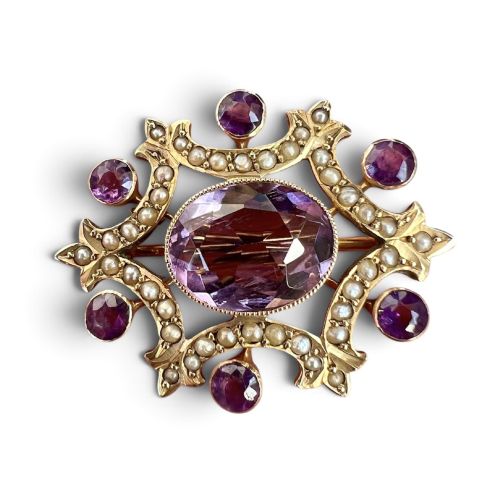
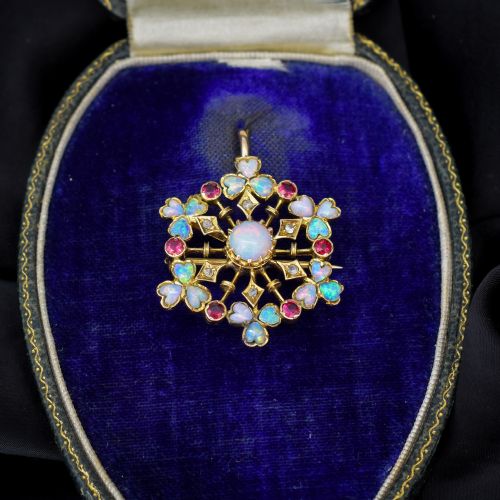
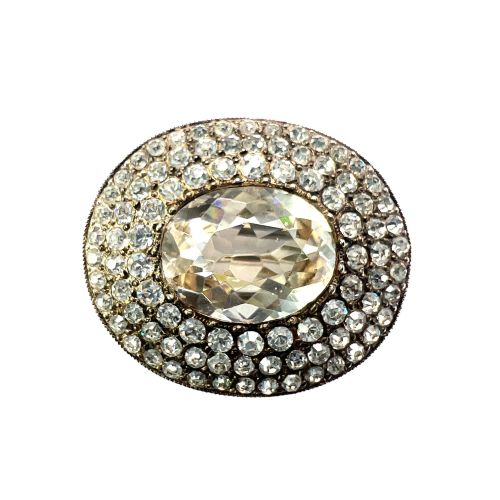
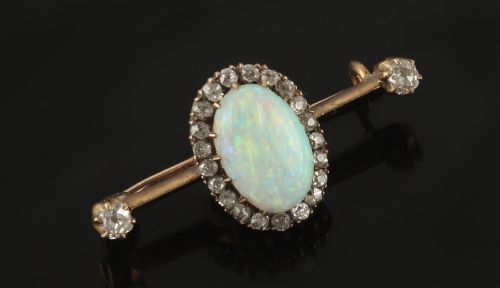
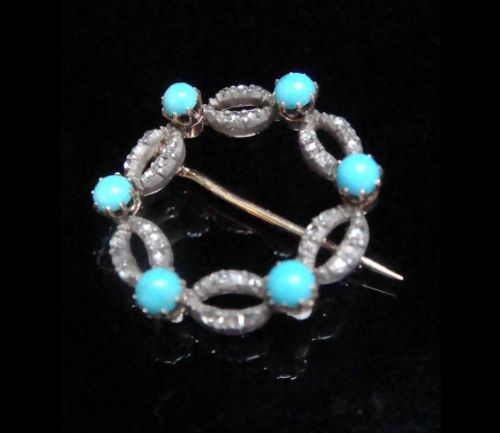
A vintage cluster brooch groups central gemstones, such as diamonds, sapphires, rubies, amethysts, opals, turquoise or paste, tightly surrounded by smaller accent stones to form a focused focal point. The listings show forms ranging from flower baskets and star motifs to triple leaves and geometric Art Deco shapes.
Buyers looking for a vintage cluster brooch will encounter pieces spanning the 19th century through the mid-20th century, with notable representations from Edwardian, Victorian and 1920s periods. These ornaments often double as pendants, offering versatility in how they are worn.
Makers and designers of these items utilised various settings, mounting stones in combinations of gold, silver, platinum and white gold. The visual impact relies on the density of the stones and the contrast between the central gemstone and its surrounding border.
Materials and construction methods
Craftsmen built these jewels using combinations of precious metals, frequently pairing yellow gold, rose gold or platinum with silver settings to enhance the brilliance of diamonds. Stones were secured using claw settings, bezel mounts or foil backs, particularly in paste and Georgian pieces.
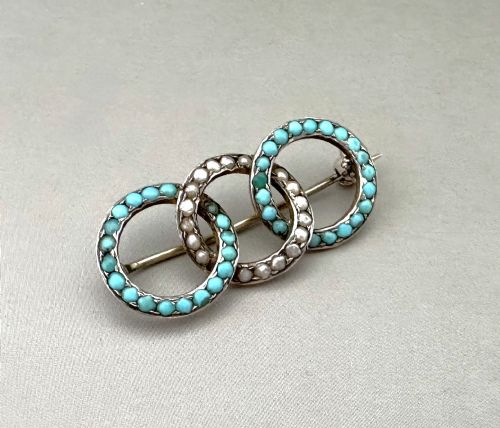
The construction of a cluster brooch often involved multi-tiered frameworks to give depth to flower petals, stars and geometric arrangements. Seed pearls and turquoise beads were threaded or pegged onto backing plates, whilst larger sapphires, rubies and diamonds were precision-set by hand.
Listings feature yellow gold, white gold, platinum and silver paired with diamonds, amethysts, seed pearls and sapphires.
Quality variations in cluster brooches
The distinction between standard examples and superior pieces rests on the uniformity and origin of the set gemstones, such as unheated sapphires or natural pearls. Master goldsmiths employed finer detailing in the metalwork, ensuring clean lines in platinum or white gold mountings.
Structural integrity and original condition separate well-preserved items from heavily altered examples. Higher quality brooches retain their original pin stems, secure catches and matched stones without replacement pastes or modern repairs.
Christian Dior·Mikimoto·Beto
The Vintage Cluster Brooch Glossary
- Cluster brooch
- An ornament featuring a central gemstone encircled by a tight ring of smaller accent stones. This arrangement maximises the play of light across the piece.
- Paste
- Faceted glass cut and polished to imitate gemstones such as diamonds, emeralds or amethysts. It was widely utilised in Georgian and Victorian jewellery.
- Seed pearl
- A very small, naturally occurring pearl, often drilled and threaded in groups. Edwardian jewellers favoured them for delicate floral and geometric borders.
- Platinum
- A dense, durable white metal introduced widely in fine jewellery fabrication during the Edwardian and Art Deco eras. It allowed for extremely fine, secure stone settings.
- Unheated sapphire
- A natural sapphire that has undergone no thermal enhancement to improve its colour or clarity. These stones command high regard amongst collectors.
Vintage Cluster Brooch: Frequently Asked Questions
How do I wear a cluster brooch?
Pin the brooch securely to heavy fabrics such as lapels, wool coats, or structured scarves to support the weight of the metal and stones. Many designs include a hidden loop on the reverse, allowing the piece to be suspended from a chain as a pendant.
Ensure the pin stem is locked correctly into the safety clasp before wearing. Positioning the jewel slightly higher on the shoulder draws the eye upward and prevents the fabric from sagging.
How do I date an antique brooch?
Examine the materials and metal combinations, as silver-topped gold settings typically point to the Victorian and Edwardian eras. Platinum and geometric symmetry often indicate an Art Deco origin from the 1920s or 1930s.
Inspect the reverse construction and pin mechanism for clues about manufacturing techniques. Hand-carved mounts and natural seed pearls generally suggest older 19th-century craftsmanship.
Are these brooches suitable for daily use?
Vintage cluster brooches can be worn regularly provided they are handled with care and checked for loose stones. Sturdy metals like 18ct gold and platinum endure daily wear better than delicate silver or paste pieces from earlier centuries.
Remove jewellery before engaging in physical activities or housework to protect delicate gemstones like opals, pearls and turquoise from impact and chemicals.