



Vintage Circular Wall Glass
These vintage circular wall glass pieces bring light and reflection to a room, ranging from convex Regency frames to geometric Art Deco designs.
Vintage Circular Wall Glass
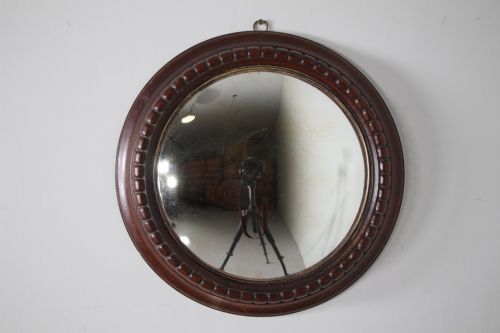
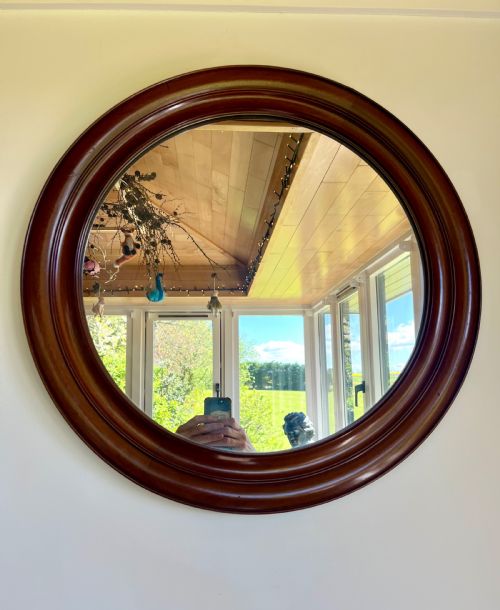
The most common form on this page is the circular wall mirror, often finished in gilt, mahogany, or oak frames. Pieces range from small convex plates to large decorative items incorporating etched glass and foxed plates.
How they were made
Frames utilise traditional materials including giltwood, gesso, brass, mahogany, walnut, and oak shaped into circular forms. Glass components comprise mirror glass, silvered glass, and convex plates designed to project internal reflections across a space.
Makers employed specialist techniques such as silvering, etching, and ebonising to finish the wood and metal surrounds. Dial clocks and aneroid barometers integrate precision instrumentation into circular timber or brass housings.
Sorcerer mirrors were once believed to ward off evil spirits by gathering negative energy into their curved glass depths.
What varies in quality
The calibre of a circular wall glass piece depends upon the crispness of the original gesso moulding and the preservation of the mercury or silvered mirror plate. Superior examples retain their original gilding and timber patination without heavy restoration.
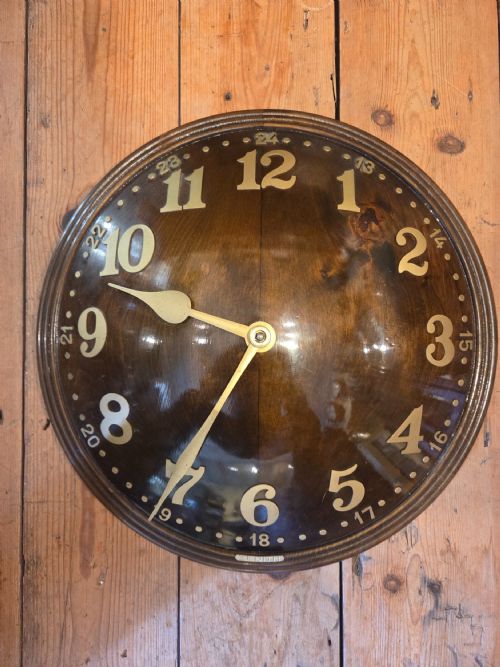
Internal mechanisms in barometers and clock dials demonstrate differing degrees of craftsmanship, with signed London makers and specialised 24-hour dials commanding attention. Frame construction integrity and original glass retention dictate overall standing.
John Wilson·Dollond of London·Zenith
The Vintage Circular Wall Glass Glossary
- Convex mirror
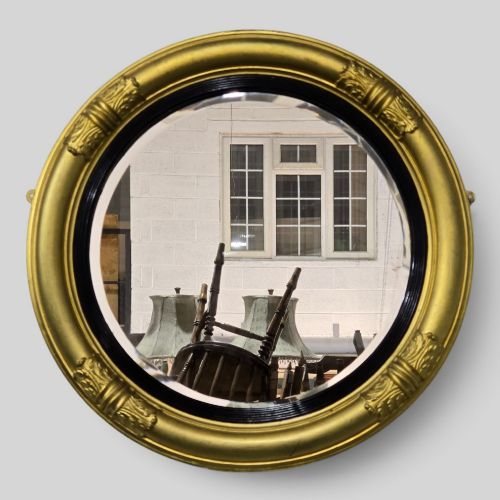
- A round mirror with a bulging spherical glass surface that reflects a wide-angle view of the room. These are frequently housed in gilt frames with sphere-adorned bezels.
- Aneroid barometer
- A scientific instrument used for measuring atmospheric pressure without liquid, typically mounted within a circular wood or brass wall case. Victorian examples often feature skeletonised or oak designs.
- Foxed mirror plate
- Age-related deterioration of the silvered backing behind the glass, creating characteristic dark spots and mottled patches. This indicates genuine antique age.
- Giltwood
- Timber carved and coated with a thin layer of gold leaf or gesso preparation. It is characteristic of Regency and Victorian frame decoration.
- Dial clock
- A wall-mounted timepiece featuring a round face, often enclosed behind convex glass. These include mid-century and nineteenth-century variations.
Vintage Circular Wall Glass: Frequently Asked Questions
How do I hang a heavy convex mirror safely?
Heavy circular wall mirrors require secure wall fixings suited to the weight of the timber and glass assembly. Ensure the bracket engages directly with wall studs or utilises appropriate structural anchors.
Position the piece at eye level where the convex reflection can effectively capture light from surrounding windows and lamps.
What is a sorcerer mirror?
A sorcerer mirror is an alternative name for a convex mirror, traditionally associated with nineteenth-century interior displays. The curved glass concentrates light and creates a miniature panoramic view of the interior.
Collectors prize these for their distinct optical distortion and decorative framing styles.
How do I date a circular wall glass piece?
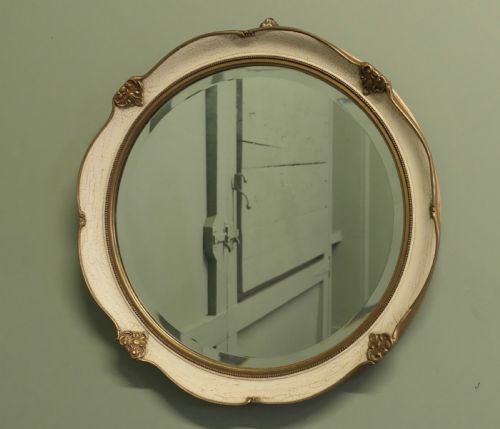
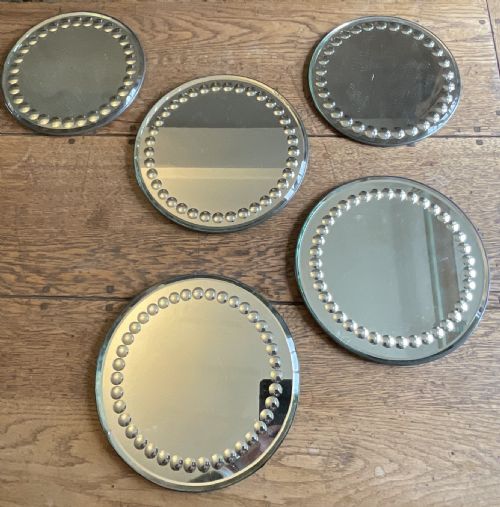
Dating relies upon examining the construction methods of the frame, the backing boards, and the characteristics of the glass plate. Regency pieces often exhibit distinct ball-bearing gilt bezels, while Art Deco items feature geometric frameless designs or cream and gilt accents.
Clock and barometer movements also provide chronological clues through their mechanical signatures and maker inscriptions.
Can barometer and clock mechanisms be repaired?
Many historical barometer and clock movements can be serviced by specialists familiar with antique aneroid systems. Some pieces have undergone conversions, such as battery adaptations in mid-century clock mechanisms.
Consulting a horologist helps preserve the original components where possible during maintenance.
How do I clean antique mirror glass?
Cleaning requires a soft dry cloth to remove dust from the glass and frame surface without disturbing fragile silvering or foxing. Avoid harsh chemical sprays that might seep behind the edges of the glass plate.
Giltwood frames demand particular care to prevent loss of the original gold leaf finish.