




Convex Style Circular Mirror
A convex style circular mirror distorts the room with clever curvature, catching light in a deep frame.
Convex Style Circular Mirror
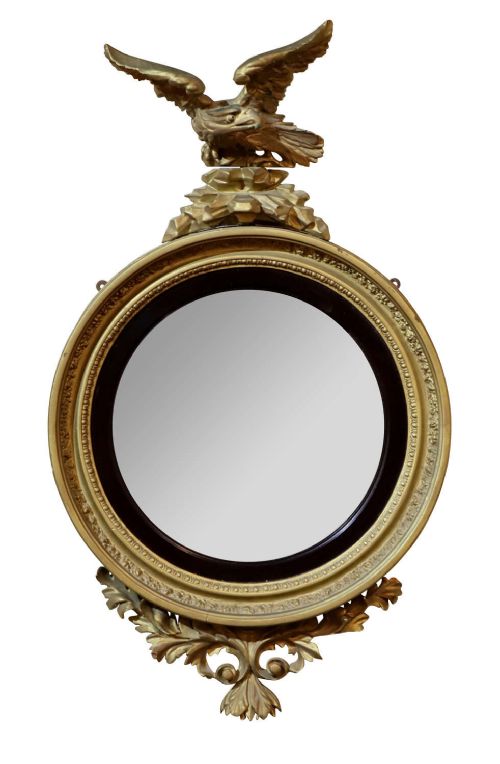
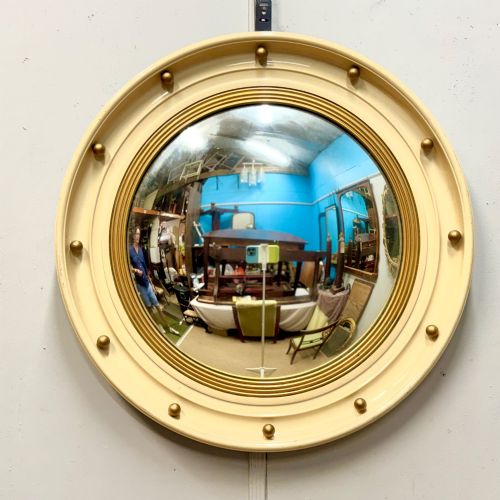
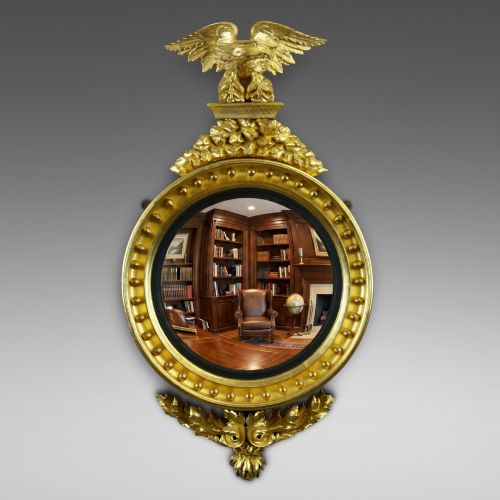
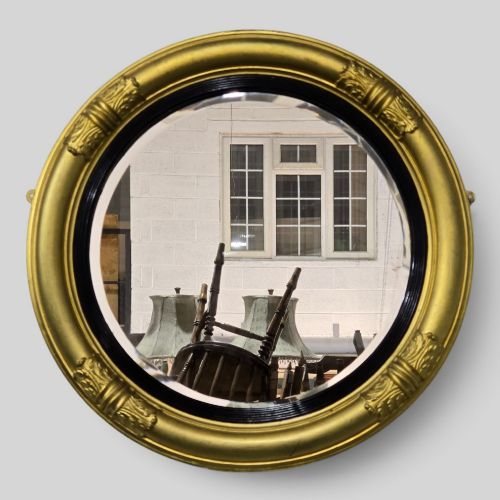
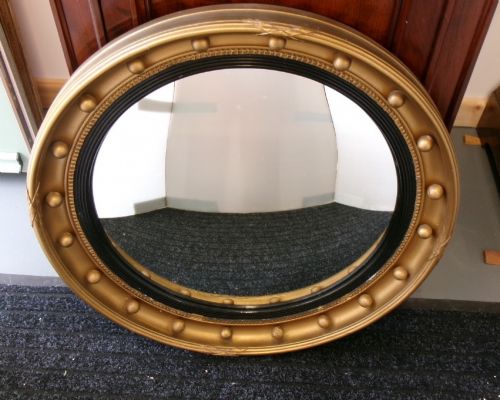
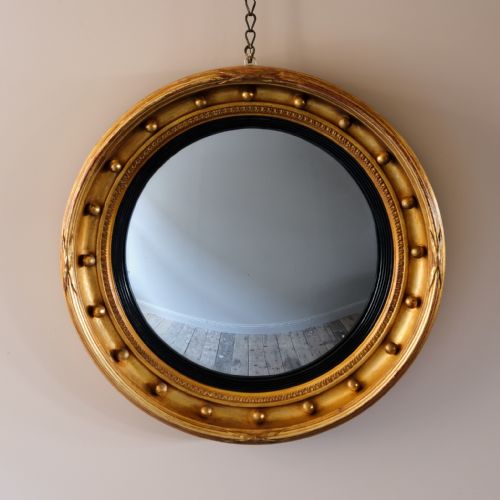
A convex style circular mirror gathers the whole room into a single curved glass disc, offering a wide, fish-eye perspective that traditional flat glass cannot match. These pieces appear most frequently in 19th Century, Victorian, and Regency forms, anchored by circular wooden frames.
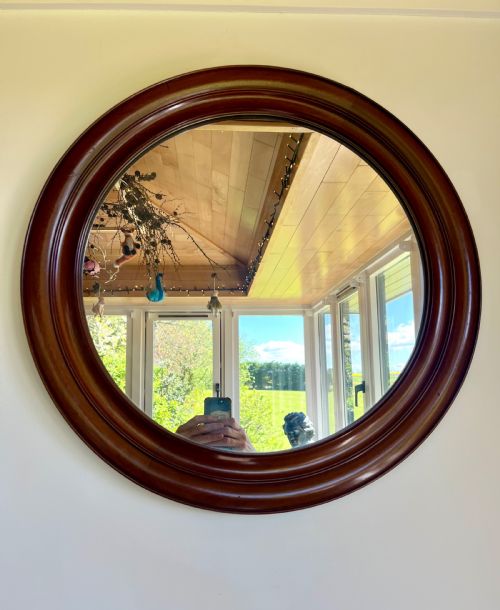
The assortment includes giltwood frames topped with carved eagles, ebonised surrounds, and straightforward mahogany or painted wood bodies. Buyers regularly encounter the classic butler's mirror design alongside heavier Victorian porthole variants.
Originating as practical instruments for servants to monitor large dining rooms from a single vantage point, these circular wall mirrors quickly transitioned into decorative statements. Today, they remain chosen primarily for their ability to bounce natural light into dark corners.
How they were made
Makers shaped heavy timber or softwoods into tight circular rings, frequently building up decorative mouldings with gesso before applying thin layers of gold leaf. Giltwood and gilt surfaces dominate the period output, requiring steady hands to lay metal leaf over intricate carved details.
Alternative examples utilise solid mahogany, ebonised wood, or painted finishes, paired with thick blown mirror glass that possesses a distinct curvature. The glass itself is heavy and often shows minor historical imperfections from early manufacturing methods.
What varies in quality
The crispness of the frame carving dictates the visual success of the piece, particularly where crests like eagles or elaborate crestings meet the circular surround. Finer examples retain sharp, deep relief work in the giltwood, whereas simpler variations rely on plain turned wood or flatter mouldings.
The integrity of the reflective glass surface and its backing plate sets the better pieces apart from standard alternatives. Original convex glass with minimal foxing holds greater appeal than modern replacements fitted into antique frames.
The Convex Style Circular Mirror Glossary
- Convex glass
- Curved outward like the exterior of a sphere. This specific shape shrinks the reflected image to capture a panoramic view of the entire interior space.
- Giltwood
- Timber coated with a thin layer of gold leaf over a prepared gesso base. It creates a bright, reflective surface that catches flickering candle or daylight.
- Ebonised wood
- Timber treated with a chemical stain or black finish to imitate expensive ebony. It provides a stark, dark contrast against the shining mirror glass.
- Porthole mirror
- A heavy, round wall glass resembling a ship's window. These typically feature simple wooden frames without ornate crestings.
Convex Style Circular Mirror: Frequently Asked Questions
Why is it called a butler's mirror?
Historical servants used these wide-angle glasses in dining rooms to keep watch over multiple tables and guests simultaneously without turning around.
The curved reflection allowed staff to anticipate service needs across the room from a single stationary position.
Are these mirrors actually from the Regency period?
The selection includes genuine Regency items alongside later 19th century and early 20th century revivals that imitate the earlier aesthetic.
Examining the construction methods, backing boards, and wear on the gilt surface helps distinguish original Regency pieces from later revivals.
How do I clean convex glass?
Wipe the curved surface gently with a soft, lint-free cloth and mild cleaning solution applied to the cloth rather than directly onto the glass.
Avoid pressing too hard against the centre of the glass, as older plates can be fragile within their frames.