


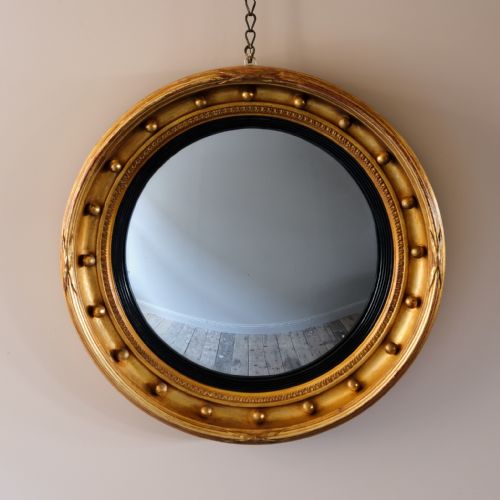


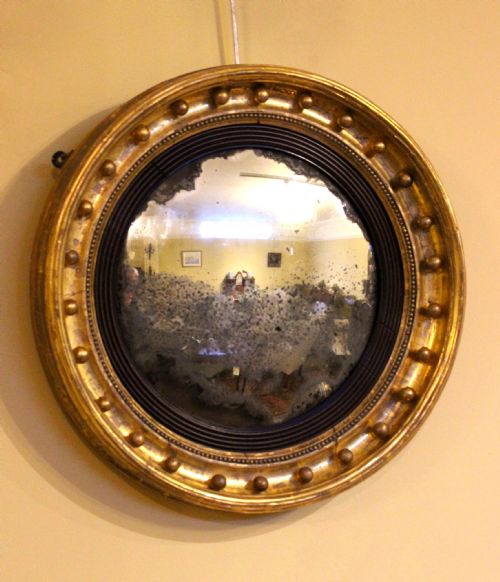

Georgian Style Circular Mirror
A georgian style circular mirror brings focused light and deep perspective into a room, drawing the eye with its bold, curved frame.
Georgian Style Circular Mirror
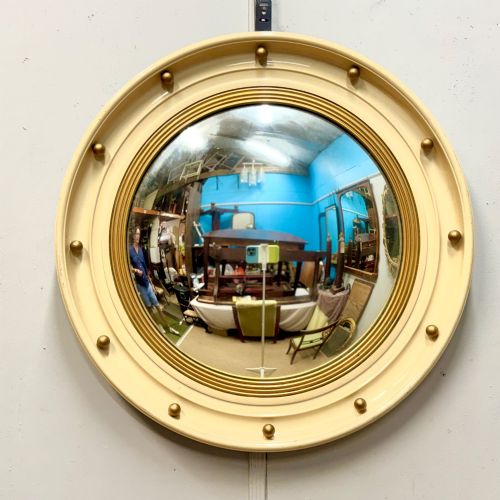
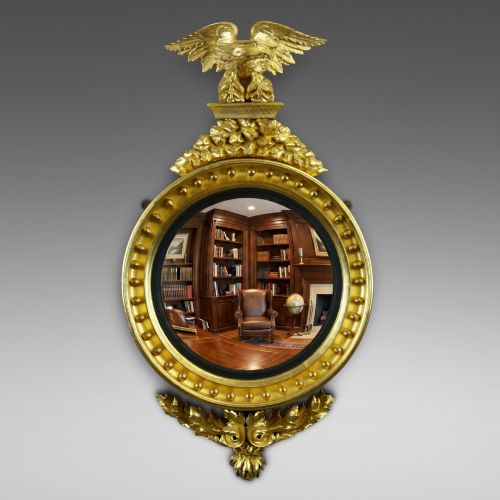
A georgian style circular mirror takes many forms across the selection, most frequently appearing as a convex wall mirror with a round frame designed to expand the visual field of an interior space. These pieces draw heavily on Regency designs and nineteenth-century interpretations, offering dramatic reflection through curved glass.
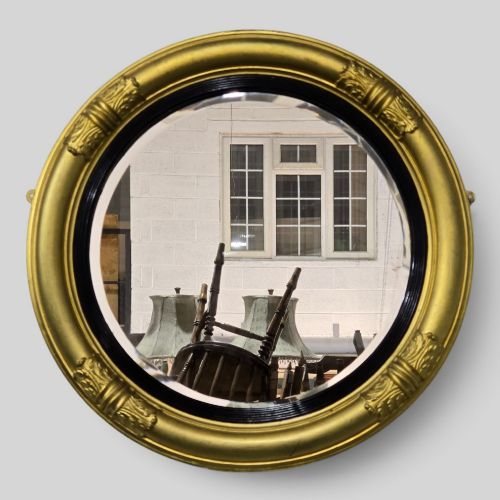
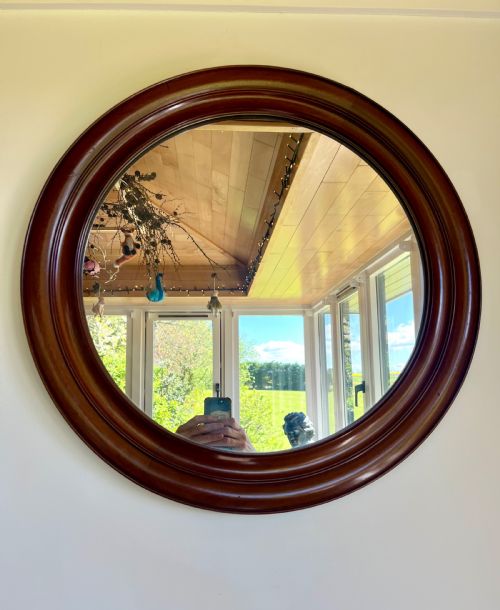
The objects seen here span several periods, including genuine nineteenth-century pieces alongside later revivals from nineteen hundred and the early twentieth century. Buyers will encounter robust frames built from mahogany, ebonised wood, and painted wood, as well as classic giltwood finishes.
Wall mirrors dominate the selection, frequently described in historical terms as butler's mirrors or convex wall mirrors. Their circular format ranges from modest domestic pieces to large focal points suitable for principal reception rooms.
Materials and construction methods
Makers shaped these frames from solid timbers such as mahogany and ebonised wood, often applying gilt layers or composition ornaments to create elaborate surfaces. Painted wood finishes also appear, providing alternative decorative textures to the polished wood.
The distinctive curved glass relies on specialised blowing and forming techniques to achieve the convex distortion that defines the style. Frames combine traditional joinery with moulded composition details to hold the heavy curved glass securely in place.
Butler's mirrors were historically hung low so staff could keep an eye on misbehaving guests without staring.
Distinguishing quality across pieces
Quality reveals itself in the crispness of the frame moulding and the depth of the gilding or timber finish. Superior examples display fine hand-carving or well-applied composition ornament that remains sharp and balanced around the entire circumference.
The clarity and integrity of the mirrored glass contribute significantly to the overall merit of the piece. Older convex glass plates show subtle distortions and historical character that differentiate them from later replacements.
The Georgian Style Circular Mirror Glossary
- Convex glass
- Curved glass that bulges outward, designed to capture a wide-angle reflection of the room in a compact circular format.
- Giltwood
- Timber coated with a thin layer of gold leaf or gilt finish, commonly used on nineteenth-century mirror frames to catch the light.
- Butler's mirror
- A traditional name for a round convex mirror often hung to give servants a wide view of dining room activities.
- Ebonised wood
- Timber treated with a dark stain or finish to imitate expensive ebony, frequently paired with gilt slip details on circular frames.
- Composition
- A moulded mixture of whiting, resin, and glue pressed into decorative ornaments for mirror frames before hardening.
Georgian Style Circular Mirror: Frequently Asked Questions
Where should I hang a circular mirror?
These mirrors suit principal living spaces, hallways, or dining rooms where their wide-angle reflection can open up the surrounding area. Hang them at eye level to maximise their visual impact and practical utility.
Ensure the wall fixings are robust, as the combination of solid wood frames and thick glass creates considerable weight that requires secure anchoring.
How do I identify a nineteenth-century mirror?
Examine the construction methods visible on the reverse of the frame, where older fixings, aged timber, and hand-cut screws often indicate nineteenth-century origins. The quality of the gilding and the characteristics of the glass plate also provide reliable clues to the period.
Consult the listed date and material details to compare how different eras utilised mahogany, ebonised wood, and composition mouldings.
What is the difference between Regency and revival pieces?
Period Regency pieces date from the early nineteenth century and carry the authentic wear, construction traits, and materials of that specific era. Revival pieces capture the same aesthetic but were produced later, around nineteen hundred or during the early twentieth century.
Both versions offer strong decorative appeal, though collectors often distinguish them by the ageing of the internal components and frame finishes.
Why do these mirrors have curved glass?
The curved surface creates a fish-eye effect that reflects a broad panoramic view of an entire room within a relatively small diameter. This optical property made them popular in historic interiors for monitoring activity across large spaces.
Today, this characteristic distortion remains the defining feature that sets convex mirrors apart from standard flat wall mirrors.