
Vintage Circular Clock
A vintage circular clock brings architectural discipline and straightforward utility to a wall, combining legible Roman or Arabic dials with sturdy timber or metal housings.
Vintage Circular Clock
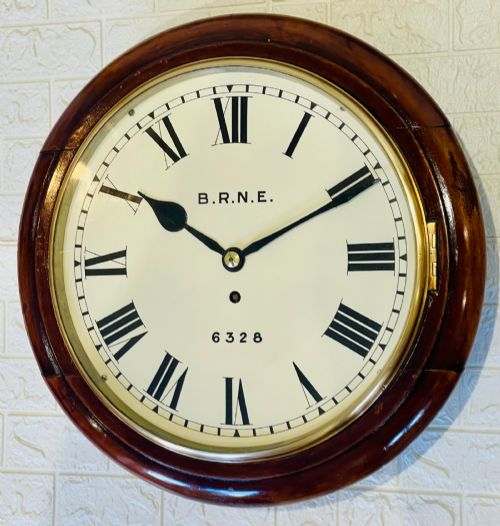
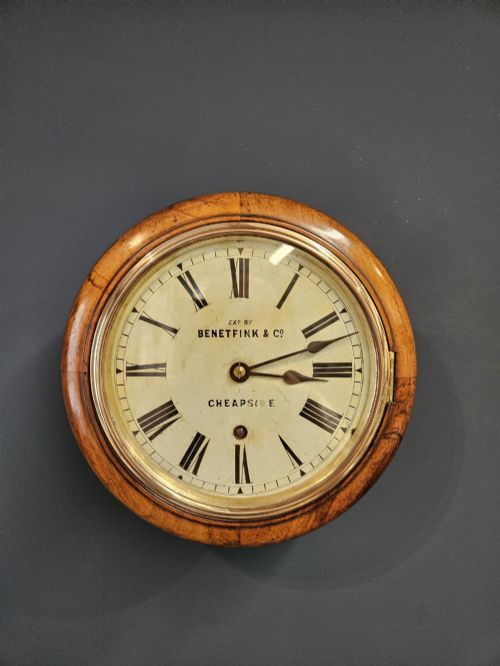
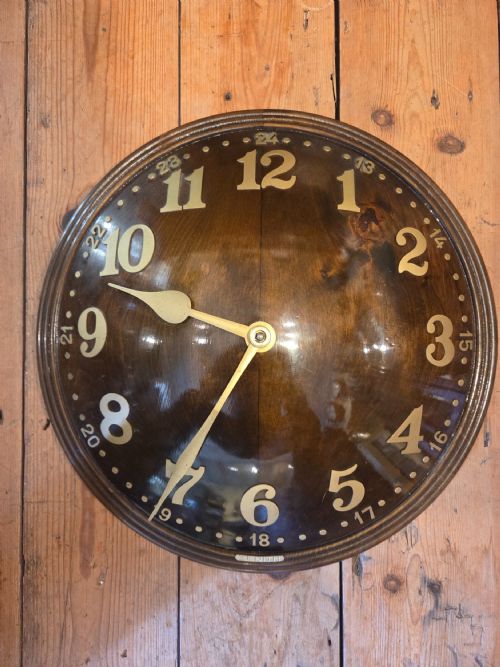
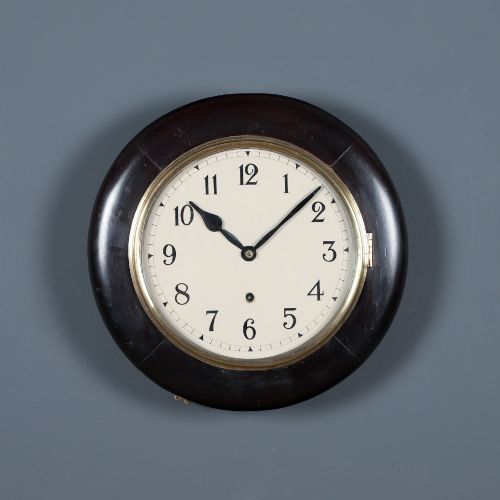
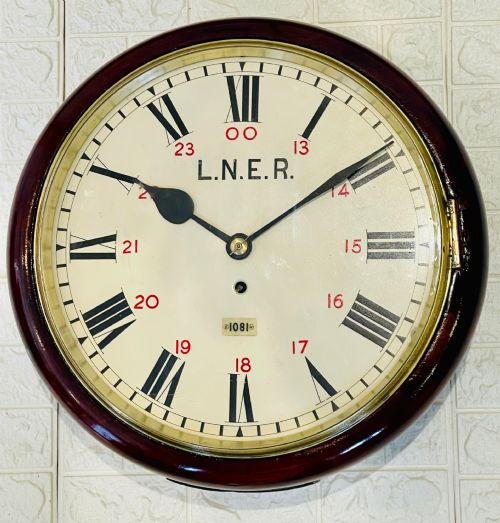
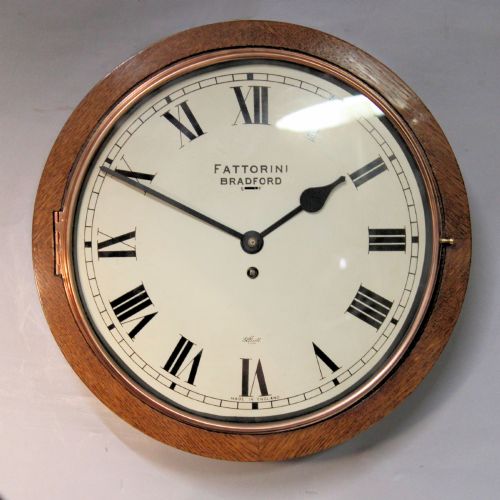
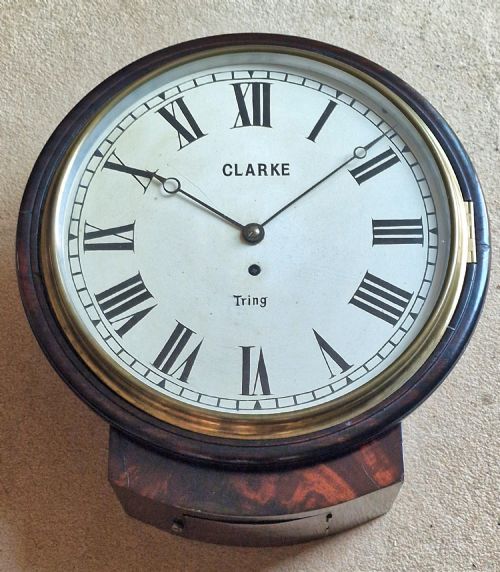
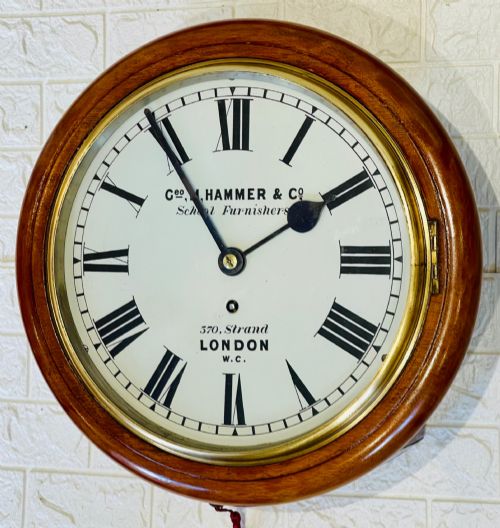
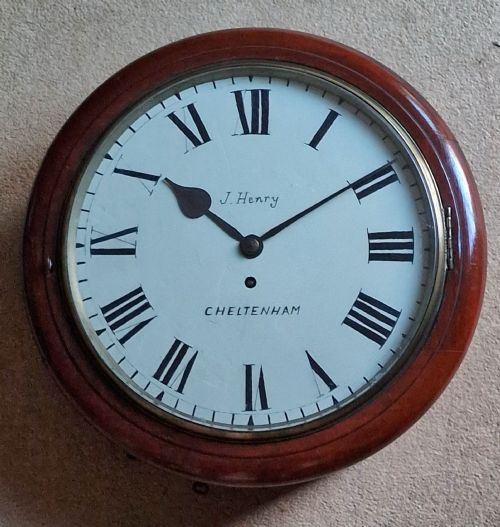
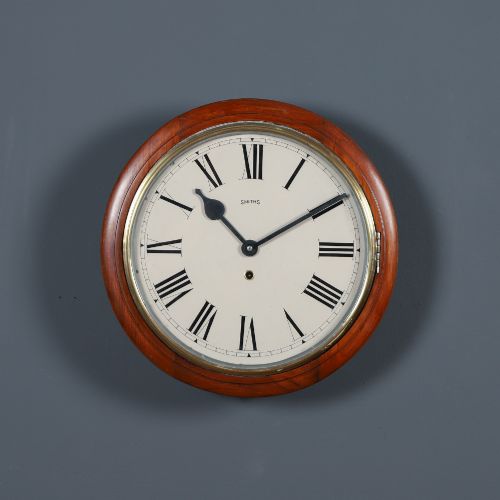
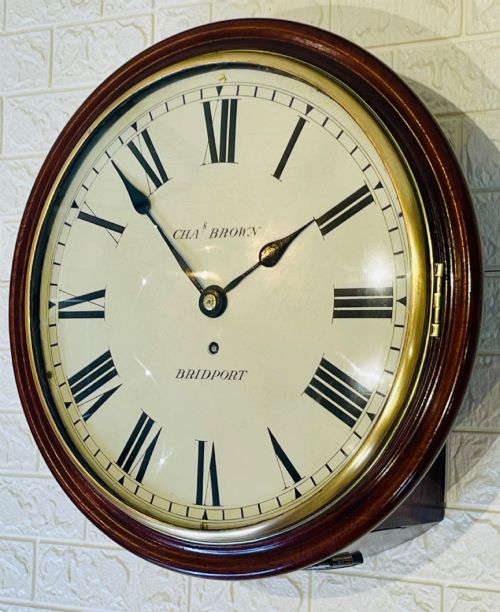
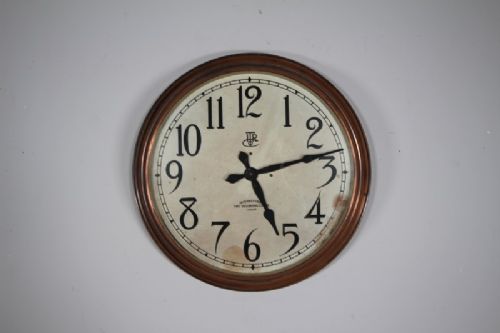
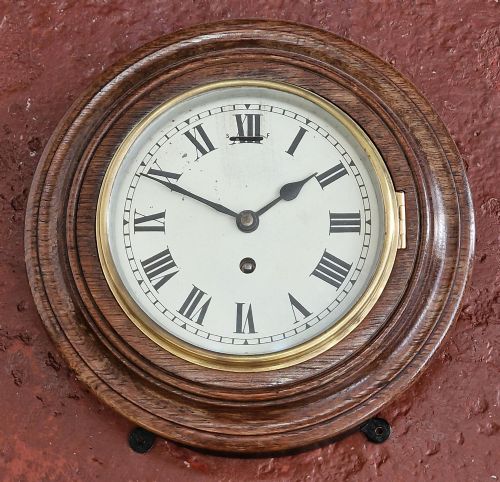
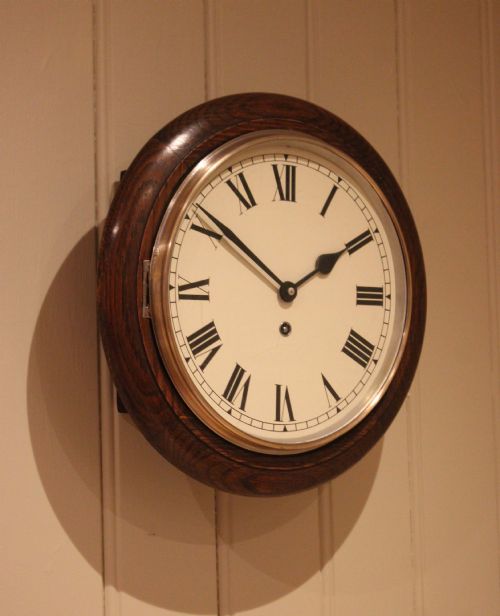
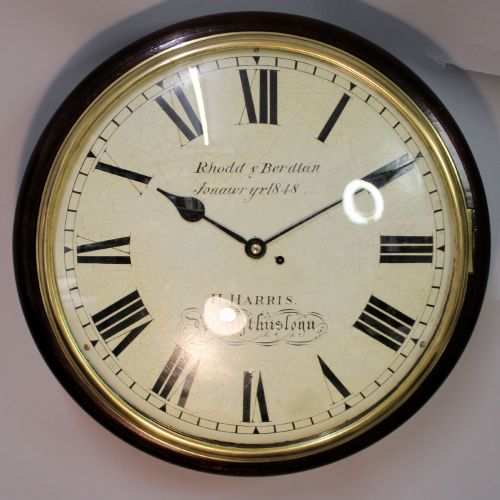
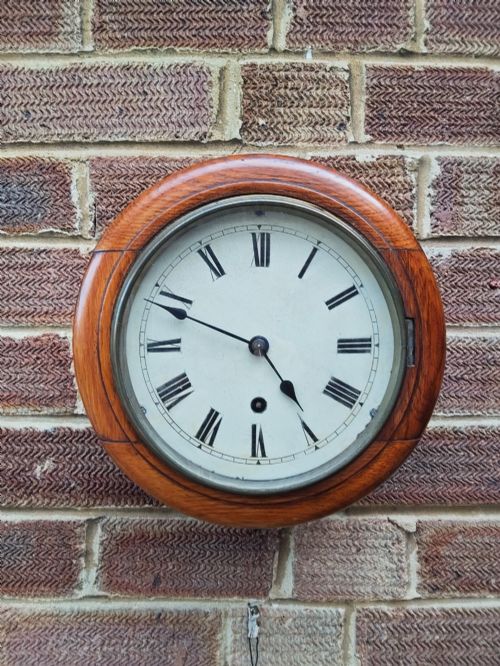
A vintage circular clock encompasses round-faced timepieces intended primarily for wall mounting or mantel placement, drawn from periods spanning the Georgian era through the mid-twentieth century. Buyers seeking this phrase encounter round dial formats in numerous guises, from utilitarian railway and school clocks to domestic fusee models housed in timber cases.
The selections available range from modest six-inch dial variants to substantial factory and station timepieces exceeding twenty inches in diameter. Oak, mahogany, and painted metal predominate, reflecting the practical origins of these round instruments in public buildings, offices, and transport networks.
Materials and construction
Protection for the painted or papered dial is typically achieved via a hinged brass bezel fitted with thick glass. Dial faces themselves employ painted metal or wood, with numerals hand-painted or etched to ensure high legibility from a distance.
Some models retain strict railway lineage, having once regulated train departures from quiet country platforms in Hampshire and Wiltshire.
Distinctions in quality
Excellence in these round timepieces rests upon the sophistication of the movement and the integrity of the housing. Fusee movements, which maintain equal driving power regardless of the spring's tension, represent a higher standard of mechanical execution than standard spring-driven or lever escapement mechanisms.
The calibre of timber preparation and the precision of the bezel hinge separation also distinguish superior examples. A well-proportioned case with intact original finish and crisp dial lettering demonstrates greater manufacturing care than utility models built strictly for municipal service.
Elliott·Smiths Clock Company·Henry Harris·John Walker·Zenith
The Vintage Circular Clock Glossary
- Fusee
- A conical pulley used in mechanical clocks to maintain even tension on the chain as the mainspring unwinds. This mechanism improves timekeeping consistency across the duration of the wind.
- Bezel
- The metal or wooden ring that holds the glass protecting the dial face. It often hinges open to allow hand-setting and winding.
- Escapement
- The mechanical linkage that controls the release of gear train energy to regulate the movement. Common variations include lever and verge escapements.
- Dial
- The visible circular face bearing the hour numerals and minute tracks. These are frequently painted on metal or wood.
- Timepiece
- A clock movement that indicates hours and minutes without a striking or chiming mechanism. Simplicity of train distinguishes it from chiming variants.
Vintage Circular Clock: Frequently Asked Questions
Where were round wall clocks originally used?
These timepieces served primarily in railway stations, schools, post offices, and factories where clear visibility from across a large room was essential. Their robust construction suited environments demanding reliable timekeeping.
Domestic versions later adapted the form for hallways and kitchens, retaining the legible round format but often employing softer timbers like mahogany or walnut.
How do fusee movements function?
A fusee movement uses a conical pulley connected to the mainspring via a fine chain or cord. As the spring unwinds and loses strength, the chain moves to a wider section of the cone, providing greater leverage.
This clever mechanical compensation ensures uniform power delivery to the escapement throughout the entire running cycle, resulting in more accurate timekeeping.
How should I hang a heavy wooden dial clock?
Secure mounting requires fixing directly into wall studs or masonry using appropriate wall anchors capable of supporting the combined weight of the timber case and heavy brass movement. Most wall models feature mounting brackets or reinforced rear plates designed for stability.
Ensuring the case hangs plumb prevents the pendulum or escapement from binding, allowing the mechanism to beat evenly.
How do I identify the period of a round clock?
Dating relies on examining the timber species, dial construction, and fixing methods inside the rear case. Georgian and Victorian examples frequently utilise robust fusee movements housed in heavy mahogany or oak frames with pinned bezels.
Later twentieth-century versions often incorporate simpler lever escapements, alternative materials like peach mirror glass, or stamps denoting military and railway service.