



Vintage Church Candleholders
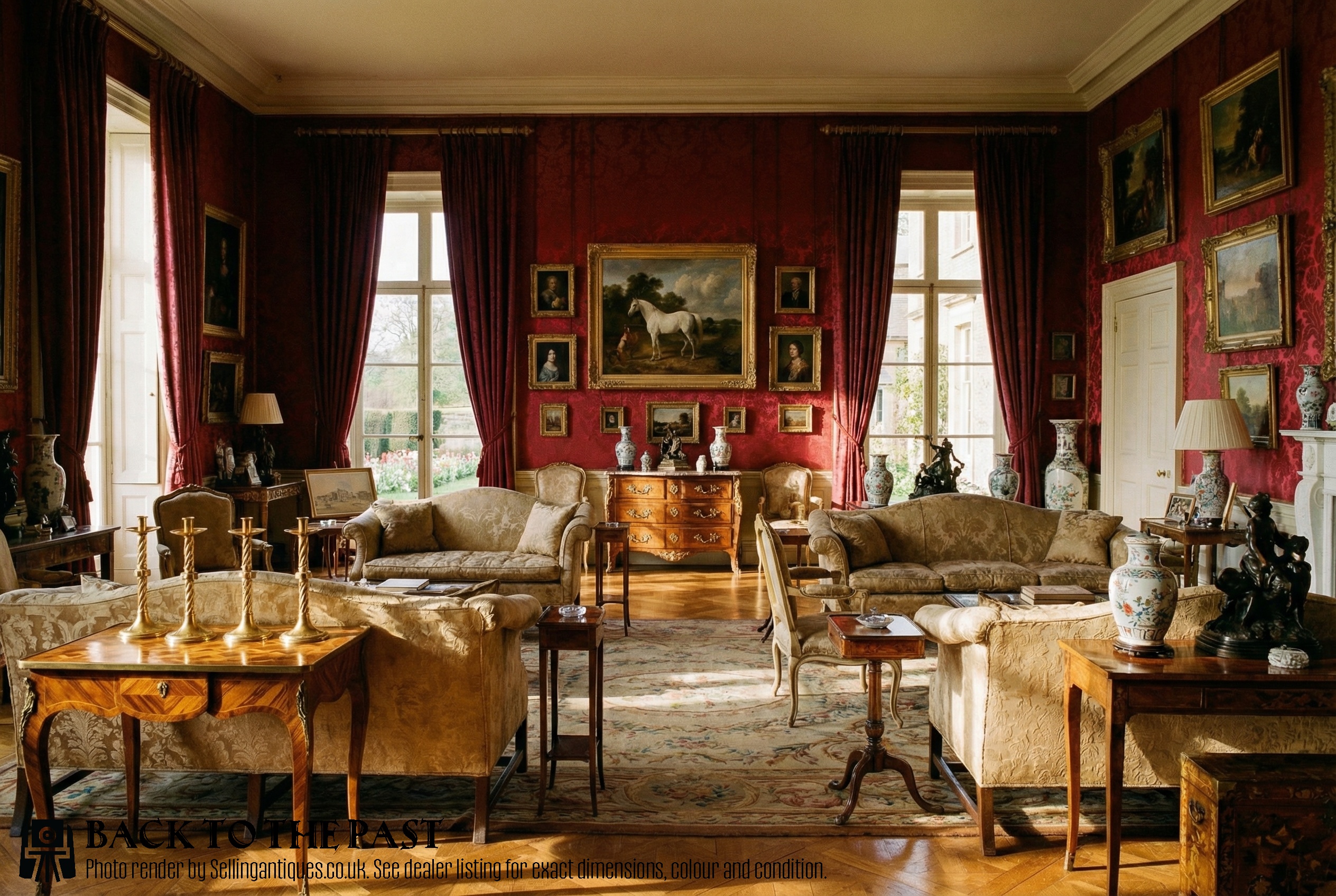
These vintage church candleholders bring centuries of sanctuary ritual into domestic spaces through heavy metals, carved timbers, and architectural forms.
Vintage Church Candleholders
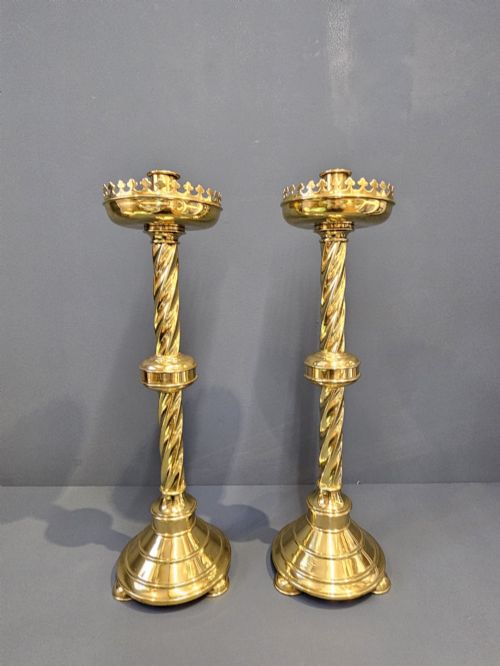
Vintage church candleholders comprise candlesticks, candelabra, floor candelabra, and wall sconces designed for ecclesiastical settings and later adapted for homes. You will most frequently encounter brass pairs originating in the Victorian era, alongside examples reflecting Gothic Revival and seventeenth-century baroque styles.
The selection spans tall altar pieces and heavy pricket candlesticks alongside carved wooden holders and wrought iron floor candelabra. Pieces range chronologically from the nineteenth century through the early twentieth century, including Amsterdam School and French chateau designs.
How they were made
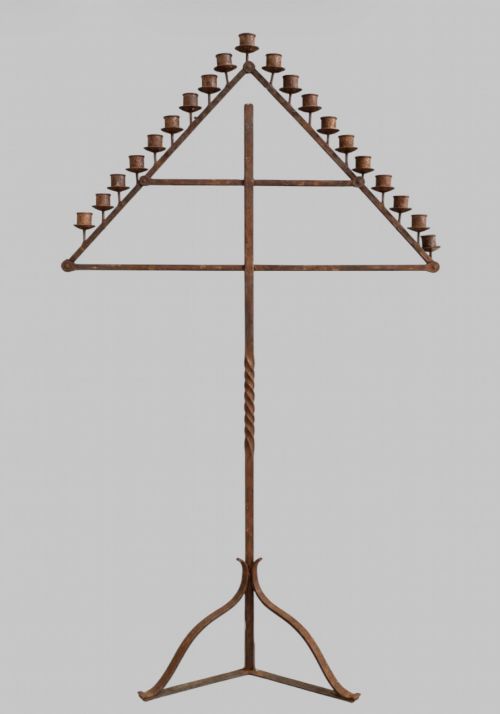
Brass and cast brass form the backbone of these pieces, often worked into heavy architectural profiles designed to support tall altar candles. Wrought iron provides structural strength for floor-standing candelabra, while carved wood and giltwood appear in decorative French and domestic iterations.
Surface treatments recorded in the evidence include applied paint and enamel alongside gilded finishes. Metal prickets secure the candles directly onto the spike, pairing with standard socket formations where appropriate.
Some pairs are heavy enough to double as gothic doorstops if the sermon runs too long.
What varies in quality
Substance and scale separate standard pairs from substantial architectural statements, visible in the sheer weight of the metal and the integrity of the casting. Superior examples display crisp chasing and confident proportions that reflect their original ecclesiastical purpose.
Design ambition distinguishes simple turned brass from nuanced stylistic expressions like Gothic Revival tracery, Amsterdam School geometry, or intricate carved woodwork. The execution of surface gilding and enamel work further marks out the calibre of individual workshops.
T Thomason & Co
The Vintage Church Candleholders Glossary
- Pricket
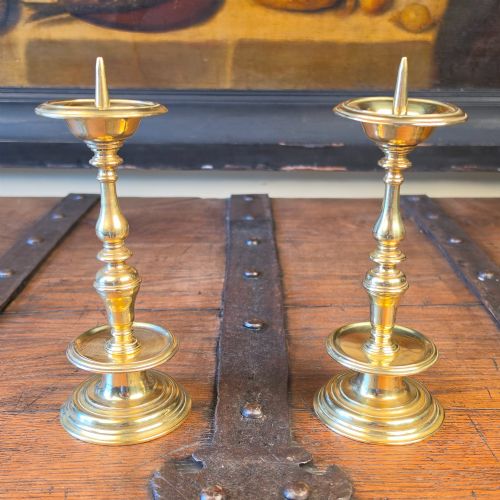
- A sharp metal spike on a candlestick designed to impale the base of a candle to hold it secure. This form is common in ecclesiastical metalwork.
- Gothic Revival
- An architectural and decorative style drawing inspiration from medieval design. It is characterised by pointed arches, trefoils, and heavy vertical lines.
- Amsterdam School
- An early twentieth-century architectural and design movement known for expressive forms, rounded brickwork, and rich surface textures. Pieces in this style utilise stylized metalwork.
- Giltwood
- Timber that has been coated with a thin layer of gold leaf or powder. This finish was frequently applied to decorative candlesticks for added visual weight.
- Altar Candelabra
- Branching lighting fixtures designed to sit upon a church altar. These multi-light holders accommodate several candles simultaneously.
Vintage Church Candleholders: Frequently Asked Questions
What is a pricket candlestick?
A pricket candlestick uses a sharp metal spike instead of a socket to hold the candle in place. This traditional ecclesiastical design requires candles with a hollow base or a pierced bottom.
Such pieces are particularly common among nineteenth-century brass church fittings and heavy altarware designed for liturgical use.
How do I style heavy floor candelabra?
Wrought iron floor candelabra function as architectural focal points in large rooms or hallways. Their substantial scale allows them to stand alone without competing with surrounding furniture.
Pair them with plain walls or stone fireplaces to highlight their structural lines and historical presence.
What is Gothic Revival style?
Gothic Revival draws on medieval ecclesiastical architecture, featuring pointed arches, heavy brass casting, and geometric tracery. In church metalwork, this style emphasises verticality and solemn ornamentation.
Victorian makers frequently utilised these motifs to imbue domestic interiors with a sense of historic sanctuary.
Are these candleholders made of solid brass?
The evidence shows heavy brass and cast brass construction across the majority of the metal ecclesiastical pieces. This weight ensured stability when supporting large altar candles.
Secondary materials include wrought iron, carved wood, and giltwood depending on the regional origin and period.
How do I date antique altar candlesticks?
Dating relies on stylistic markers such as Victorian Gothic proportions, Amsterdam School geometry, or seventeenth-century baroque influences. Material choices and manufacturing techniques like heavy brass casting also indicate the era.
Makers' stamps, where present, provide definitive attribution to firms such as T Thomason & Co.