

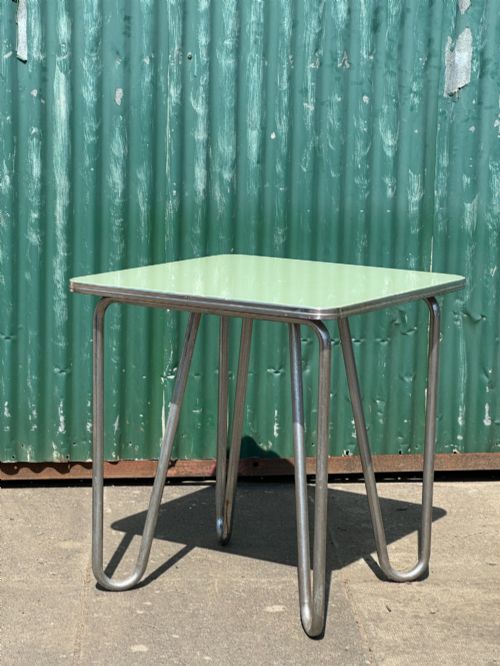
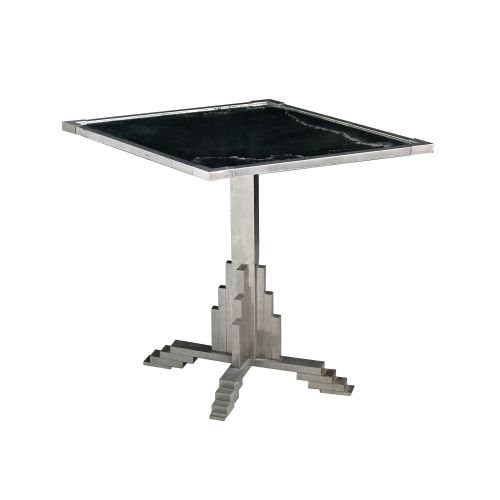


Vintage Chrome Side Table
A vintage chrome side table brings bright modernism and clean industrial edges straight into a room.
Vintage Chrome Side Table
A vintage chrome side table sits firmly in the twentieth-century design tradition, most commonly emerging from the Art Deco period of the nineteen-thirties. These pieces combine polished metallic surfaces with wood, glass, or mirrored tops to create functional occasional furniture.
Buyers encounter forms that range from simple two-tier occasional tables to reading stands, over-bed tables, and occasional tables with modernist glass tops. The selection includes examples originating from England, France, and America.
While the search phrase highlights occasional tables, the wider selection spans side tables and table lamps sharing identical modernist materials and periods. Pieces trace their heritage back to early twentieth-century innovations in tubular steel and metal plating.
Materials and construction
Construction relies heavily on chrome-plated metal and tubular steel to form sturdy, reflective frames that define the modernist aesthetic. These metallic elements join with contrasting materials such as walnut and mahogany to introduce warmth and depth.
Surfaces feature clear glass or mirrored glass inserted into metal structures, alongside solid wood tiers. Craftsmanship from the period prioritises clean geometric lines and precise metalwork suited to Art Deco and Mid-Century Modern tastes.
Some tables double as reading stands or over-bed furniture, proving that nineteen-thirties designers took breakfast in bed very seriously indeed.
Judging quality and design
The distinction between standard production and high-end pieces rests on the complexity of the frame and the integration of secondary materials like walnut. Superior examples demonstrate refined proportions and sophisticated tiered designs rather than basic utilitarian forms.
Attribution to known designers or specific manufacturers elevates a piece significantly beyond anonymous mass-market items from the era. The calibre of the metal plating and the seamless joining of steel and glass determine the enduring presence of the furniture.
Oliver Percy Bernard·PEL·Peter Ghyczy
The Vintage Chrome Side Table Glossary
- Chrome plated metal
- A layer of chromium applied over a base metal to provide a shiny, corrosion-resistant finish. This treatment creates the signature reflective sheen seen across modernist furniture.
- Tubular steel
- Hollow steel piping bent into curved structural frames. It enabled lightweight, strong furniture designs popularised in the nineteen-thirties.
- Art Deco
- A design style spanning the nineteen-twenties and nineteen-thirties characterised by sleek geometric shapes, streamlined forms, and modern industrial materials.
- Mirrored glass
- Glass coated with a reflective silver substance on the reverse side. It adds luminosity and depth to table surfaces.
- Occasional table
- A small, movable table designed for specific, temporary uses around a living space. These pieces serve beside seating areas or as display surfaces.
Vintage Chrome Side Table: Frequently Asked Questions
How do I date a chrome table?
Dating relies on stylistic markers from periods such as the nineteen-thirties Art Deco era or subsequent Mid-Century Modern movements. Materials like tubular steel and chrome plating strongly point to these specific decades of manufacture.
Construction methods and design patents further help narrow down the production window. Examining how glass or wood inserts fit into the metal frame often reveals the manufacturing decade.
Are these tables sturdy enough for daily use?
These pieces utilise robust tubular steel and chrome-plated metal frames designed for practical domestic environments. They comfortably support everyday items like books, lamps, and drinks.
Care should be taken with glass or mirrored tops to prevent surface scratching. Regular gentle cleaning maintains the structural integrity and appearance of the metal.
What styles match these tables?
They pair naturally with Art Deco interiors, industrial aesthetics, and clean Mid-Century Modern spaces. The reflective metallic surfaces also contrast effectively against traditional wooden furniture.
Their neutral palette of chrome and glass allows them to integrate into contemporary minimalist rooms without overwhelming the existing decor.
Where were these tables made?
Production spans several countries, with pieces originating from England, France, and America during the early and mid-twentieth century. European workshops particularly drove the adoption of tubular steel in domestic furniture.
Different regional design houses brought distinct interpretations to the style, ranging from streamlined American pieces to refined English occasional tables.