

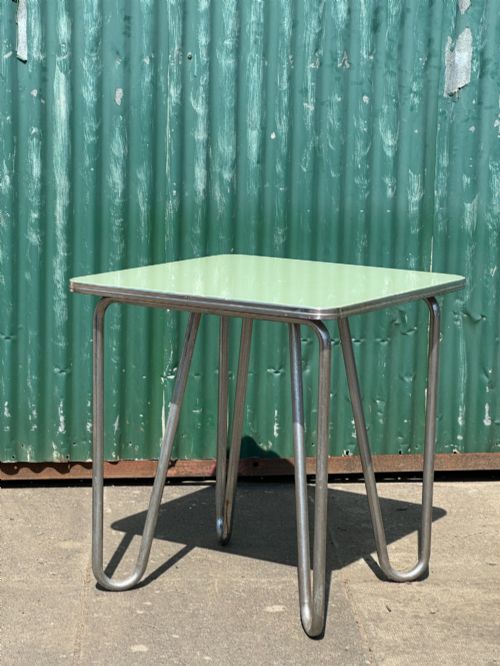
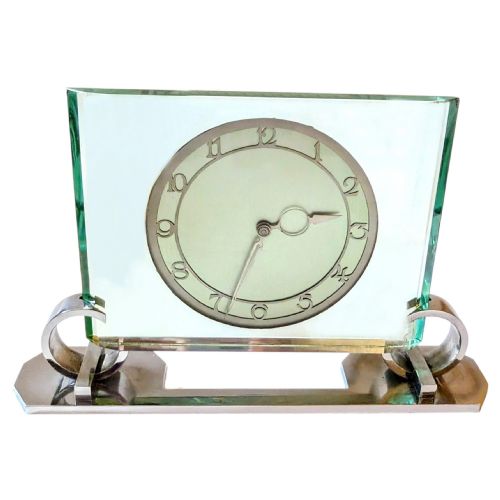
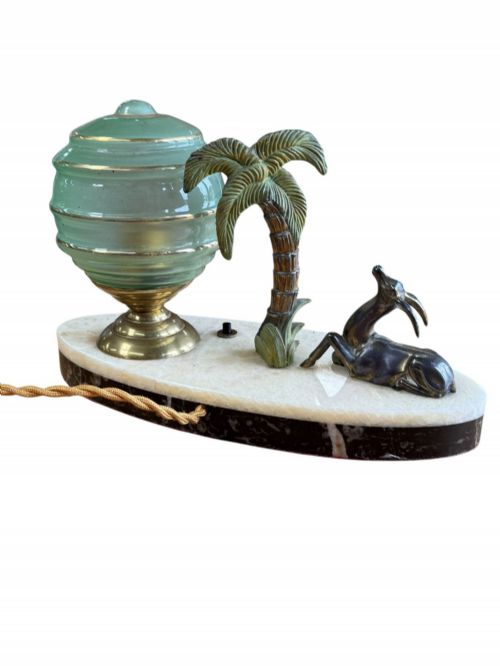


Green Art Deco Table
When you search for a green art deco table, you discover striking surfaces that combine geometric forms with rich colour.
Green Art Deco Table
A green art deco table brings together the characteristic symmetry of the period with striking green surfaces formed from jade marble, painted wood, or tinted glass. These functional items range from compact side stands to occasional coffee tables designed in the early twentieth century.
Many examples incorporate contrasting materials such as chrome, brass, or shagreen alongside the green elements to create a distinct modernist silhouette. Buyers often encounter pieces originating from French and English workshops dating predominantly from the nineteen-thirties.
How they were made
Craftsmen utilised metals like brass, chrome, and cast iron to build sturdy frames, frequently pairing them with natural stone bases or wooden carcases. Surfaces were finished using specialised techniques including green lacquer, guilloché enamel, and polished shagreen.
Glass components often featured moulded or over-crystal treatments, while metal parts relied on cold-painting or plating methods to achieve a durable sheen.
Listings feature items spanning the eighteen-fifties through the nineteen-forties, constructed from glass, brass, chrome, fabric, onyx, marble, enamel, and metal.
What varies in quality
The standard of a piece depends heavily on the integrity of its surface finishes, such as the depth of the green enamel or the polish of the marble and onyx. Original mounts and intact decorative details distinguish standard production items from finer workshop pieces.
Construction methods also dictate worth, with solid metal frames and carefully fitted joints representing superior manufacturing compared to lighter domestic alternatives.
Josef Lorenzl·Oliver Percy Bernard·Smiths Clockmakers·Elliott·Mappin & Webb·Karl Palda·Viners·Fasold & Stuach·Ferdinand Priess
The Green Art Deco Table Glossary
- Onyx
- A banded variety of chalcedony often used for the heavy bases of clocks and lamps. This natural stone frequently displays striking green tones.
- Shagreen
- Untanned skin from sharks or rays used to cover small boxes and tables. It provides a distinctive textured surface popular in modernist design.
- Guilloché
- A decorative engine-turning technique engraved into metal beneath translucent enamel. It creates repeating geometric patterns across surfaces.
- Spelter
- A zinc alloy frequently utilised as a substitute for bronze in decorative figures and lamp bases. It accepts patination well.
- Bakelite
- An early synthetic plastic that appears in vibrant green shades on desk items and lamp fittings. It defined interwar industrial production.
Green Art Deco Table: Frequently Asked Questions
How do I clean a marble top?
Use a damp cloth with mild soap and dry immediately to protect the stone surface.
Avoid acidic cleaning products that can etch the polished finish.
Are these items purely decorative?
Most pieces serve practical functions as side tables, desks, or lighting fixtures in modern interiors.
Their sturdy construction supports everyday use alongside aesthetic appeal.
How do I identify the period?
Look for characteristic geometric lines, stepped profiles, and specific industrial materials like chrome and catalin.
Maker marks and hardware styles also help confirm a nineteen-thirties origin.
Where should I place a green table?
Position the item as a focal point in a hallway or beside a neutral seating arrangement.
The rich colour works well against muted walls and metallic accents.