




Vintage Chinoiserie Screen
These vintage chinoiserie screen examples bring hand-painted narrative scenes and folding utility into domestic spaces.
Vintage Chinoiserie Screen
When you search for a vintage chinoiserie screen, you are looking at folding room dividers, dressing screens, and smaller tabletop or fire screens adorned with decorative European interpretations or authentic Chinese motifs. The selection encompasses multi-leaf panels spanning from the eighteenth century to the mid-twentieth century, utilising various folding formats.
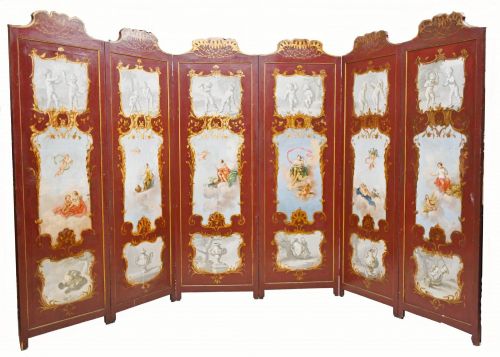
The version you are most likely to meet on this page is a four-leaf or six-leaf freestanding black lacquered room divider. These larger panels often feature painted figures, landscapes, or inlaid materials designed to divide a space or decorate a wall.
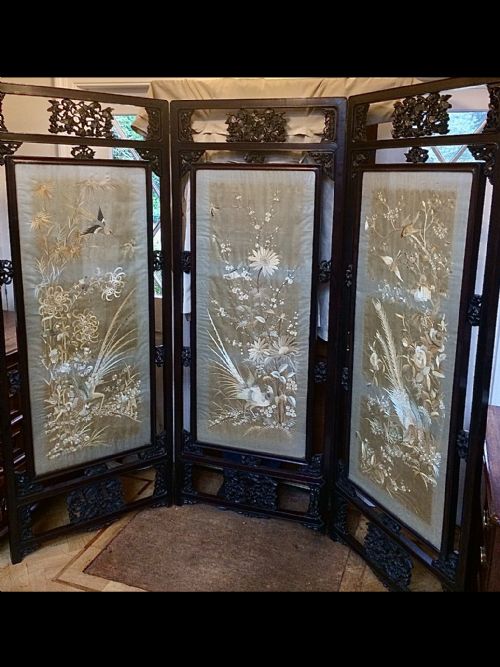
Beyond grand room dividers, the selection includes smaller pieces such as English Regency pole screens and Chinese silk table screens with carved stands. These diverse objects share a common decorative lineage rooted in traditional Chinese styles, Regency designs, and Rococo influences.
Materials and construction
The primary construction relies on wood and hardwood frames built to support multiple folding leaves or panels. Lacquer is applied to surfaces, often in black, creating a smooth dark ground for subsequent painted decoration and gilding.
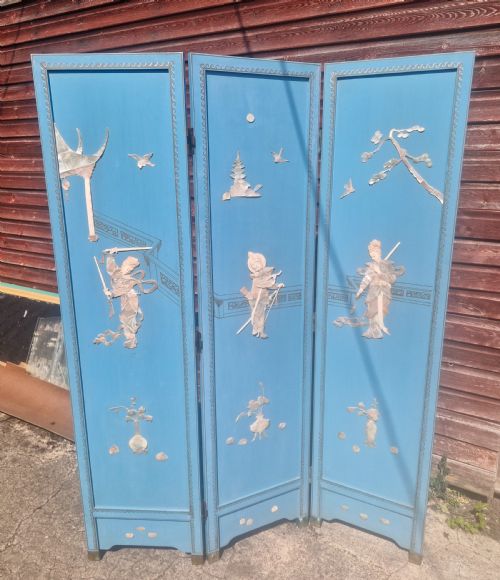
Makers integrated decorative elements including gold leaf, painted leather, silk panels, and inlaid mother-of-pearl or soapstone. Carved wooden details, such as dragon motifs, appear alongside intricate stands and brass hardware used to hinge the folding sections together.
Vintage Chinoiserie Screen Retail Price Guide 2026
Typical asking prices for vintage chinoiserie screen among the pieces listed under this phrase on Sellingantiques today, from the lower quarter to the upper quarter. They describe what is for sale here now, not the wider market.
Dragons carved into eighteenth-century wood give serious expressions while guarding your living room from stray drafts.
Judging quality in screens
The distinction between ordinary and superior pieces rests on the depth of hand-craftsmanship found in the carving and surface decoration. Panels featuring meticulous hardstone mounting, detailed mother-of-pearl inlay, and finely brushed gold leaf demonstrate a higher tier of artistry than simpler painted surfaces.
Structural integrity and the quality of the timber framework also divide the range. Hardwood frames that support heavy folding leaves smoothly on their hinges represent better workshop standards than lighter, less stable constructions.
The Vintage Chinoiserie Screen Glossary
- Chinoiserie
- European artistic styles that reflect Chinese decorative motifs and cultural influences. This aesthetic gained popularity across various historical periods, particularly in furniture and wall decoration.
- Pole screen
- A type of freestanding screen featuring a vertical wooden pole with an adjustable panel used to shield a person from fireplace heat. These items were common in English Regency interiors.
- Lacquer
- A durable varnish applied in multiple coats to wooden objects and polished to a hard finish. Black lacquer provides a traditional dark background for gilt and painted scenes.
- Table screen
- A smaller decorative panel mounted on an intricately carved wooden stand for display on a desk or table. These items originated in traditional Chinese scholar rooms.
- Hardstone
- Minerals such as soapstone or jade carved and applied to screen surfaces to create raised pictorial elements. This technique adds tactile dimension to the lacquer ground.
Vintage Chinoiserie Screen: Frequently Asked Questions
What is a chinoiserie screen?
A chinoiserie screen is a folding divider or decorative panel decorated with European interpretations or traditional Chinese artistic motifs. These pieces utilise materials like lacquer, gold leaf, and silk.
They range from large multi-fold room dividers to smaller table and pole screens designed for domestic use.
How were room dividers used?
Room dividers were historically utilised to partition large chambers, create private dressing areas, or block drafts from doors and windows. Their folding construction allowed owners to reposition them easily.
In modern interiors, they function similarly as decorative partitions or as substantial wall art.
What is a pole screen?
A pole screen consists of an adjustable panel mounted on a vertical wooden stand, designed during the Georgian and Regency eras. Placed near a fireplace, owners adjusted the height to shield their faces from radiant heat.
These pieces typically feature embroidered silk or painted panels held within carved wooden frames.
How do I identify lacquer?
Lacquer is a hard, polished coating built up in numerous layers over a wooden substrate. It provides a smooth, glossy background that resists moisture and wear.
On vintage screens, this surface often carries painted gold details, inlaid mother-of-pearl, or carved hardstone figures.
Where should I place a screen?
Freestanding multi-fold screens suit large open spaces where they can function as room dividers or sculptural backdrops against a wall. Smaller table screens fit securely on sideboards, desks, or mantels.
Placement depends on the panel's size, fold count, and whether the design is intended to be viewed from one side or both.