




Vintage Chinoiserie Divider
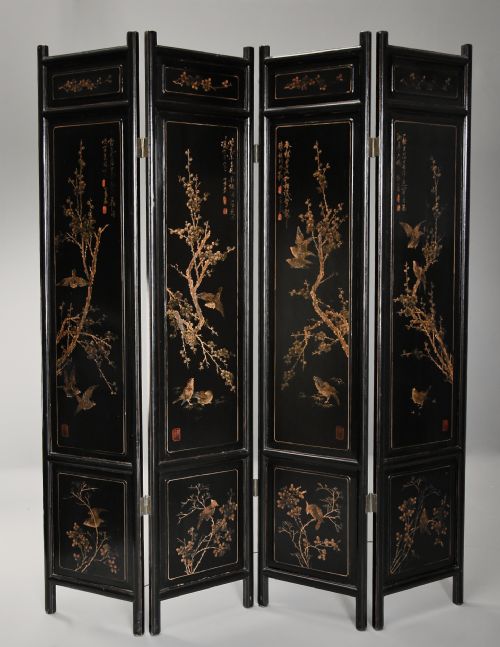
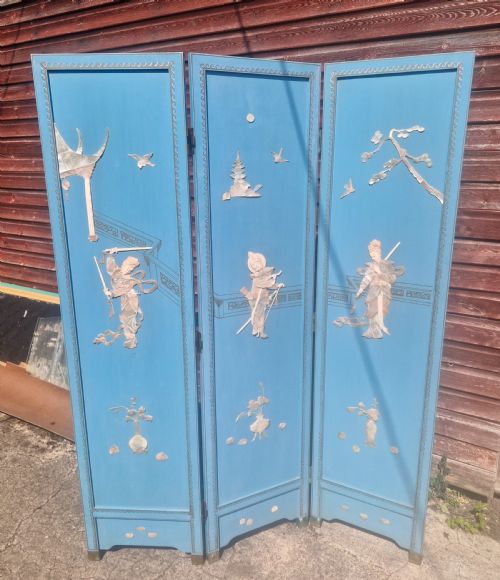
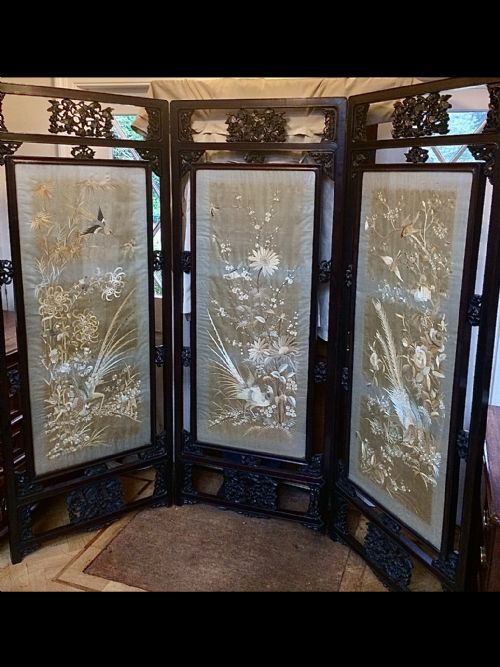
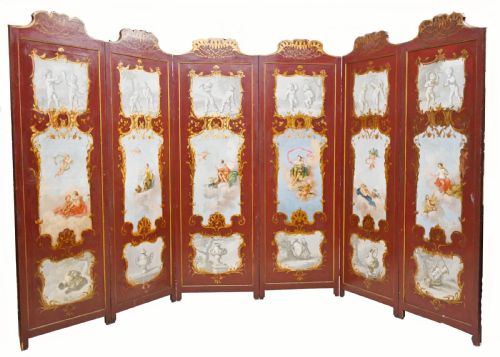
These vintage chinoiserie divider panels bring painted lacquer and carved screens into a room, offering functional division with traditional Eastern motifs.
Vintage Chinoiserie Divider
When you search for a vintage chinoiserie divider, you encounter multi-fold screens and panels designed to partition space or decorate a wall. The examples on this page span from the eighteenth century to the mid-twentieth century, capturing centuries of decorative screen-making traditions.
The most common forms you meet here are folding screens with three to eight leaves, rendered in wood and finished with lacquer. These pieces combine Chinese traditional and Qing dynasty aesthetics alongside eighteenth-century Dutch interpretations of Oriental styles.
Makers utilised wood substrates, silk, and leather to build these folding screens and wall art pieces. Objects range from freestanding four-leaf black lacquered screens to dragon carved panels and silk screens.
How they were made
The construction of these dividers relies on wooden frames or solid hardwood panels built to support multiple folding leaves. Artisans applied successive layers of lacquer to create a smooth, durable base surface for subsequent ornamentation.
Decoration often involved intricate hand-painting, gilding with gold leaf, and applying mother-of-pearl or soapstone inlays. Certain pieces integrate carved details such as dragons alongside painted silk or gilt leather elements.
Several screens proudly feature carved dragons keeping watch over your sitting room from behind four to eight folding leaves.
What varies in quality
Quality in these dividers rests upon the depth of the lacquer finish and the precision of the joinery connecting the folding leaves. Superior examples display crisp hand-carving and securely anchored inlays rather than surface-level painted shortcuts.
The sophistication of the painted scenes and the inclusion of materials like gold leaf and hardstone elevation separate standard decorative items from finer collector pieces. The integrity of the hinges and the stability of the wood substrate dictate the longevity of each screen.
The Vintage Chinoiserie Divider Glossary
- Chinoiserie
- European artistic style reflecting Chinese motifs and techniques, popular in decorative arts across several centuries.
- Lacquer
- Protective and decorative finish applied in multiple coats to wood surfaces, yielding a hard and glossy sheen.
- Hardstone
- Dense minerals such as jade or soapstone used for carved pictorial inlays on decorative panels.
- Gilt leather
- Leather treated with gold leaf or gold paint, frequently utilised in European interpretations of oriental screens.
- Folding screen
- Movable room divider composed of two or more panels joined by hinges.
Vintage Chinoiserie Divider: Frequently Asked Questions
How do I use a divider?
These folding screens function primarily to divide large rooms, create private dressing areas, or act as decorative wall art.
Position them against a flat wall to display the painted panels or angle the leaves to partition a specific corner of a space.
Are these screens heavy?
The weight depends heavily on the timber used and the number of leaves in the screen. Hardwood frames and multiple lacquered panels add substantial mass.
Larger multi-fold examples require care when repositioning to avoid straining the hinges connecting the leaves.
How do I date a screen?
Dating relies on examining the wood construction, the formulation of the lacquer, and the stylistic details of the painted motifs. Eighteenth-century European iterations differ perceptibly from twentieth-century Chinese exports.
Hardware styles and mounting techniques also provide clues regarding the period of manufacture.