


Oriental Black Lacquer Divider
An oriental black lacquer divider creates instant architectural presence in a room, offering deep tones and intricate surface work gathered across the nineteenth and twentieth centuries.
Oriental Black Lacquer Divider
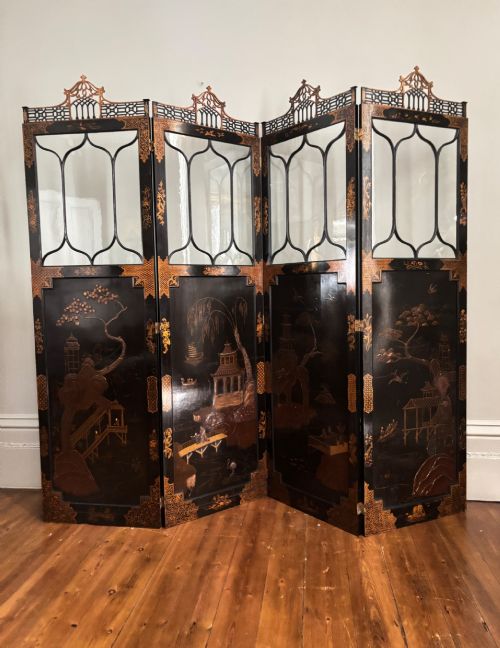
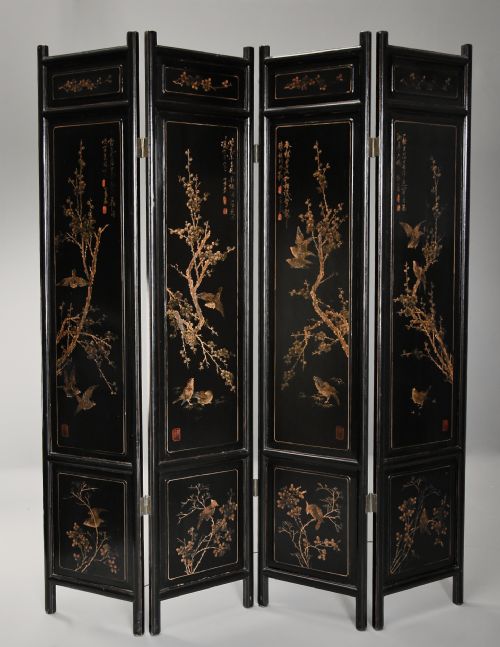
An oriental black lacquer divider functions primarily as a folding screen or freestanding room partition, emerging in formats ranging from three-fold panels up to expansive eight-fold compositions. These pieces originate from distinct traditions including Chinese Chinoiserie, Japanese Meiji and Export workshops, Chinese Republic Era designs, and Burmese craftsmanship, alongside British Regency and Victorian interpretations of Eastern styles.
The forms span tall freestanding room dividers, dressing screens, and occasionally decorative wall art panels, utilising hinged leaves to articulate interior space. The most common examples encountered on this page date from the nineteenth century through the early decades of the twentieth century, particularly around nineteen hundred and nineteen ten.
How they were made
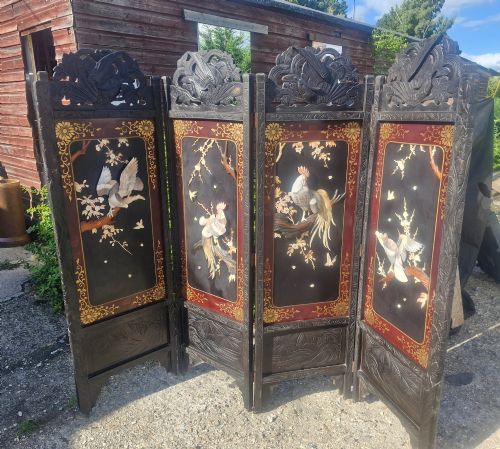
Wood serves as the primary substrate, often formed as hardwood or lacquered wood, upon which layers of black lacquer build a deep, reflective surface. Artisans integrated contrasting materials directly into this dark ground, utilising carved bone, hardstone, and gold leaf to articulate pictorial scenes and decorative motifs.
Techniques varied by region and era, encompassing the incised coromandel method where designs are cut into the lacquer and filled with pigment, alongside applied textile elements such as silk panels and detailed painting.
Some screens feature deep carved bone figures peering out from the dark lacquer, bringing miniature theatrical scenes right into the hallway.
What varies in quality
The distinction between ordinary and exceptional examples rests upon the depth and precision of the surface decoration, whether through finely carved bone figures, meticulous hardstone mounting, or the crisp execution of gold leaf detailing. Heavier panel construction and the structural integrity of the folding hinges further determine how well a multi-leaf screen stands over time.
Artisanal proficiency dictates the richness of the black lacquer ground and the harmony of the composition across multiple panels, separating standard decorative items from works of substantial craftsmanship.
The Oriental Black Lacquer Divider Glossary
- Coromandel
- A type of Chinese incised lacquer where the design is carved into a dark ground and filled with colours or plain pigments. This technique produces a distinctive recessed surface texture.
- Chinoiserie
- European artistic styles reflecting Chinese motifs and decorative techniques, popular across various historical periods including the Victorian era and the Regency period. It reinterprets Asian aesthetics through Western design conventions.
- Meiji
- A period in Japanese history spanning from eighteen sixty-eight to nineteen twelve, known for exceptional metalwork, lacquer, and decorative arts produced for both domestic use and export. Pieces from this era often feature refined carving and painting.
- Hardstone
- Minerals such as jade, agate, or soapstone carved and mounted onto the surface of a screen. These elements add tactile dimension and contrasting natural colour to the dark lacquer background.
Oriental Black Lacquer Divider: Frequently Asked Questions
How do I use a folding screen in a modern room?
A folding screen acts as a flexible architectural element to zone open-plan spaces, conceal specific areas, or function as a dramatic backdrop against a plain wall. Position the panels at slight angles to ensure stability while displaying the full breadth of the lacquer work.
Ensure the panels receive indirect light to protect the lacquer and inlaid elements from extreme temperature fluctuations and direct sun exposure.
What is the difference between Chinese and Japanese screens?
Chinese examples frequently employ deep incisions, coromandel techniques, or mounted hardstone and bone figures on heavy wood frames. Japanese pieces often emphasise painted surfaces, textile integration, and delicate export finishes associated with the Meiji era.
Both traditions utilise a dark lacquer base, but the hand of the artisan and the specific regional iconography distinguish their origins.
How do I care for antique lacquer surfaces?
Dust the panels gently with a soft, dry cloth and avoid using chemical cleaners, polishes, or excessive moisture that can damage the aged lacquer ground. Keep the screens away from direct heat sources to prevent the wood underneath from warping.
Careful handling of the hinges when repositioning the leaves prevents stress on the joints and preserves the structural frame.
How can I tell the age of a lacquer divider?
Dating relies on examining the construction methods of the wooden frame, the wear patterns on the lacquer, and the style of the decorative motifs. Nineteenth-century and early twentieth-century pieces often display specific regional characteristics, such as Republic Era painting styles or Victorian interpretations of Chinoiserie.
Comparing the hinge types and the materials used for inlay, such as carved bone or hardstone, provides further clues to the period of manufacture.