

Vintage Chinese Painting
Vintage chinese painting works on silk, paper, and pith, bringing framed scrolls, ancestral portraits, and watercolours into the room.
Vintage Chinese Painting
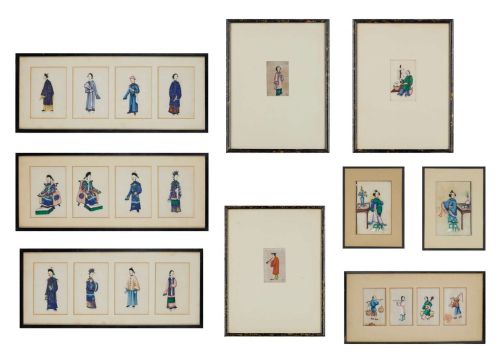
A vintage chinese painting captures landscapes, flora, fauna, and figural studies through watercolours, inks, and gouache on delicate surfaces. Buyers encounter framed silk scrolls, butterfly and flower studies from the chinese school, and pith paper figural groupings.
The selection ranges from nineteenth century Qing dynasty works to mid twentieth century pieces. Many items arrive in original frames or on traditional scrolls alongside related porcelain, lacquer, and textile objects.
What varies in quality
Quality rests in the precision and fluidity of the brushwork, the preservation of the silk or paper ground, and the retention of vibrant mineral pigments. Superior examples display confident line work and subtle tonal gradations in subjects like koi carp, snow leopards, and floral studies.
The integrity of the original mounting, frames, and scrolls influences the character of each piece. Works showing minimal fading, foxing, or water staining retain stronger visual impact and historical authenticity.
Snow leopards peer quietly from early twentieth century scrolls.
The Vintage Chinese Painting Glossary
- Shan Shui
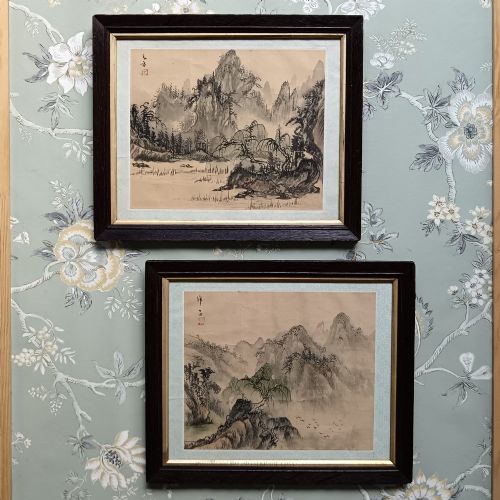
- A style of traditional Chinese painting that depicts scenery or natural landscapes using a brush and ink. These works often portray mountains, rivers, and waterfalls in meditative compositions.
- Pith painting
- Art created on thin, cellular sheets sliced from the pith of the Tetrapanax papyrifer plant. This medium produces a soft, velvety surface texture found on nineteenth century figural works.
- Scroll
- A length of paper or silk mounted for rolling or hanging. They allow traditional paintings to be stored compactly or displayed vertically on walls.
- Chinese School
- A designation for works created by artists trained in traditional Eastern techniques and subjects. The category includes watercolours on silk depicting butterflies and flowers.
Vintage Chinese Painting: Frequently Asked Questions
How should I hang silk paintings?
Silk paintings require protection from direct sunlight and high humidity to prevent the fabric from warping or fading. Mount them away from heat sources using appropriate conservation glass.
Keep the hanging environment stable in temperature to preserve both the silk ground and any original wooden framing or scroll mountings.
What subjects appear in these works?
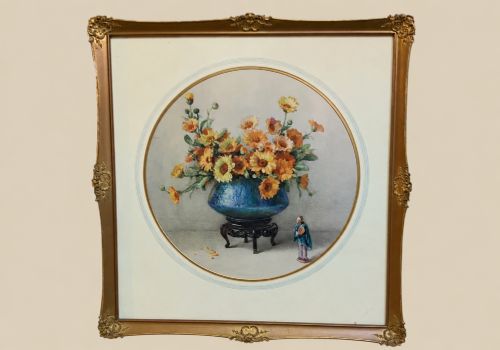
Common subjects include natural studies of koi carp, butterflies, marigolds, and snow leopards. Figural groups and ancestral portraits also feature prominently across the periods.
Shan shui landscapes focus on mountains and rivers, reflecting traditional philosophical approaches to nature and space.
Are these paintings signed?
Some pieces feature artist signatures, studio stamps, or calligraphy inscriptions denoting the title or creator. Unsigned works frequently belong to the broader Chinese School tradition.
Inscriptions often provide context regarding the date or the specific lineage of the workshop.