


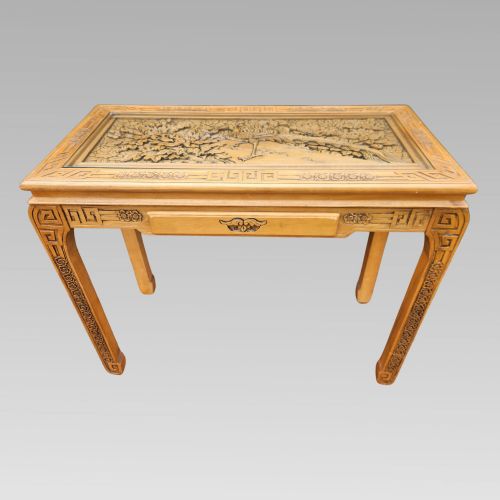


Vintage Chinese Hall Table
A vintage chinese hall table brings practical surface space and distinct regional character into a hallway.
Vintage Chinese Hall Table
When you search for a vintage chinese hall table, you encounter console tables, side tables, altar tables, and centre tables spanning the nineteenth century through the early twentieth century. These pieces serve narrow spaces with slender proportions, offering flat surfaces suited to entryways and passages.
Elm and hardwood dominate the selection, often accompanied by red lacquer finishes or brass hardware. Regional variations include provincial designs and export pieces that reflect traditional craftsmanship.
Altar tables and narrow console forms appear most frequently on this page, providing the characteristic long, shallow surface that defines the category.
Materials and construction
Makers utilised solid elm and dense hardwoods, relying on traditional joinery methods that accommodated the natural movement of timber over decades of use. Surfaces often received coats of red lacquer, building a durable and glossy finish that protected the wood underneath.
Metal fittings such as brass plates and pulls appeared on drawer fronts, while carving added decorative detail to aprons and legs without compromising structural integrity.
Vintage Chinese Hall Table Retail Price Guide 2026
Typical asking prices for vintage chinese hall table among the pieces listed under this phrase on Sellingantiques today, from the lower quarter to the upper quarter. They describe what is for sale here now, not the wider market.
One piece on this page secretly doubles as a work table, proving that historical craftsmen knew how to multitask.
Assessing craftsmanship
Quality rests in the crispness of the carved details and the depth of the lacquer surface, where smoother finishes and retained pigment indicate careful historic maintenance. The integrity of the underlying hardwood frame dictates the stability of the piece.
Proportions also distinguish finer examples, particularly where altar tables balance length with slender, well-turned supports rather than heavy framing.
Butler
The Vintage Chinese Hall Table Glossary
- Altar table
- A long, narrow rectangular table traditionally placed against a wall for ceremonial displays. These tables feature stepped flanges at the short ends and deep aprons.
- Console table
- A table designed to stand flat against a wall, typically supported by legs at the front and brackets at the rear. They provide narrow surface areas for hallways.
- Lacquer
- A durable varnish made from tree sap, applied in multiple coats and polished to a smooth finish. Red lacquer is common on traditional Chinese case furniture.
- Hardwood
- Dense timber derived from broad-leaved trees, utilised for structural strength and fine carving. Elm and other regional varieties supply the heavy frames seen in these pieces.
Vintage Chinese Hall Table: Frequently Asked Questions
Where should I place a hall table?
These narrow tables suit entrance halls, narrow corridors, and tight transitional spaces where depth is limited. Their shallow profiles allow them to sit flat against a wall without obstructing passageways.
They also function effectively behind sofas or beneath mirrors in living spaces, providing a practical surface for lighting or decorative objects.
How do I care for lacquered wood?
Dust surfaces regularly with a soft, dry cloth to prevent abrasive particles from scratching the finish. Avoid exposure to direct sunlight and extreme humidity fluctuations, which can cause timber to split and lacquer to craze.
Applying microcrystalline wax occasionally helps protect older wooden and lacquered surfaces without building up heavy residues.
What is the difference between an altar table and a console?
Altar tables typically feature distinctive upturned flanges at the short ends and decorative carved aprons beneath the top board. They originated from domestic and ceremonial furniture traditions.
Console tables present simpler rectangular profiles designed specifically to stand against walls, though historical forms often overlap in appearance and function.
Are these tables from the Qing dynasty?
Some pieces date to the nineteenth century, falling within the later Qing dynasty period of Chinese history. Others originate from the early decades of the twentieth century, reflecting ongoing traditional woodworking methods.
Stylistic markers such as carved aprons and red lacquer finishes align with provincial and export traditions from these eras.