


Vintage Cherub Chandelier
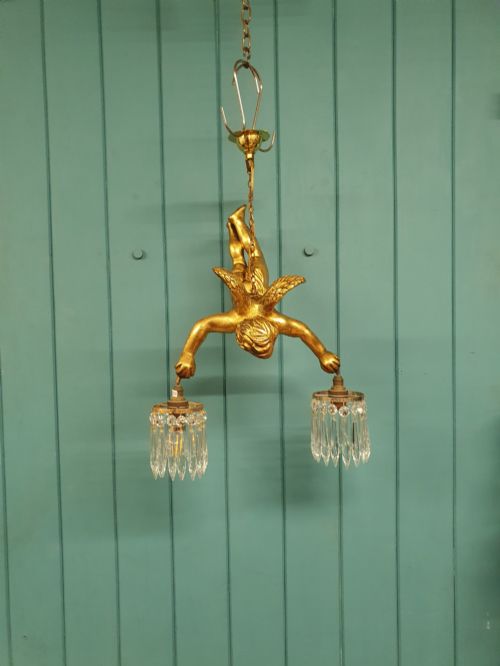
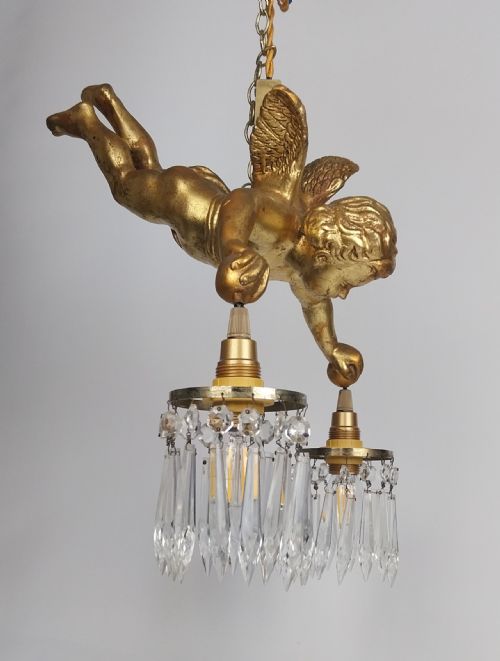
A vintage cherub chandelier brings sculptural romance to a room, combining cast metal figures with hanging crystal and glass.
Vintage Cherub Chandelier
A vintage cherub chandelier turns overhead lighting into figurative art, featuring winged figures alongside multi-arm candle or bulb holders. When you search for a vintage cherub chandelier, you are looking at ceiling lights that range from mid-nineteenth-century gilt bronze pieces to lighter Edwardian brass designs.
The versions you meet most often on this page span the nineteenth century and the early twentieth century, taking forms such as French Rococo Revival fixtures and simpler brass and glass ceiling lights. These fittings use cast figures of cherubs, putti, or winged cupids, often paired with cut glass crystal spikes or hanging drops.
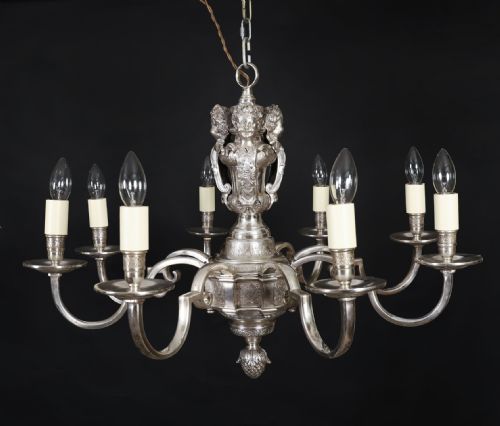
Makers and designers drew heavily on French Chateau and Neo-Classical styles, creating fixtures with anywhere from four to eight lights. Whether finished in silver plate, gilt metal, or raw bronze, each piece integrates sculptural metalwork directly into the structural arms or central stem.
Materials and construction methods
Gilding was frequently applied to bronze and metal surfaces, creating a rich gold-tone finish that caught the candlelight or early electric light. Glass components, including cut glass crystal spikes and drops, were wired or pinned to the metal frame to refract illumination across the room.
Materials recorded across the inventory include solid bronze, gilt metal, silver plate, brass, and cut glass crystal spikes.
Distinguishing quality in design and execution
The crispness of the metal casting separates standard production from finer work, particularly in the definition of the cherub's face, feathers, and limbs. Finer examples retain deep chisel marks and subtle hand-finishing on the bronze or gilt surfaces, whereas simpler pieces show softer, more generalised contours from repeated moulding.
The integration of the figural elements into the chandelier frame dictates the overall harmony of the piece. Superior examples use cherubs as structural arm supports or central stems with natural weight and balance, rather than simple decorative attachments bolted onto a standard frame.
The Vintage Cherub Chandelier Glossary
- Putto
- A plump, winged child figure frequently seen in Renaissance and Revival art. In these chandeliers, putti act as decorative supports or central sculptural elements.
- Gilt Bronze
- Bronze metal coated with a thin layer of gold or gold-coloured alloy. This finish provides a warm, reflective surface that resists tarnishing.
- Rococo Revival
- A nineteenth-century design movement favouring asymmetrical curves, scrollwork, and natural motifs. This style heavily influences French chandelier designs.
- Cut Glass
- Glass shaped and faceted on a wheel to create sharp edges that refract light. These are often used as spikes or hanging drops on the fixture.
Vintage Cherub Chandelier: Frequently Asked Questions
Were these chandeliers originally for candles or electricity?
Many nineteenth-century and early twentieth-century examples started life as candle or oil-burning fittings before being adapted for electricity. Candle pans and drip catchers often remain part of the design even when wired for modern bulbs.
When inspecting a piece, look at the internal wiring channels to see how conversion work was integrated. Professional rewiring is usually recommended to ensure safety in modern homes.
How do I date a cherub chandelier?
Dating relies on examining the casting techniques, fixing screws, and stylistic markers such as Rococo Revival curves or Neo-Classical symmetry. Nineteenth-century pieces typically feature heavy bronze casting and hand-finished chasing, while 1920s and 1930s examples may use lighter gilt metal or pressed brass.
Component parts like the ceiling rose, chain links, and socket types also provide clues to the era of manufacture. Comparing the overall weight and material composition against documented period pieces helps narrow down the decade.
Can these chandeliers support heavy crystal drops?
The structural capacity depends on the metal frame and how securely the arms are joined to the central body. Solid bronze and brass frameworks easily bear the weight of cut glass crystal spikes and hanging drops.
Lighter gilt metal or plated fixtures require careful checking at the junction points where arms meet the main stem. Ensuring the ceiling fixing is anchored into joists is essential for heavier multi-light chandeliers.