
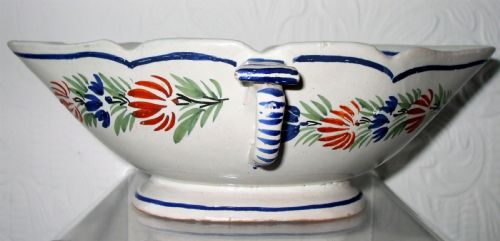


Vintage Ceramic Sauce Boat
These vintage ceramic sauce boat examples bring refined 18th and 19th-century table service charm to modern dining spaces.
Vintage Ceramic Sauce Boat
When searching for a vintage ceramic sauce boat, buyers encounter table vessels designed for serving gravies and sauces during formal meals. The examples on this page span the 18th century, 19th century, and 1850, originating from English factories and French potteries.
The forms range from single vessels to double sauceboats and lidded sauce tureens complete with matching ladles. Stylistic influences across these pieces include Georgian, Victorian, Regency, Rococo, French Country, and Georgian Rococo designs.
Buyers are most likely to meet earthenware, ironstone, soft-paste porcelain, and standard porcelain vessels decorated with blue and white designs, cobalt glaze, enamel, or gold leaf accents. Notable historical patterns represented include the Rose, the Doughnut Tree, and the Japan Basket pattern.
How they were made
Potters shaped soft-paste porcelain, standard porcelain, earthenware, and ironstone into complex forms like triangular platform vessels and double-spouted bodies. These ceramic bodies were then fired and finished with transparent or opaque glazes to seal the porous material.
Makers applied decoration using cobalt glaze underglaze painting, hand-applied enamel colours, and delicate gold leaf detailing. Ironstone pieces relied on sturdy ceramic pastes to withstand heavy use, whilst Worcester and Meissen examples utilised finer porcelain recipes.
Some sauce boats come equipped with tiny matching ladles, proving that Georgian gravy enthusiasts took their pouring logistics very seriously indeed.
What varies in quality
The artistic merit of the hand-painted decoration separates standard utilitarian pieces from exceptional cabinet examples. Early Worcester porcelain pieces with intricate moulded bodies and careful blue and white painting demonstrate superior ceramic artistry compared to mass-produced items.
The crispness of the moulding in Rococo scrolls and the retention of delicate gold leaf details indicate the skill of the original workshop. Completeness also alters the standing of a piece, particularly when lids and original matching ladles survive alongside the main vessel.
Meissen·Mason
The Vintage Ceramic Sauce Boat Glossary
- Sauce boat
- A ceramic vessel designed with a spout and handle for serving gravy or sauce at the dining table. They frequently feature pedestals, attached stands, or matching underplates.
- Ironstone
- A dense, durable type of earthenware patented in the 19th century to imitate porcelain. It provides exceptional strength for heavy table service items like tureens.
- Soft-paste porcelain
- A ceramic composition made from clay, glass, and other minerals fired at lower temperatures than true porcelain. It produces a warm, slightly creamy body favoured by early English potteries.
- Cobalt glaze
- A deep blue metallic oxide pigment applied under the glaze before firing. It withstands high temperatures and creates durable, vibrant blue decoration on white ceramics.
- Sauce tureen
- A lidded serving vessel intended to keep gravies warm during meals. These often include fitted ladles and two side handles.
Vintage Ceramic Sauce Boat: Frequently Asked Questions
What is a vintage ceramic sauce boat?
A vintage ceramic sauce boat is a handled serving vessel created to hold and pour gravies or sauces during formal dining.
These pieces range from simple 19th-century earthenware designs to elaborate 18th-century porcelain vessels featuring hand-painted cobalt patterns and gilt highlights.
How were sauce boats used?
These vessels sat on dining tables during multi-course meals to dispense hot gravies, drawn butter, or thin sauces onto meat and vegetable dishes.
Lidded versions, known as sauce tureens, helped retain heat and often included matching ceramic ladles for clean serving.
How do I date an antique sauce boat?
Dating relies on identifying the ceramic body, such as soft-paste porcelain, ironstone, or earthenware, alongside stylistic markers from periods like the Georgian and Victorian eras.
Factory patterns, such as early blue and white Worcester designs or Quimper faience styles, also provide clear chronological boundaries.
Can I use antique sauce boats today?
While these ceramic pieces remain functional for serving dry items or cold sauces, many collectors prefer to display them as cabinet items or decorative table centrepieces.
Hand-washing is essential to protect delicate enamels, soft-paste bodies, and 18th-century gold leaf details from modern detergents.