



Vintage Ceramic Flower Holder
These vintage ceramic flower holder pieces bring domestic charm to a room, offering practical display options for fresh stems.
Vintage Ceramic Flower Holder
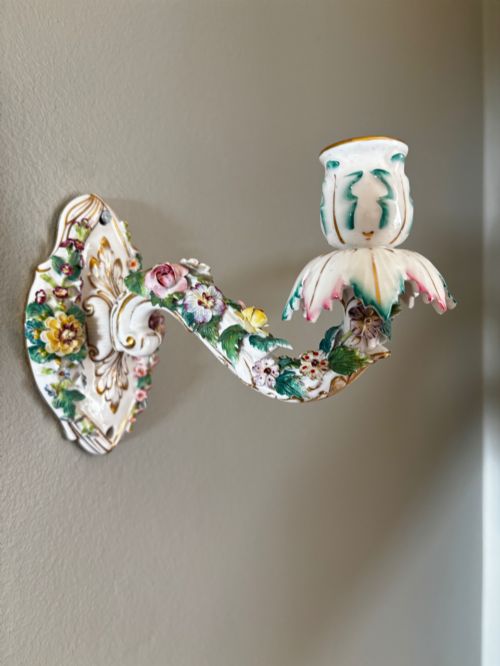
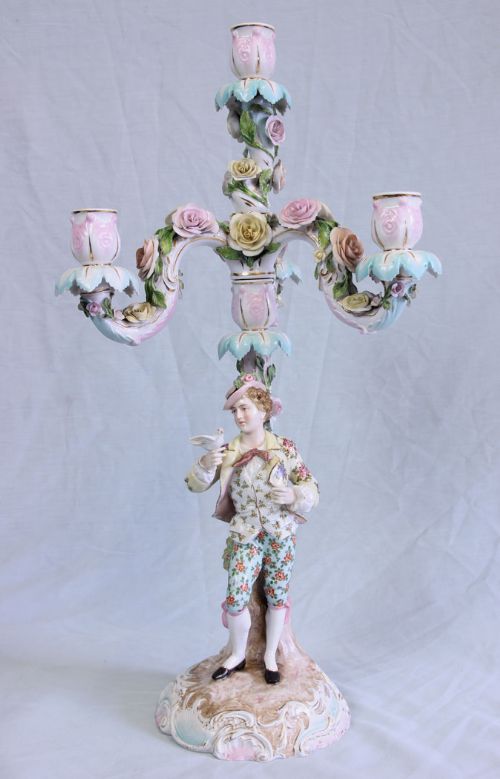
A vintage ceramic flower holder encompasses an array of receptacles designed for botanical arrangements, spanning the nineteenth century through the 1920s. Buyers encountering these items will find forms ranging from standard vases and spill vases to wall sconces, candelabra, and posy vases.
The selections on this page bridge several distinct historical periods, including the Victorian era, Edwardian period, and the Art Deco movement. Styles vary from Rococo Revival and French Country to Edwardian Chinoiserie.
Origins represented across the inventory include English manufactories and continental European kilns. Functional pieces double as decorative table centrepieces or wall-mounted accents.
Materials and construction methods
Maker workshops utilised traditional ceramic bodies, encompassing standard earthenware, porcelain, hard-paste porcelain, and ironstone. These foundational materials were shaped by hand or cast in moulds to create intricate vessel forms.
Surface decoration frequently involved hand-painted details, enamel work, and lustre glazes. Artisans applied gilding and gold leaf accents to highlight moulded contours and figurative scenes.
Listings feature items spanning the 19th Century through 1920, utilising porcelain, earthenware, and enamel with gilding.
Assessing craftsmanship and finish
Quality within these domestic objects rests upon the precision of the hand-painted execution and the crispness of the porcelain or earthenware moulding. Pieces featuring detailed depictions of animals, birds, or landscapes demonstrate superior artistic execution.
The application of glaze and gilding dictates the visual depth of the object. Finer examples retain intact gold leaf and smooth enamel finishes that show careful kiln firing and skilled brushwork.
Meissen·Mason·Royal Worcester·Royal Doulton·Charlotte Rhead
The Vintage Ceramic Flower Holder Glossary
- Spill vase
- A tall, slender receptacle historically used to hold wooden spills for lighting fires. In modern contexts, they function primarily as decorative single-stem holders.
- Hard-paste porcelain
- A durable ceramic composition fired at very high temperatures. It results in a dense, vitrified body that resists scratching and moisture.
- Ironstone
- A heavy, durable type of earthenware patented in the nineteenth century. It mimics the qualities of porcelain while offering increased resistance to daily wear.
- Lustre glaze
- A metallic film applied to ceramics to create an iridescent sheen. This technique reflects light and shifts in tone depending on the viewing angle.
Vintage Ceramic Flower Holder: Frequently Asked Questions
How do I clean an antique ceramic holder?
Dust the surface gently with a soft, dry cloth to remove loose particles. Avoid abrasive scrubbing pads or harsh chemical cleaners that might damage hand-painted enamel or gold leaf details.
For interior cleaning, rinse with lukewarm water and mild soap if needed. Dry thoroughly with a lint-free cloth before returning the piece to display.
Can these holders still hold water safely?
Many older ceramics develop micro-fissures in the glaze over decades of use. Test the vessel with a small amount of room-temperature water on a protected surface before filling it completely.
If the body shows seepage, place a discreet glass or plastic liner inside the vessel to protect the historic ceramic material while displaying fresh flowers.
How do I distinguish Victorian from Art Deco pieces?
Victorian designs often lean towards ornate floral motifs, Rococo Revival curves, and rich hand-painted details. These items reflect the heavy, decorative tastes of the nineteenth century.
Art Deco items feature geometric symmetry, stylised motifs, and metallic lustre glazes. They favour clean architectural lines over the elaborate ornamentation of earlier decades.
What is the difference between earthenware and porcelain?
Earthenware is a porous, opaque ceramic fired at lower temperatures. It requires a glazed surface to become waterproof and tends to feel heavier and thicker in the hand.
Porcelain is fired at much higher temperatures, producing a dense, vitrified body that can be translucent. Hard-paste porcelain represents the most durable variant of this ceramic family.