


Vintage Ceramic Decorative Jug
These vintage ceramic decorative jug examples encompass everything from nineteenth-century earthenware to twentieth-century porcelain, offering functional utility and rich decorative character.
Vintage Ceramic Decorative Jug
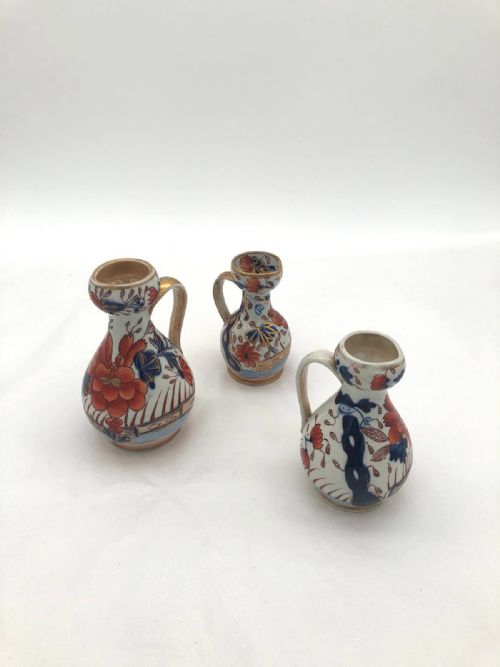
A vintage ceramic decorative jug brings centuries of pottery traditions into a modern interior through forms that range from robust stoneware water vessels to delicate porcelain ewers. These pieces emerge across distinct periods spanning from Georgian pearlware to twentieth-century Staffordshire production, reflecting changing domestic tastes and manufacturing capabilities over generations.
The most common forms encountered in this selection include large water pitchers, washstand sets, and ornamental ewers designed primarily for display rather than heavy daily service. Styles trace a path from Victorian Rococo Revival and Arts and Crafts movements through to Edwardian majolica and later painted earthenware.
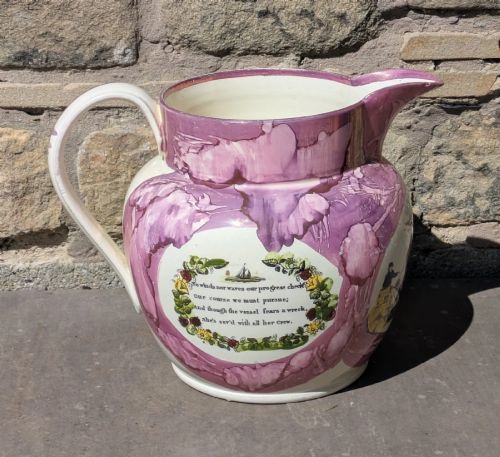
Buyers select these items to anchor a room with historical texture, utilising the varied patterns and glazed finishes to introduce colour and narrative into a space. Each vessel carries the specific imprint of its era, whether through maritime themes, floral transfer decoration, or hand-painted botanical studies.
Assessing craftsmanship and finish
Quality rests upon the crispness of the moulded relief and the precision of the hand-painted or transfer-printed decoration applied across the ceramic surface. Superior examples demonstrate careful control during the glazing and firing stages, resulting in even colour distribution and well-defined patterns.
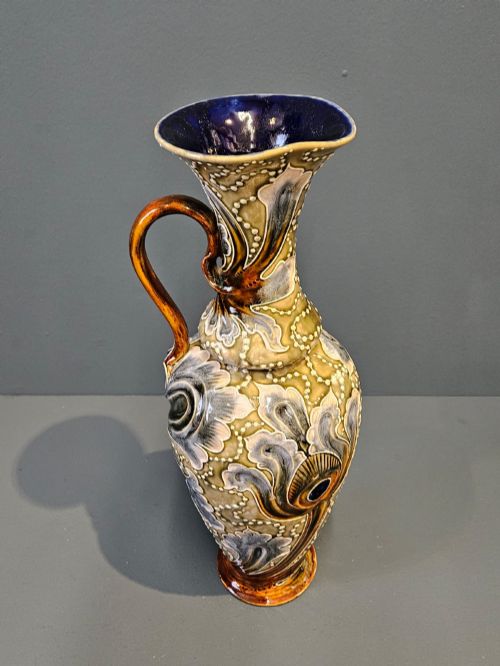
The distinction between standard production wares and exceptional pieces lies in the artistic ambition of the form, such as the sculptural modelling found on ewers and commemorative jubilee vessels. Master potteries achieved a level of refinement in their paste and glaze formulas that separates fine cabinet pieces from utilitarian kitchenware.
Queen Victoria's jubilee inspired enthusiastic potters to issue commemorative jugs featuring royal portraits.
Mason's Ironstone·Doulton Lambeth·Royal Doulton·Royal Worcester·Staffordshire
The Vintage Ceramic Decorative Jug Glossary
- Ewer
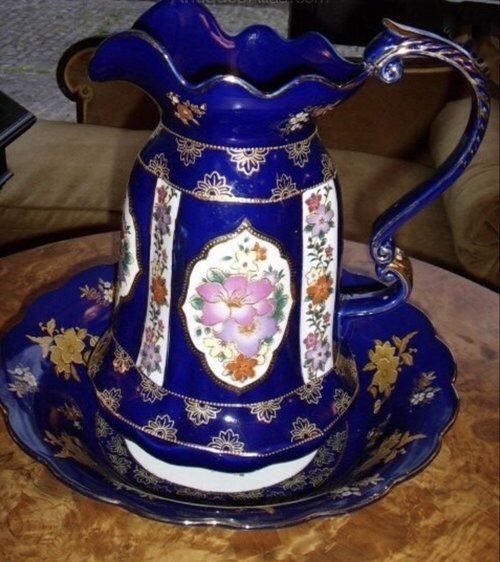
- A large ornamental jug with a wide spout and a curved handle, traditionally used alongside a matching basin for washing. These vessels often feature elaborate Victorian or Georgian styling.
- Pearlware
- A refined earthenware developed in the late eighteenth century featuring a subtle bluish glaze pooled in the recesses, designed to mimic the appearance of Chinese porcelain.
- Lustreware
- Pottery treated with a metallic film that creates an iridescent sheen, particularly noted in nineteenth-century pink and copper variations.
- Majolica
- A heavy earthenware covered in an opaque coloured tin glaze, popular during the Victorian and Edwardian eras for its vibrant botanical and figurative relief modelling.
- Transfer printing
- A decoration technique where an engraved copper plate transfers a design onto paper and then onto the ceramic body before glazing and firing.
Vintage Ceramic Decorative Jug: Frequently Asked Questions
What is a decorative ewer?
A decorative ewer is a water pitcher featuring an elongated spout and a graceful handle, designed primarily for display on a washstand or sideboard.
These vessels often display ornate Victorian or Edwardian moulding that distinguishes them from simple utilitarian jugs.
How do I identify Gaudy Welsh pottery?
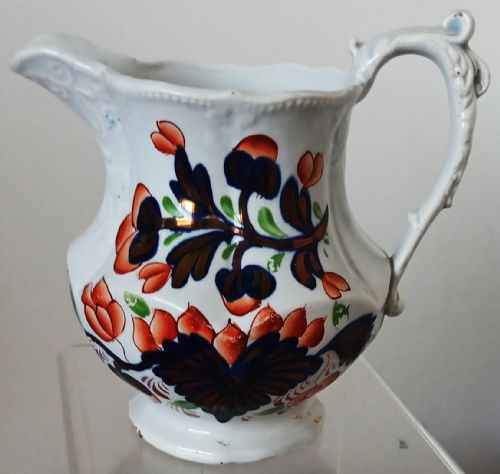
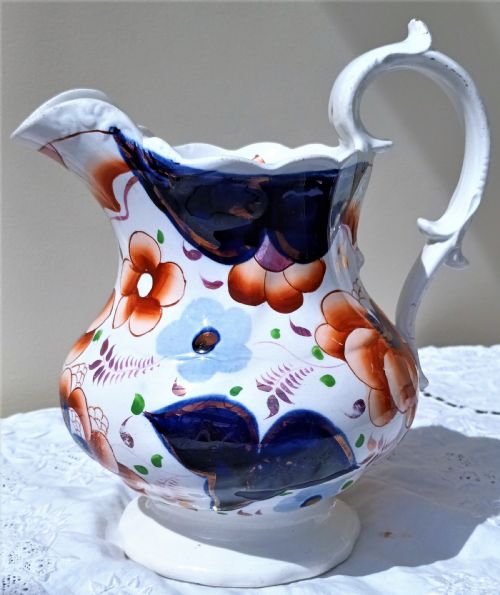
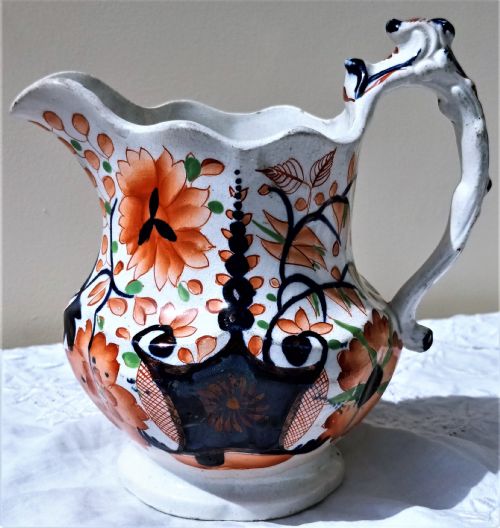
Gaudy Welsh pieces feature distinctive hand-painted patterns like grape, drape, or pagoda motifs executed in vibrant cobalt blue, iron-red, and copper lustre.
Produced during the nineteenth century, this earthenware was created largely for domestic display and everyday use.
Where should I display a large jug?
Large stoneware and earthenware jugs work well anchored on sturdy sideboards, floor stands, or open shelving where their weight and form remain secure.
Pairing a water jug with a matching bowl creates a traditional focal point within a room.
Are these jugs waterproof?
Many glazed ceramic and stoneware jugs remain fully waterproof and suitable for holding fresh cut flowers or serving water at the table.
Pieces with delicate enamel or gold leaf decoration are better suited for dry display to protect their historical surfaces.