
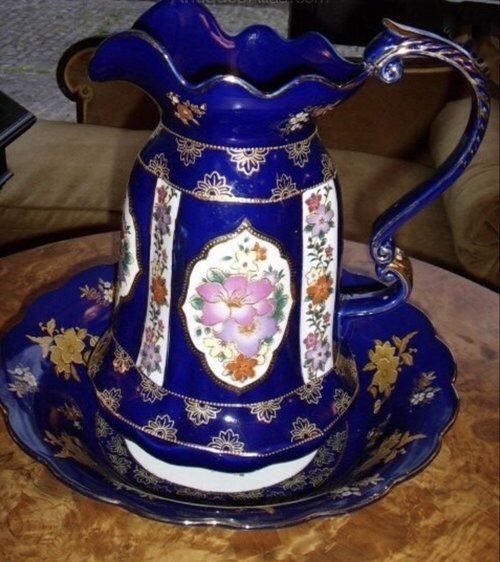


Decorative Porcelain Pitcher
These decorative porcelain pitcher items bring distinct Victorian and Edwardian character to a room, offering both practical form and intricate ceramic artistry.
Decorative Porcelain Pitcher
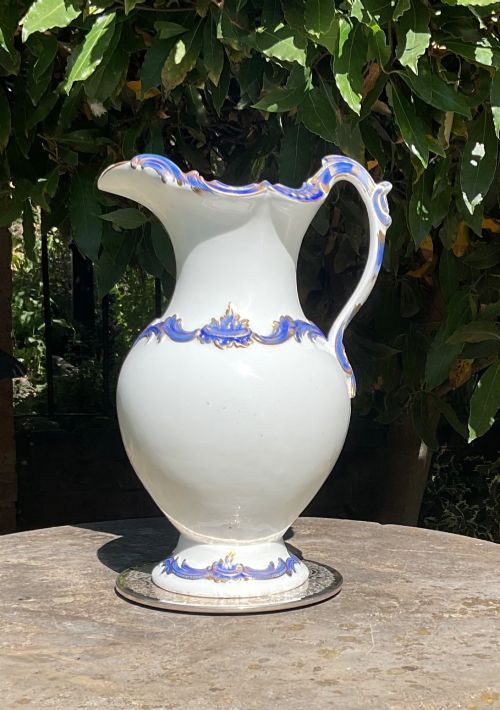
A decorative porcelain pitcher serves as a striking vessel, often shaped as an ewer, jug, or pedestal vase with historic roots stretching across the nineteenth and early twentieth centuries. These pieces appear frequently in forms associated with washstand sets, wine ewers, and floral display jugs.
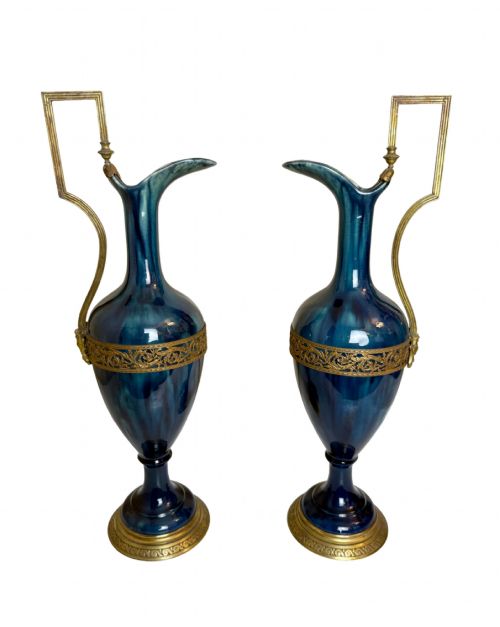
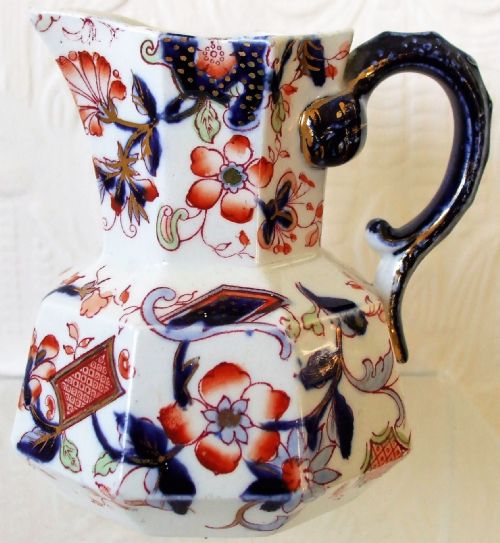
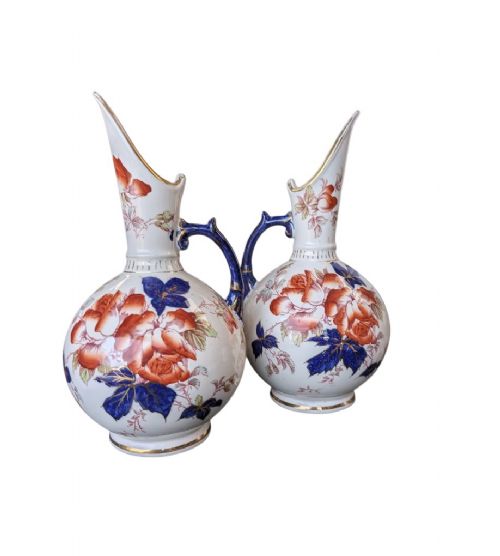
The selection here encompasses Victorian and Edwardian examples alongside French Neoclassical and Japanese Imari influences. Buyers encounter various ceramic forms, from large water vessels to delicate cream jugs and blush ivory pedestal vases.
The aesthetic movement and rococo revival styles heavily shape these items, providing detailed surface patterns and elaborate handles. Most pieces originate from established English manufactories of the period alongside continental workshops.
Materials and production methods
Makers relied on fine porcelain and earthenware bodies, shaped into complex vessels before receiving smooth glazes and detailed enamel work. Cobalt blue glaze frequently provides a deep background for painted flower designs and botanical motifs.
Gilding, gold leaf, and gold gilt accents highlight handles, rims, and raised floral decorations across many examples. Skilled artisans added hand-painted details, including fruit scenes and intricate reticulated patterns, before final firing.
Some Victorian water jugs managed to survive centuries of household use without losing a single speck of their original raised gold decor.
Evaluating quality and craftsmanship
Quality rests in the precision of the hand-painted decoration, the crispness of reticulated cutting, and the application of gold leaf and gilding. Finer pieces display careful artistic control in portraiture, floral panels, and gilt bronze trim.
The complexity of the ewer shape and the reputation of the pottery influence the overall distinction of the piece. Well-preserved glazes and balanced forms separate standard production items from exceptional workshop examples.
Keeling and Co·Royal Worcester·Doulton Burslem·Rockingham Porcelain·Royal Crown Derby·Vienna Porcelain·Coalport
The Decorative Porcelain Pitcher Glossary
- Ewer
- A large jug or pitcher with a wide spout and ornate handle, traditionally used for pouring water or wine.
- Reticulated
- Describes ceramic work featuring an openwork lattice pattern cut into the porcelain body before glazing.
- Blush ivory
- A matte cream-coloured porcelain finish popular during the late Victorian period, often highlighted with gilt.
- Imari
- A style of ceramic decoration featuring deep cobalt blue and iron red combined with gold, originating in Japan.
- Gilding
- The application of gold leaf or powdered gold to the surface of porcelain to accentuate handles and borders.
Decorative Porcelain Pitcher: Frequently Asked Questions
How do I identify a Victorian piece?
Victorian examples often display characteristic aesthetic movement motifs, rococo revival curves, or rich cobalt glazes with heavy gilding.
Examining the base for period marks helps confirm the manufacturing era and links the piece to nineteenth-century production methods.
Were these items used for serving wine?
Certain specialised vessels were designed specifically as wine ewers for formal dining tables during the nineteenth century.
Other larger jugs served functional roles in bedrooms as part of washstand sets or functioned purely as decorative ornaments.
How should I display a porcelain ewer?
Place these vessels on sturdy surfaces where their painted panels, gold leaf, and sculpted handles receive adequate light.
Keep them away from busy edges to protect delicate spouts and reticulated rims from accidental knocks.