

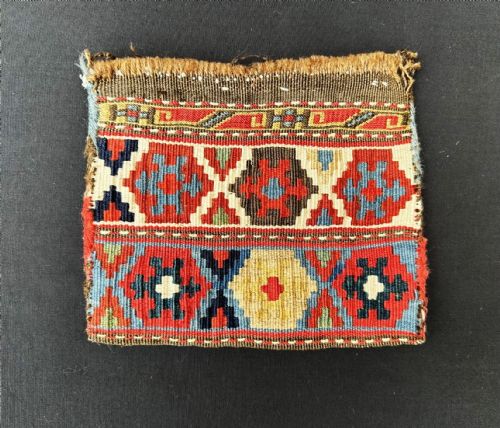


Vintage Caucasian Textiles
These vintage caucasian textiles are hand-woven tribal rugs, runners, bags and floor coverings carrying bold geometric motifs.
Vintage Caucasian Textiles
Vintage caucasian textiles comprise hand-woven rugs, runners, kilims, panels and bag faces made by nomadic and tribal groups across the Caucasus region. When searching for vintage caucasian textiles, a buyer encounters practical floor coverings alongside portable storage pieces like saddle bags, vanity bags and khorjin.
The pieces appearing on this page span the nineteenth and early twentieth centuries, stretching from eighteen-fifty through to nineteen-twenty. Buyers will most frequently meet room-size rugs, smaller kilim fragments, and mounted bag faces representing tribal weaving traditions.
How they were made
These textiles are constructed primarily from wool, hand-spun wool, cotton and silk, utilising traditional flatweave and pile techniques. Artisans employed vegetal dyes to colour the yarns, producing rich tones across soumak, kilim and knotted-pile structures.
Structural elements often incorporate wood components in related utilitarian objects, while foundational warps rely on cotton or wool. Individual workshops and nomadic groups built these items by hand, creating durable panels, saddle bags and rugs designed for daily utility.
Vintage Caucasian Textiles Retail Price Guide 2026
Typical asking prices for vintage caucasian textiles among the pieces listed under this phrase on Sellingantiques today, from the lower quarter to the upper quarter. They describe what is for sale here now, not the wider market.
What varies in quality
Quality in these textiles rests upon the fineness of the weave, the clarity of the geometric design and the integrity of the natural dyes. Pieces with tight knots, crisp tribal motifs and well-preserved wool foundation structures stand apart from heavily worn remnants.
The precision of the animal and bird designs, alongside the condition of original bag faces and panels, dictates the overall stature of the piece. Intact structures command attention over fragmented remnants, though historical panels and fragments retain distinct collectible interest.
The Vintage Caucasian Textiles Glossary
- Soumak
- A flatweave technique utilising a wrapping method that creates a durable, textured surface on the face of the textile. This method provides extra thickness compared to standard flatweaves.
- Kilim
- A tapestry-woven carpet or flatweave lacking a pile, produced across various nomadic weaving traditions. These flat surfaces highlight sharp geometric patterns.
- Bag Face
- The decorative front panel of a utilitarian storage sack, preserved and often mounted or displayed as textile art. These sections display the most concentrated tribal designs.
- Khorjin
- A traditional double-sided saddle bag used by nomads for transport and storage of household goods. Surviving examples are frequently separated into individual panels or bag faces.
- Vegetal Dyes
- Colourants derived from plants, roots and other natural sources rather than synthetic chemicals. These dyes yield nuanced tones that age with distinctive character.
Vintage Caucasian Textiles: Frequently Asked Questions
How should I display a bag face?
Bag faces can be mounted on linen or cotton backing and framed behind glass to protect the wool fibres from dust and physical wear. Alternatively, smaller fragments and cushions function effectively on low-traffic seating or display shelves.
Ensure that mounted textiles hang away from direct sunlight to prevent fading of the natural wool and vegetal dye colours over time.
Can these rugs withstand daily foot traffic?
Sturdier pile rugs and runners handle moderate walking when placed over a quality underlay that prevents slipping and cushions the fibres. Thinner flatweaves and fragile fragments suit decorative wall display rather than floor use.
Assessing the thickness of the wool and the firmness of the weave helps determine whether a textile belongs on the floor or the wall.
How do I clean a vintage wool rug?
Gentle surface brushing and careful vacuuming without a rotating power head remove surface dust from wool and cotton textiles. Professional textile cleaners specialising in antique oriental rugs should handle deeper washing.
Avoid soaking these pieces in water or applying harsh commercial detergents, as the historical vegetal dyes can bleed or shift.
How do I distinguish regional tribal styles?
Kazak and Shirvan pieces often display bold primary medallions and rectilinear motifs executed in saturated primary tones. Karabagh and Shahsavan groups utilise distinct bird and dragon iconography alongside specialised sumac weaves.
Examining the structural knotting, border patterns and specific colour palettes clarifies the likely tribal origin of each piece.