



Vintage Cast Iron Pots
These vintage cast iron pots and garden urns bring robust utility and classic form to outdoor spaces.
Vintage Cast Iron Pots
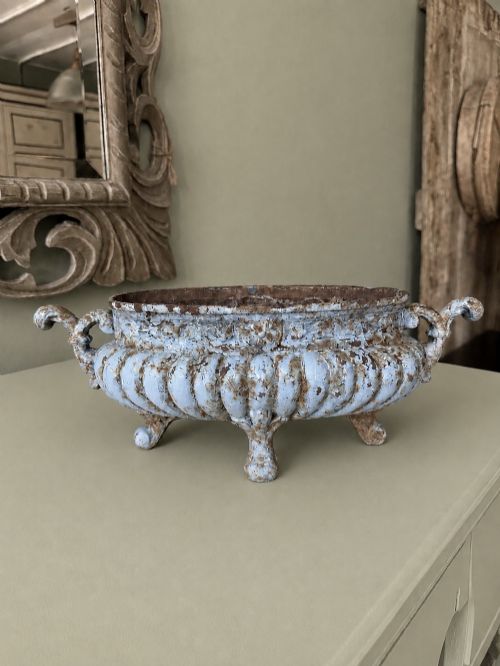
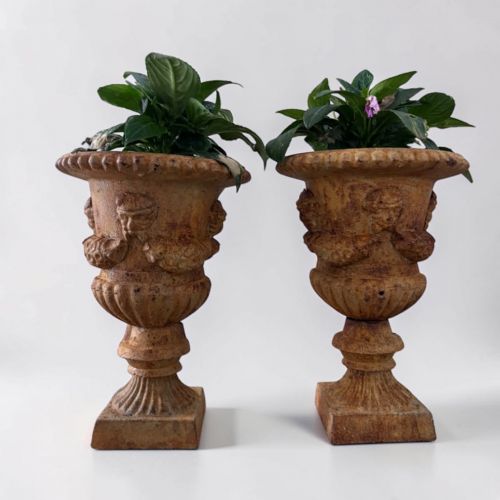
Vintage cast iron pots and garden urns encompass robust utilitarian vessels and decorative planting pieces from the nineteenth and early twentieth centuries. When searching for vintage cast iron pots, buyers typically encounter sturdy garden urns, campana planters, and tiered pan stands designed for heavy domestic and horticultural use.
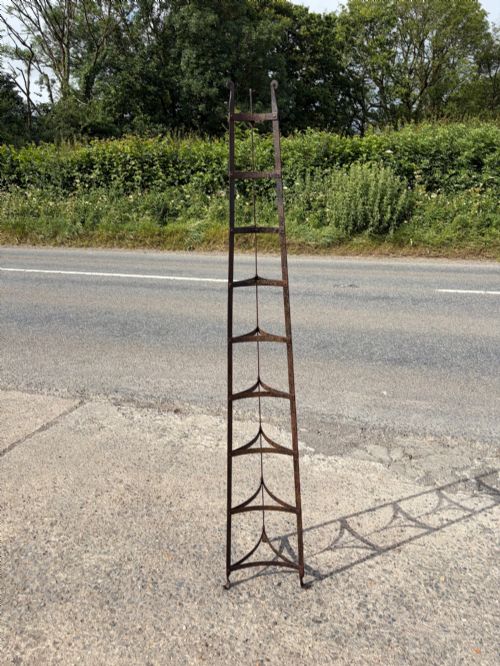
The selection ranges from French nineteenth-century jardiniere planters to Victorian campana urns on plinths and multi-tiered kitchen pan stands. Many examples date from the Victorian era and the decades following, reflecting industrial production methods adapted for gardens and sculleries.
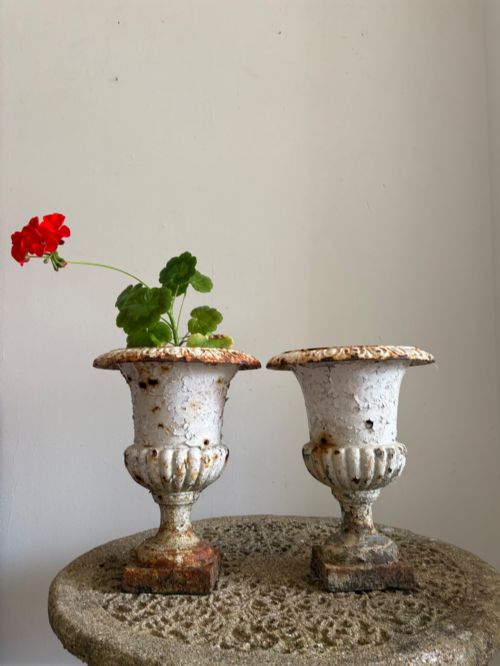
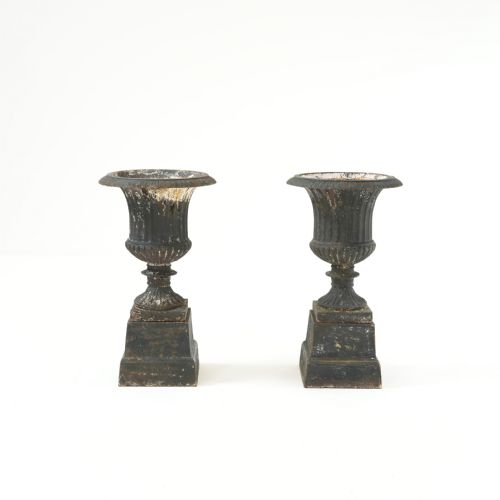
Most items on this page function as garden planters, urns, or stands, combining heavy metal construction with classical styling such as gadrooning and neoclassical motifs. These pieces suit outdoor settings, conservatories, and large interiors requiring durable architectural accents.
What varies in quality
The distinction between ordinary utility items and superior examples lies in the crispness of the casting and the refinement of classical ornamentation. Pieces featuring detailed gadrooning, well-proportioned plinths, and works attributed to known foundries exhibit higher sculptural ambition.
Proportion and scale separate standard planters from matched pairs of large garden urns that retain their original architectural pedestals. The integrity of the heavy metal and the presence of untouched historical surface patinas further define the better examples.
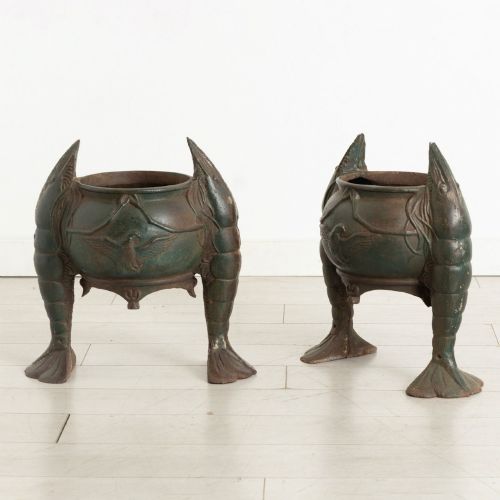
Among the heavy industrial urns and pan stands, nineteenth-century makers occasionally turned their foundry skills toward novelty animal forms, including iron shrimp planters.
Andrew Handyside·Hodges and Sons
The Vintage Cast Iron Pots Glossary
- Campana urn
- A bell-shaped garden vessel with an everted rim, popular in classical and Victorian landscape design. These urns typically sit on square plinths.
- Gadrooning
- A decorative carved or cast motif consisting of convex curves or fluting arranged in a parallel series around the rim or body of an urn.
- Jardiniere
- A large ornamental pot or stand designed to hold growing plants or flowers, frequently seen in nineteenth-century French and English metalwork.
- Plinth
- A heavy rectangular or square base supporting a garden urn, planter, or architectural element, providing stability and elevation.
- Wrought iron
- Iron that has been heated and hammered into shape by hand, often utilised for the frames of multi-tiered pot stands and workbenches rather than cast vessels.
Vintage Cast Iron Pots: Frequently Asked Questions
How do I date an iron urn?
Dating relies on stylistic markers, manufacturing techniques, and historical foundry records associated with the piece. Victorian examples often display heavier casting and classical revival motifs.
Changes in paint layers and surface oxidation also help establish the approximate age of nineteenth-century garden metalwork.
Are these pots suitable for outdoor use?
These cast iron vessels were originally manufactured for gardens, conservatories, and estates. Their robust metal construction handles outdoor weather conditions effectively.
Gardeners frequently place heavy urns and planters directly onto lawns, gravel, or stone terraces without structural concern.
What is a campana urn?
A campana urn is a bell-shaped container with a wide, flared rim mounted on a pedestal base. This classical silhouette originated in antiquity and saw a revival during the Victorian era.
Foundries cast these urns in iron for domestic gardens and formal landscape installations.
How should I clean a vintage iron planter?
Maintenance generally involves gently brushing away dirt and debris using soft tools to preserve the existing surface patina. Harsh chemical cleaners can strip historical paint and aged metal finishes.
Leaving the natural oxidation intact helps protect the iron from further environmental wear.