


Campana Cast Iron Planters
Campana cast iron planters are classic garden urns shaped to anchor terraces and lawns with enduring neoclassical style.
Campana Cast Iron Planters
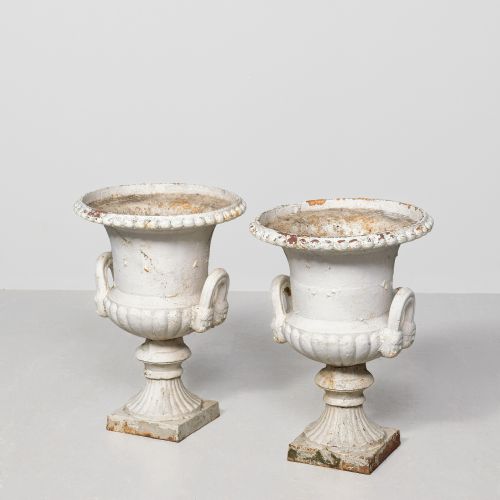
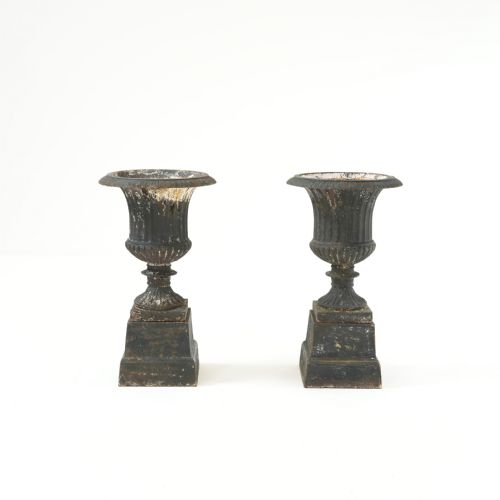
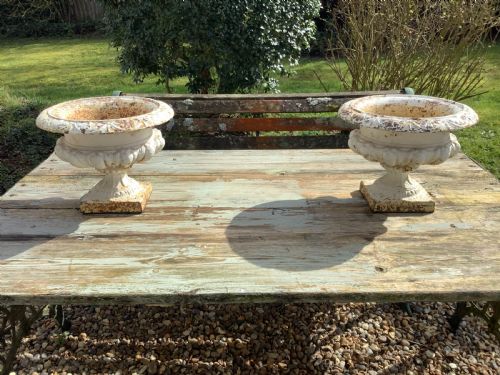
Campana cast iron planters take the classic bell-shaped form derived from antiquity and adapt it for formal garden display. When you search for campana cast iron planters, you encounter robust vessels designed to hold seasonal plantings on lawns, paths, and terraces.
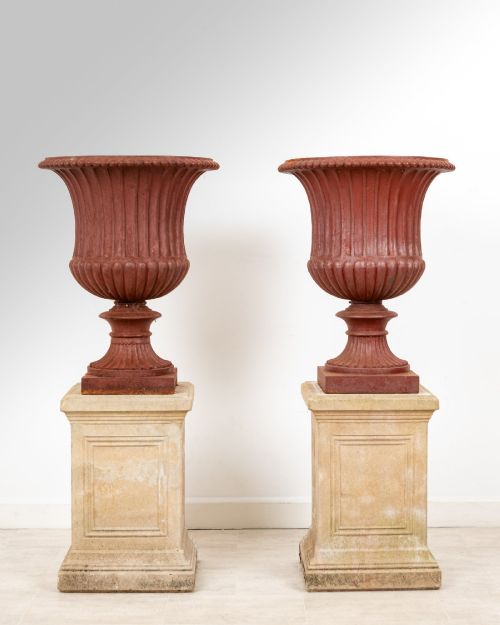
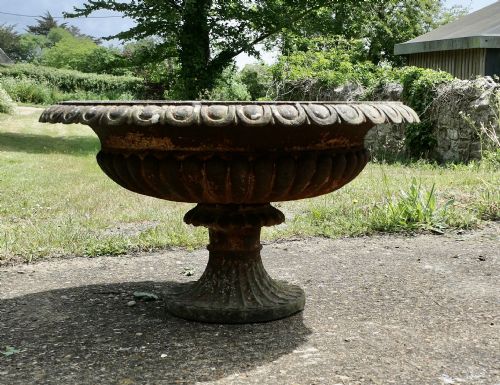
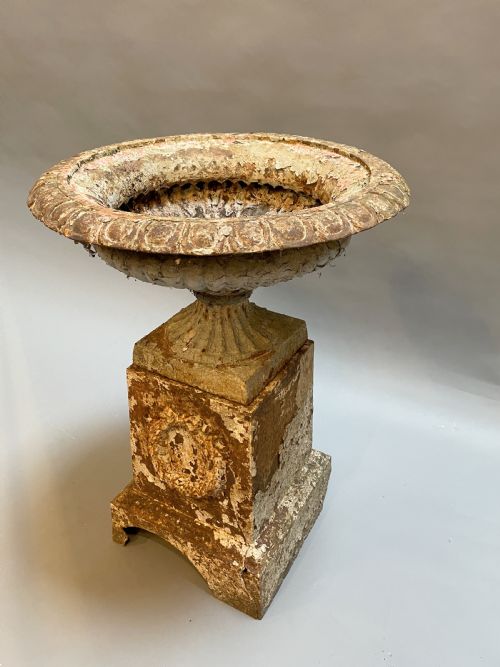
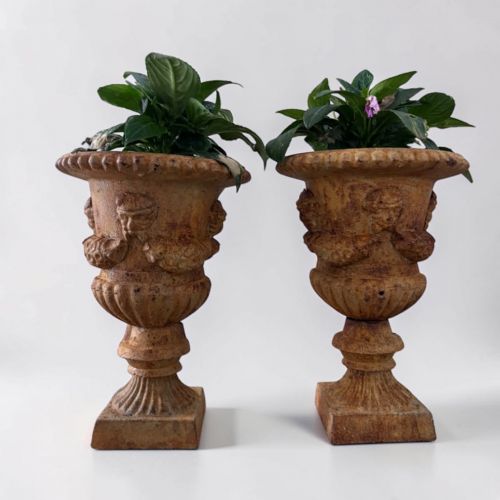
The pieces available here lean heavily into nineteenth-century production, frequently appearing in pairs complete with matching plinth bases or stone pedestals. Makers cast these garden urns and jardiniere forms with deep bowls and flared rims, echoing classical revival tastes.
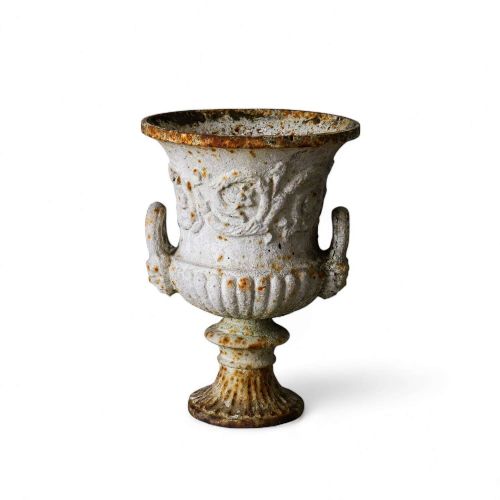
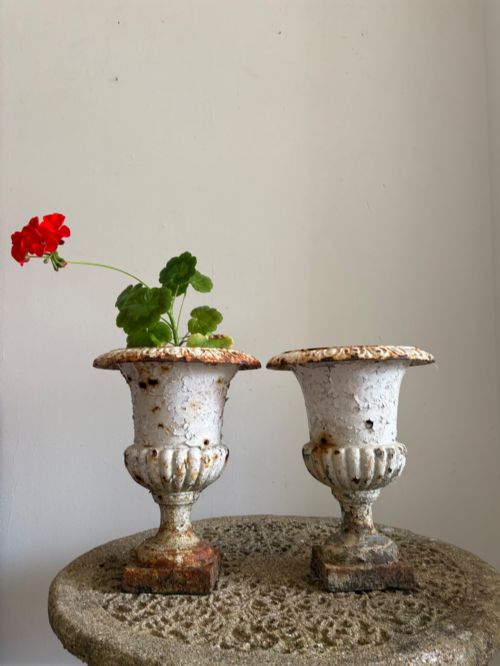
Examples range from shallow campana formats to large garden urns bearing original distressed paint and gadrooned surface detailing. French and English nineteenth-century origins dominate, alongside later twentieth-century iterations maintaining the same traditional silhouettes.
How they were made
Foundries poured molten metal into sand moulds to achieve the characteristic heavy walls and crisp decorative motifs of campana cast iron planters. This casting method allowed workshops to produce repeating classical details like gadrooning and fluted bodies with reliable precision.
Finished surfaces often received protective coats of paint, which over decades weathered into the distressed patinas seen on nineteenth-century examples today. Certain models integrated separate stone pedestals or plinth bases to elevate the heavy cast metal vessels above ground moisture.
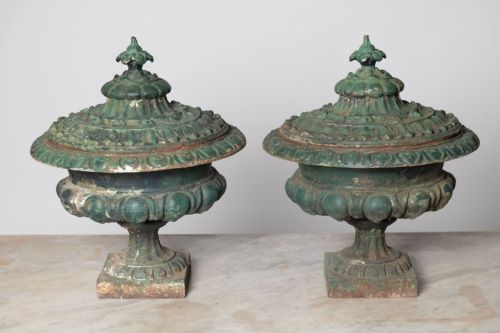
Some nineteenth-century models turned up complete with their original lids, preserving the complete neoclassical temple silhouette intact.
What varies in quality
Quality in campana cast iron planters rests in the crispness of the cast ornament and the proportion of the bell bowl to its foot. Finer examples display deeply struck details on the body and balanced classical symmetry without distortion from worn moulds.
The integrity of the metalwork and the presence of original components like matching plinths or lids elevate certain pieces above standard utility gardenware. Weight, wall thickness, and the aesthetic character of the aged surface paint distinguish the superior specimens from simpler forms.
Andrew Handyside
The Campana Cast Iron Planters Glossary
- Campana
- A bell-shaped vessel form derived from classical antiquity with a flared rim and narrow base. This silhouette defines the traditional garden urn.
- Gadrooned
- Ornamented with a series of convex curves or flutes carved or cast in a parallel row. This decorative moulding often encircles the lower body of nineteenth-century urns.
- Plinth base
- A flat-topped solid block or pedestal that supports a heavy urn or planter. Many nineteenth-century examples were designed specifically to sit upon these elevated stone or iron supports.
- Jardiniere
- An ornamental pot or receptacle used for holding flowers or plants. These garden vessels often feature wider shallow bowls suited for terrace displays.
- Neoclassical
- A style reviving classical Roman and Greek motifs, popular across nineteenth-century garden ornament production. It informs the formal symmetry and decorative reliefs on these planters.
Campana Cast Iron Planters: Frequently Asked Questions
How heavy are these iron planters?
These cast iron vessels possess substantial weight due to the thick metal used in nineteenth-century foundry production. Moving them typically requires multiple people or specialised equipment to prevent damage to the lawn or terrace.
Once positioned, their heavy mass keeps them stable against strong winds without needing permanent ground fixing.
Can I leave them outside in winter?
Cast iron withstands outdoor elements well, though prolonged exposure to freezing moisture requires attention to drainage. Ensuring the drainage holes remain clear stops trapped water from expanding and cracking the metal.
Many owners apply protective exterior paints periodically to guard against ongoing weathering and rust accumulation.
Do they come with matching bases?
Certain examples are paired with original stone pedestals, iron plinths, or matching stands as listed by the dealer. These raised supports lift the campana bowl to a more prominent viewing height in garden settings.
Listings specify whether a particular urn includes its matching plinth or whether it is sold as an individual vessel.
How do I date an iron urn?
Dating relies on stylistic clues like classical revival motifs, manufacturing techniques, and the presence of foundry marks. Nineteenth-century pieces often display hand-finished casting irregularities and layered historic paint patinas.
Georgian and Victorian examples typically feature heavier section sizes and distinct decorative banding compared to twentieth-century reproductions.