
Vintage Cast Iron Bench
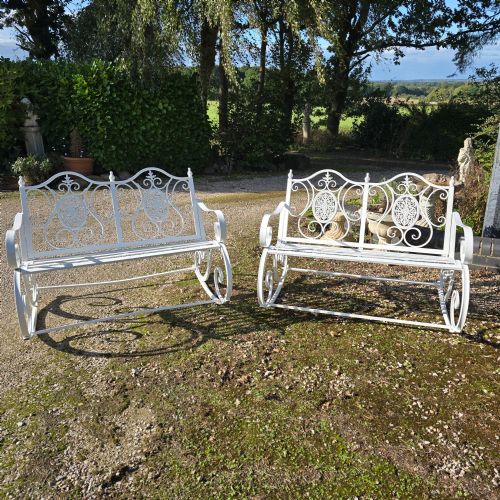
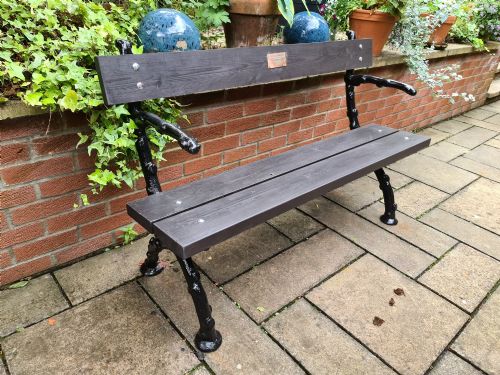
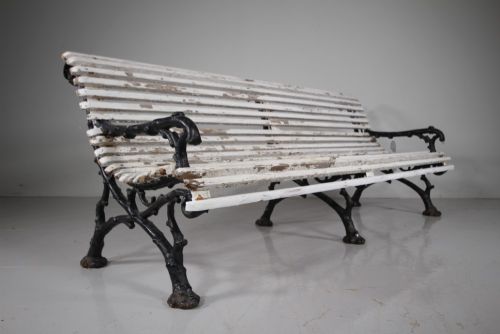
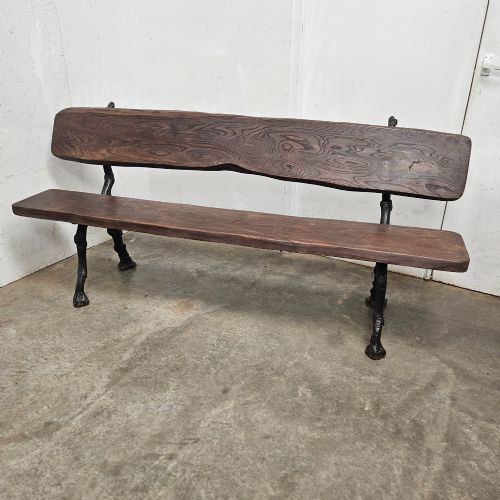
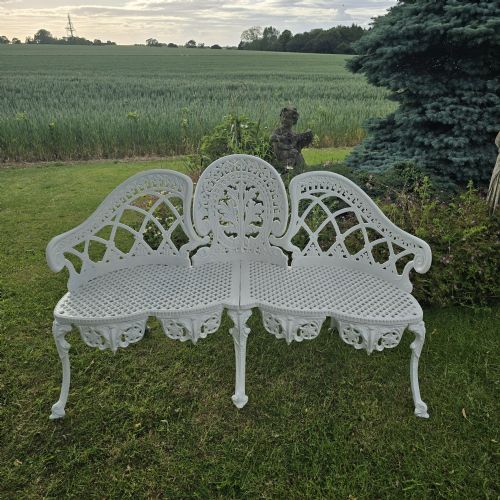
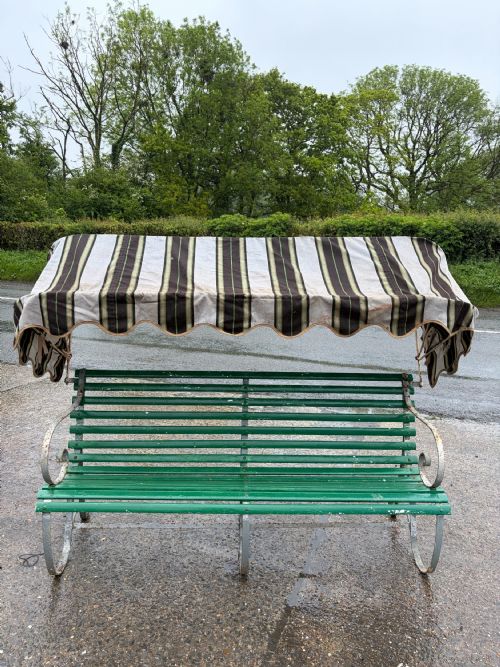
A vintage cast iron bench brings robust form to garden and patio, combining heavy metalwork with timber slats.
Vintage Cast Iron Bench
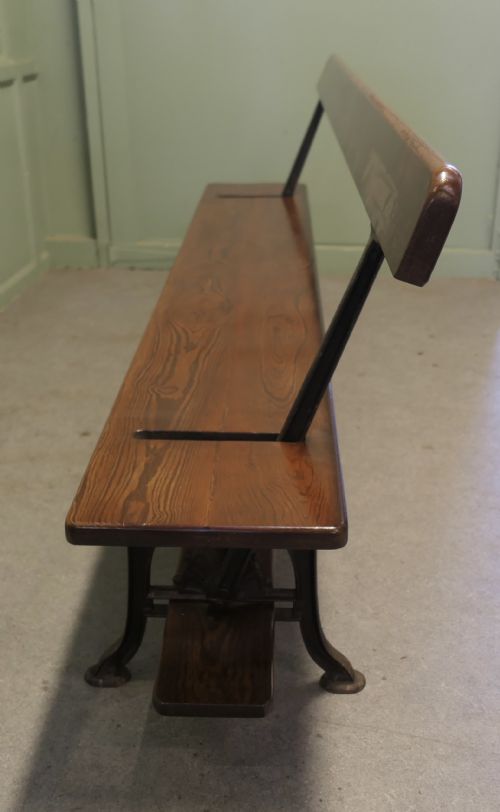
A vintage cast iron bench serves as both a sturdy seat and a striking architectural feature for outdoor spaces. The selection ranges from nineteenth-century garden benches to industrial workbenches and railway station seating.
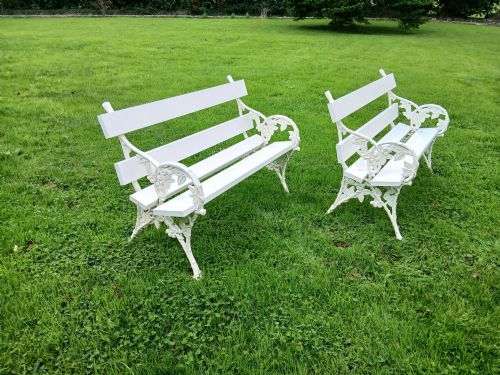
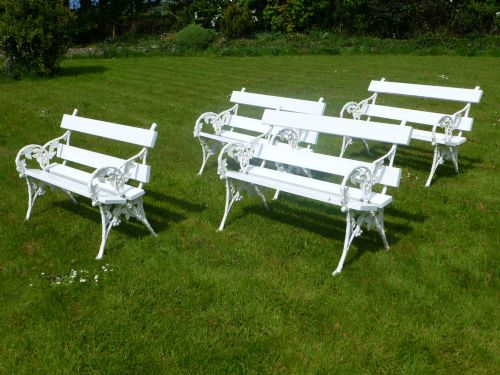
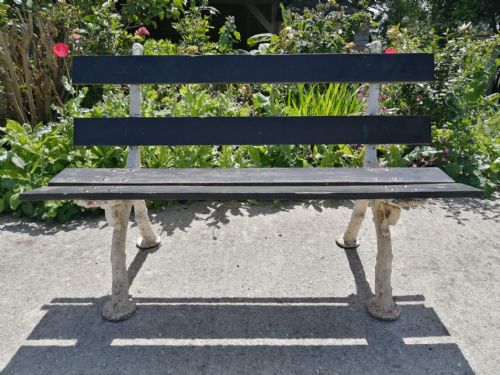
Victorian examples dominate the offerings, often displaying botanical motifs like blackberry and leaf patterns, alongside faux bois designs mimicking natural wood. These pieces frequently pair heavy iron frames with timber or pitch pine slats.
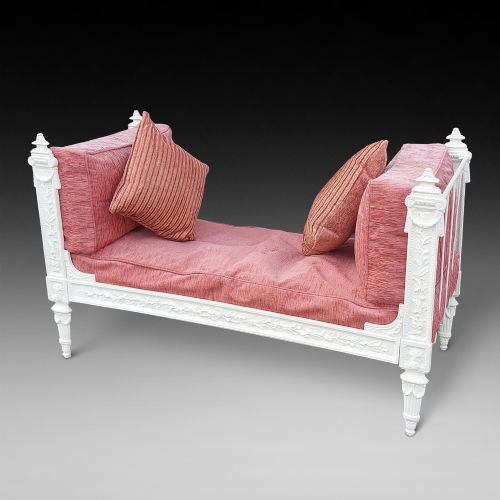
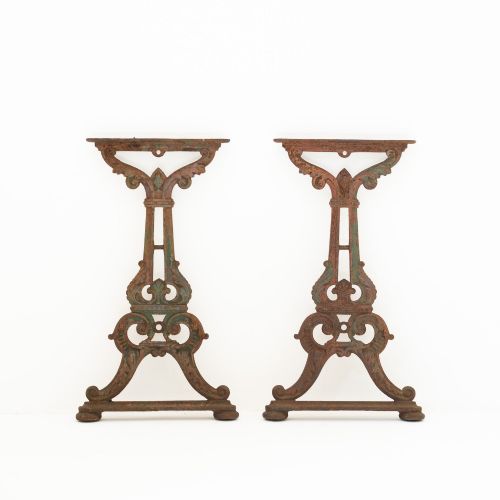
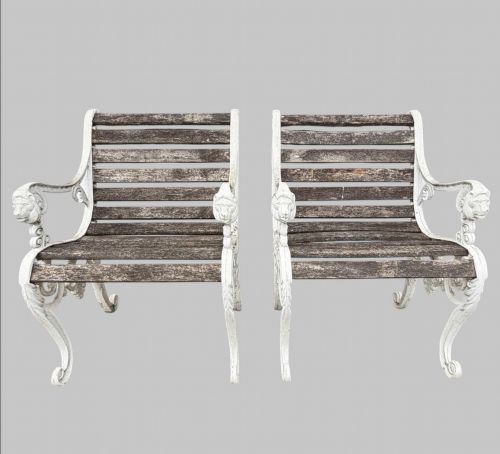
Buyers also encounter related seating and architectural elements such as daybeds, garden armchairs, and standalone bench ends. Origins stretch across English foundries and French workshops from the nineteenth and early twentieth centuries.
Materials and construction
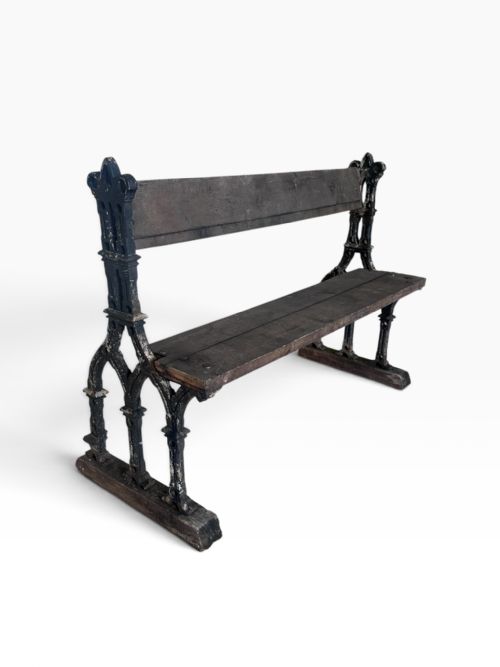
Foundries utilised molten iron poured into sand moulds to create intricate openwork frames, side panels, and bench ends. This technique allowed for detailed ornamentation including lion masks, Gothic tracery, and naturalistic foliage.
Makers integrated timber, wood, hardwood, and pitch pine for the seating slats and backrests, secured to the metal structures with bolts. Paint finishes were applied to protect the metal and wood from outdoor weathering.
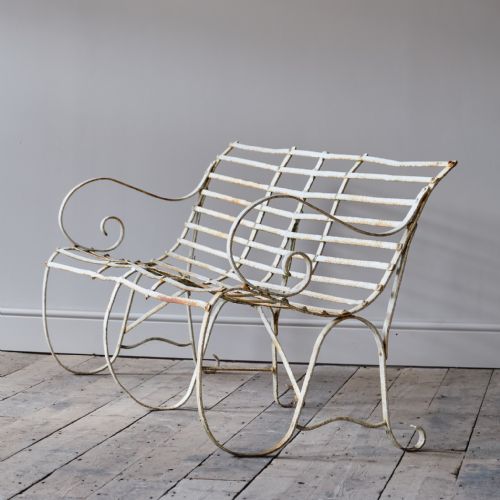
Materials recorded across the inventory include cast iron, wrought iron, pitch pine, hardwood, and painted timber.
Judging the pieces
Quality rests upon the crispness of the foundry casting and the depth of detail preserved in botanical or architectural motifs. Finer foundry work displays sharp definition in relief patterns rather than soft, worn edges.
The integrity of the combination between iron frames and wooden elements dictates the structural stability of the bench. Examples retaining original cast components and well-preserved timber demonstrate superior craftsmanship.
Falkirk Carron Foundry·Coalbrookdale
The Vintage Cast Iron Bench Glossary
- Cast iron
- An iron-carbon alloy poured into moulds to create rigid, highly decorated structural components. It provides the heavy framework for nineteenth-century garden seating.
- Bench ends
- The structural cast iron side panels that support the backrest and seat slats. They carry the decorative patterns and foundry details.
- Faux bois
- Imitation wood grain rendered in metal or painted surfaces. This decorative technique appears frequently on nineteenth-century garden furniture.
- Pitch pine
- A durable, resinous wood utilised for seating slats. It withstands outdoor exposure remarkably well.
- Wrought iron
- Iron beaten or rolled into shape while hot, offering high tensile strength. It appears in strapwork designs alongside cast elements.
Vintage Cast Iron Bench: Frequently Asked Questions
How do I care for a cast iron garden bench?
Keep the metal protected with appropriate exterior paint to prevent rust formation on the frame. Regular cleaning removes debris and moisture that might damage the wood and iron.
Store the seating undercover during harsh winter months if possible. Inspect the hardware connecting the wooden slats to the metal frame periodically to ensure stability.
Are these benches suitable for year-round outdoor use?
Most examples are designed for garden and patio environments using weather-resistant materials like cast iron and pitch pine. The robust weight prevents them from shifting easily in high winds.
Prolonged exposure to damp conditions can affect the wooden elements over time. Applying protective treatments helps preserve both the timber slats and the painted iron surfaces.
How can I identify a Victorian garden bench?
Victorian pieces often feature distinct stylistic markers such as Gothic tracery, rustic faux bois branches, or botanical leaf motifs. Foundry marks or specific design registrations can also point to nineteenth-century production.
The construction methods, including heavy cast frame components and traditional fixings, help differentiate older examples from later reproductions.
Can I replace the wooden slats on an antique bench?
Replacement of damaged wooden slats is common practice to restore structural safety and usability. Matching the original timber species, such as pitch pine or hardwood, maintains the character of the piece.
Care should be taken to retain the original cast iron ends and framework. Professional joinery ensures the new slats fit the existing frame geometry correctly.