



Vintage Cast Iron Andirons
Vintage cast iron andirons anchor a hearth with functional weight, forged in iron and brass to hold logs safely.
Vintage Cast Iron Andirons
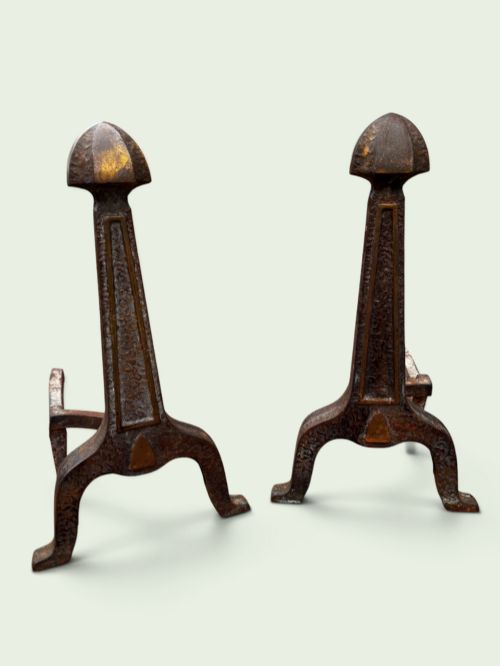
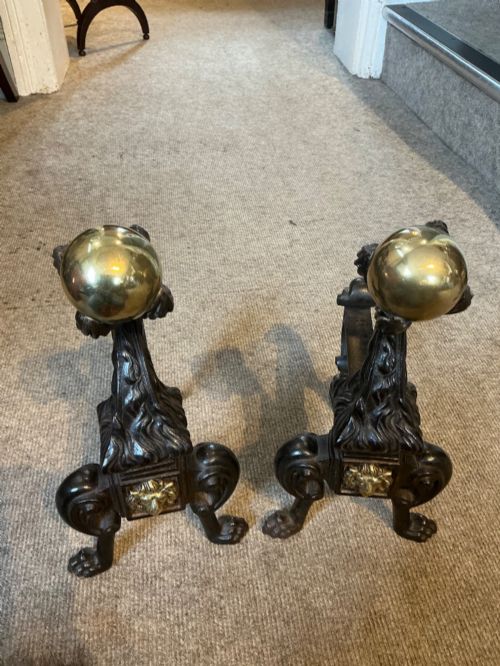
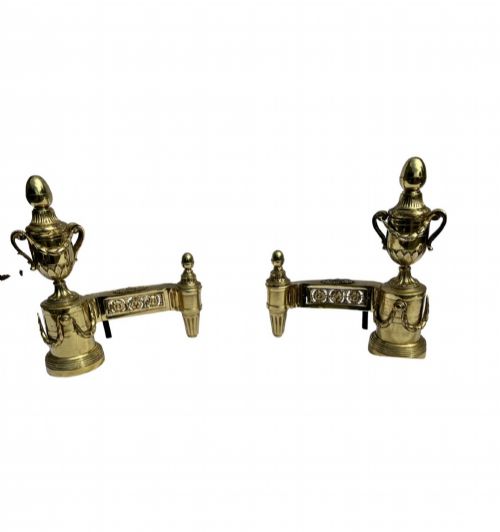
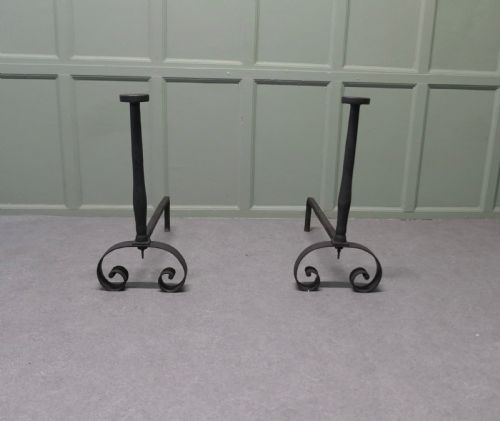
These vintage cast iron andirons form the structural supports within an open fireplace, elevating logs to allow air circulation beneath the fire. The selection ranges widely in period and design, spanning from sixteenth century pieces through Georgian and Victorian examples up to early twentieth century items.
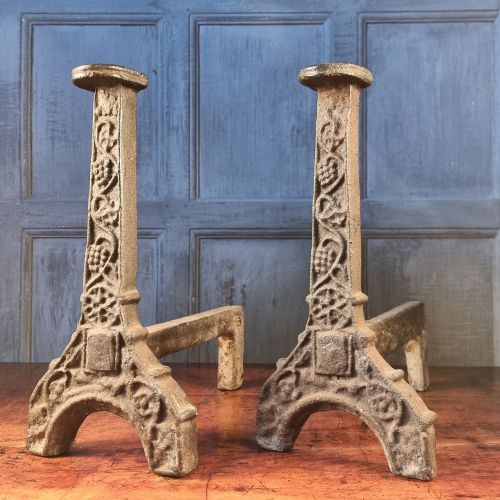
Most pieces seen here belong to the nineteenth century, encompassing Victorian interpretations and Gothic Revival styles alongside simpler cast iron forms. Alongside standard andirons or firedogs, the listings incorporate related fireplace accessories including fire baskets, fire dogs, and hearth stands.
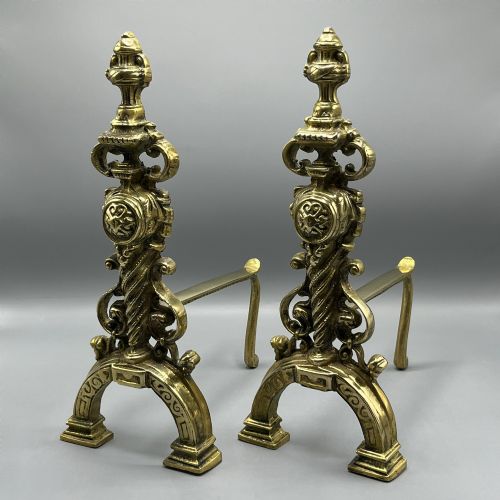
Origin details in the evidence point to English and French workshops, utilising robust metals suited to daily hearth use. Buyers encounter pairs that balance plain utilitarian casting with decorative brass accents or polished steel finishes.
What varies in quality
Substantial weight and material thickness dictate the durability of an individual pair, distinguishing heavy structural elements from lighter decorative iterations. The integrity of the casting marks the standard of production, where crisp detailing on iron surfaces and secure joints reveal superior workmanship.
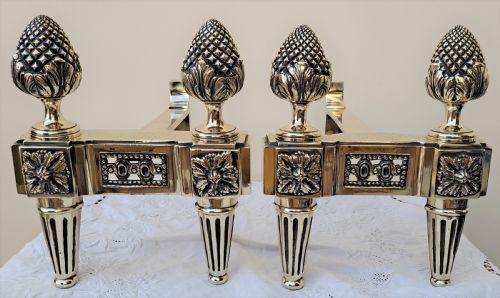
Material combination also influences the character of each piece, as solid brass fittings and polished steel elements demand greater skill in assembly than standard all-iron construction. The clarity of period stylistic markers, from Gothic Revival motifs to Neoclassical lines, separates standard hearth furniture from exceptional examples.
A sixteenth century pair comes with a precise date of fifteen eighty cast right into the iron.
The Vintage Cast Iron Andirons Glossary
- Andiron
- A horizontal metal support raised on legs, used in pairs to hold logs in an open fireplace. Also known as a firedog.
- Fire Basket
- A metal grate designed to hold burning fuel within a hearth, frequently incorporating integrated andirons or firedog ends.
- Firedog
- An alternative term for an andiron, describing the ornamental upright front standard that faces the room.
- Gothic Revival
- A nineteenth century design style drawing on medieval architectural motifs, visible in pointed arches and heavy surface ornamentation.
- Wrought Iron
- Iron beaten into shape while hot by hand tools, offering fibrous strength distinct from brittle cast metal.
Vintage Cast Iron Andirons: Frequently Asked Questions
What is the difference between andirons and fire dogs?
The terms are generally used interchangeably to describe the heavy metal supports placed inside a hearth to hold logs. Historically, fire dog often emphasised the ornamental front standard facing the room, while andiron referred to the complete supporting structure.
Both items serve the primary function of elevating firewood to improve air circulation beneath the burning logs. Listings apply both names to nineteenth century and earlier hearth furniture without strict functional distinction.
How do I measure for andirons?
Measure the depth of your fireplace hearth to ensure the horizontal shaft and rear support fit comfortably within the brick recess without protruding dangerously. Check the height of the front standard to confirm it clears any existing fire basket or fender.
Consider the scale of the opening when selecting between heavy nineteenth century pieces and smaller domestic pairs. Adequate clearance around the iron uprights ensures safe operation during use.
Can these andirons be used in a working fireplace?
Most pieces listed are constructed from durable cast iron, wrought iron, or brass, materials specifically designed to withstand high hearth temperatures. Structural weight and solid metal composition allow them to bear the burden of heavy hardwood logs.
Examine the individual pair to ensure the metal remains sound and free from deep structural fractures caused by centuries of intense heat exposure. Proper maintenance keeps vintage metalwork functional in active seasonal use.
How do I identify a Victorian andiron?
Victorian examples often display characteristic nineteenth century revivals, incorporating Gothic, Neoclassical, or ornate brass detailing onto the cast iron body. Makers frequently combined cast iron with polished steel or solid brass components to satisfy contemporary domestic tastes.
Compare the surface ornamentation and casting weight against documented nineteenth century patterns to confirm the period of manufacture. These pieces frequently accompany matching fire irons or hearth furniture from the same era.