

Vintage Cased Cutlery
Vintage cased cutlery brings together fitted boxes and fitted utensils in silver, silver plate, and steel from the nineteenth and twentieth centuries.
Vintage Cased Cutlery
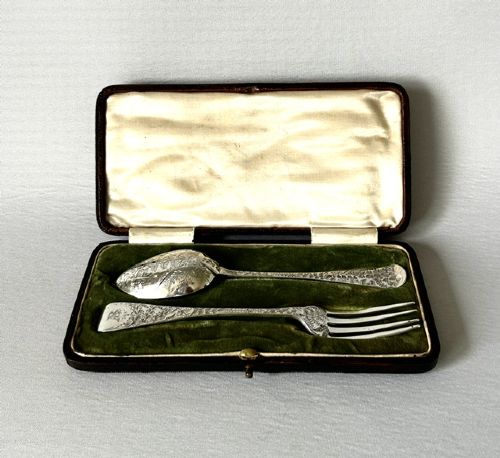
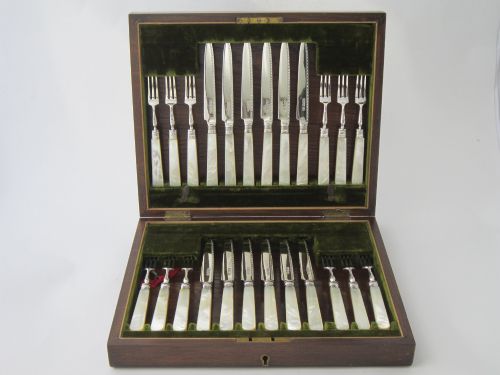
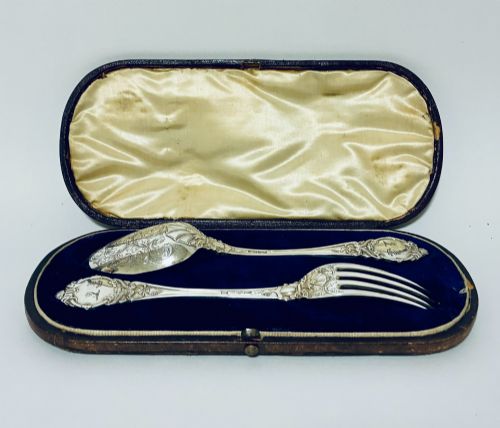
Vintage cased cutlery comprises complete sets of knives, forks, spoons, and serving pieces housed in dedicated fitted boxes designed to protect the metalwork. These sets span the Victorian, Edwardian, and Art Deco periods, alongside mid-century examples.
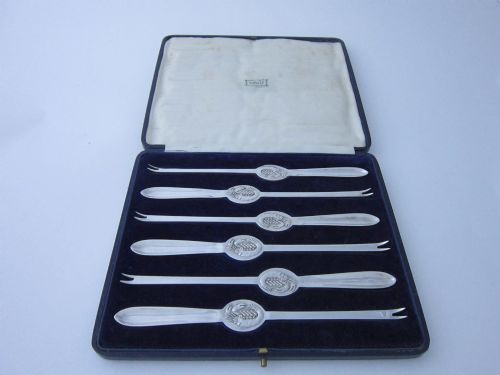
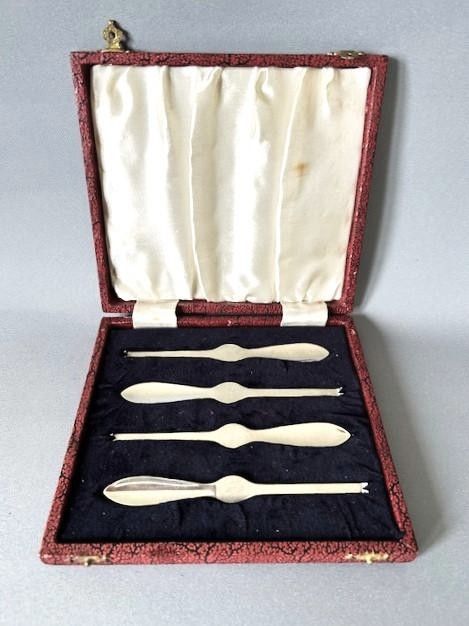
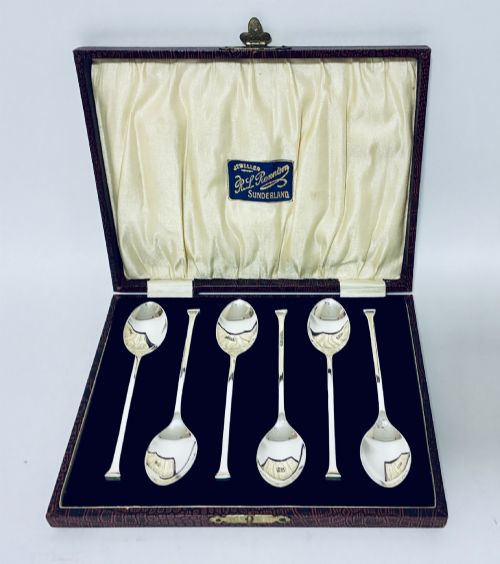
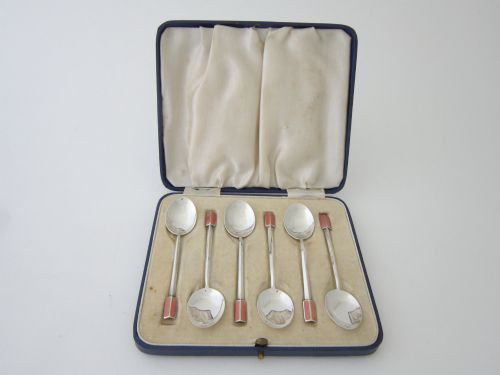
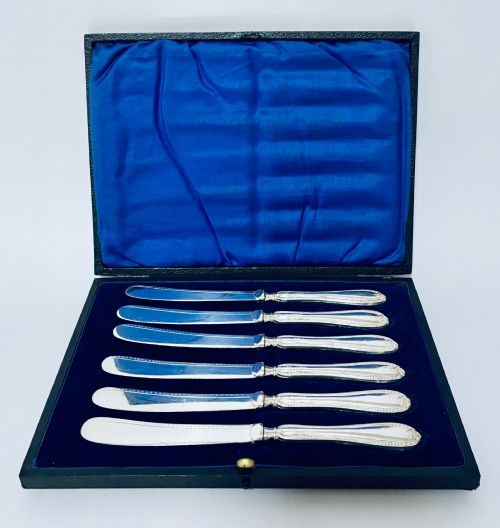
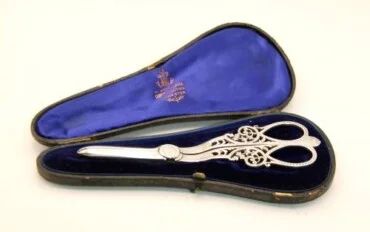
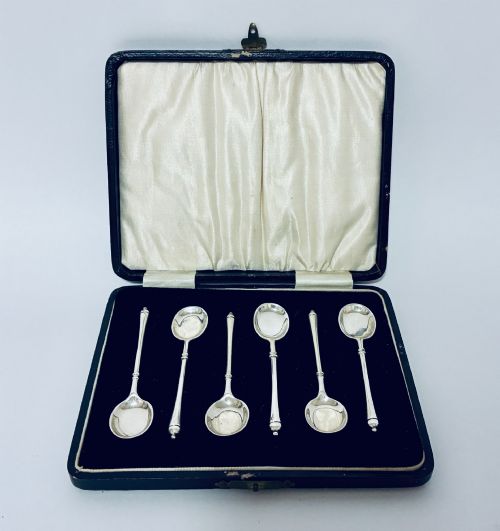
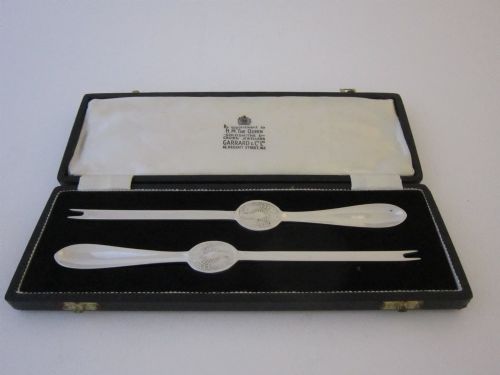
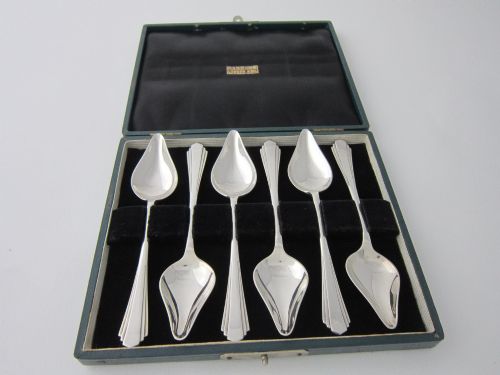
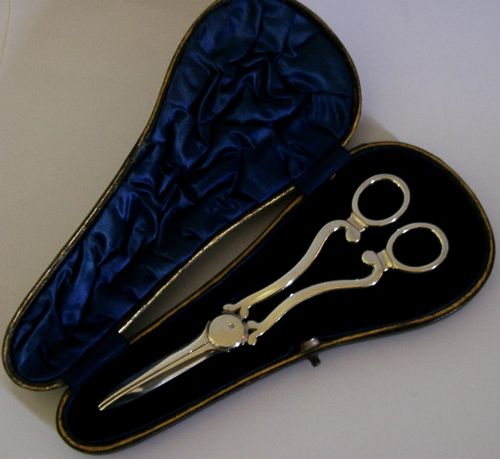
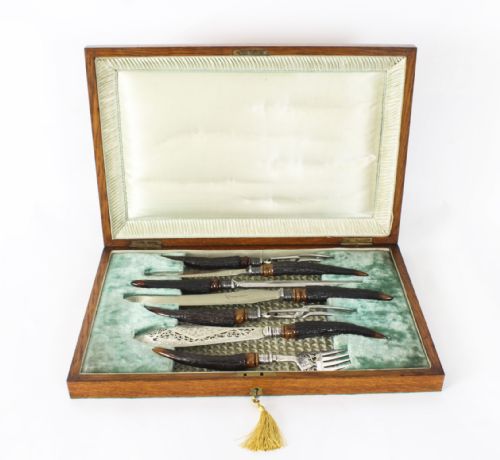
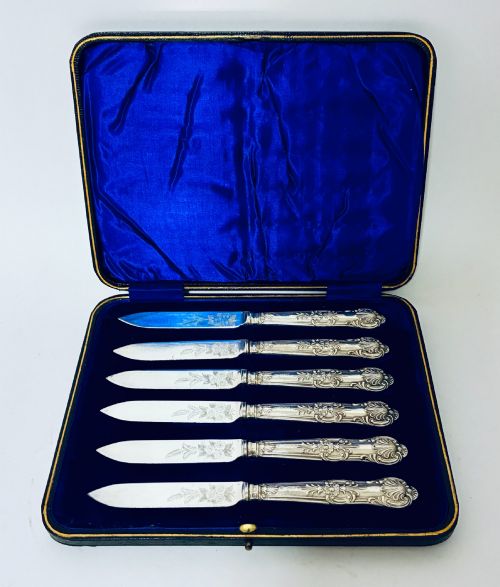
The assortment on this page ranges from specialised implements like lobster picks, grape shears, and butter knives to large dining services and teaspoons. Most pieces originate from British makers working in silver and silver plate during the late nineteenth and early twentieth centuries.
Materials and construction
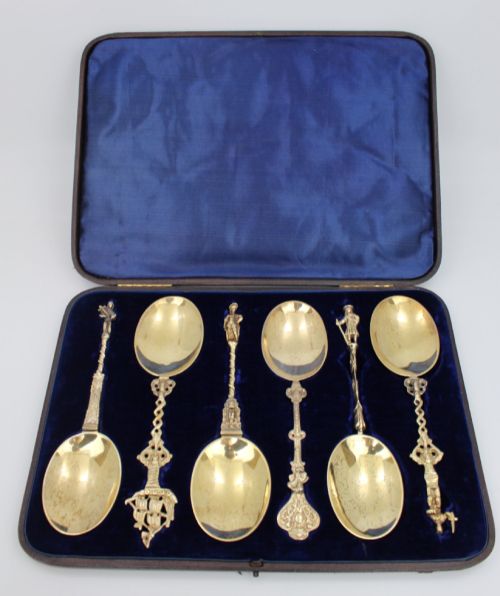
Makers utilised sterling silver and silver plate for blades, bowls, and handles, frequently pairing them with organic materials such as mother-of-pearl, antler horn, and wood. Enamel work appears on decorative spoon sets from the Art Deco period.
The interior storage boxes rely on fitted wooden frames lined with velvet, silk, satin, or leatherette to keep each individual utensil secure in its dedicated slot.
Vintage Cased Cutlery Retail Price Guide 2026
Typical asking prices for vintage cased cutlery among the pieces listed under this phrase on Sellingantiques today, from the lower quarter to the upper quarter. They describe what is for sale here now, not the wider market.
The listings span from the nineteenth century through the mid-twentieth century, featuring materials including velvet, silk, satin, leatherette, and steel.
Assessing quality and craftsmanship
Quality rests in the weight and gauge of the silver, the crispness of engraved decoration on blades and handles, and the structural integrity of the fitted case itself. Superior sets maintain original interior linings and retain matching components across every slot.
The presence of hallmarked sterling silver rather than silver plate elevates a set, as does specialised workmanship found in enamel detailing or cast silver blades.
Deakin & Francis·Garrard·Suckling Ltd.·William Devenport·Harrods·Christofle·David Andersen
The Vintage Cased Cutlery Glossary
- Sterling silver
- A silver alloy containing 92.5 percent pure silver by mass, standard in British flatware production.
- Silver plate
- A base metal coated with a thin layer of silver, common in larger dining and serving sets.
- Apostle spoons
- Spoons featuring figures of the apostles on the handle ends, frequently produced in sets.
- Grape shears
- Specialised scissors designed for cutting and serving grapes, often found in fitted presentation boxes.
- Lobster picks
- Slender metal implements created for extracting seafood meat from shells.
Vintage Cased Cutlery: Frequently Asked Questions
What is vintage cased cutlery used for?
These fitted sets serve for specific dining tasks, from everyday tea and dessert service to specialised courses like seafood and fruit.
Collectors utilise them for formal dining or display them within their original presentation boxes.
How do I care for silver flatware?
Silver requires gentle hand washing with mild soap and warm water followed by immediate drying with a soft cloth. Storing items inside their lined fitted cases helps minimise tarnish between uses.
Avoid abrasive cleaners that wear down the metal surface or damage organic handles like mother-of-pearl.
How do I identify the period of a set?
British silver bears hallmarks stamped directly onto the metal, indicating the assay office, standard, and date letter. Examining the case style, lining materials, and typography on the interior lid also aids in dating.
Design motifs such as Art Deco geometric lines or Victorian engraved foliage provide further chronological clues.
Are all cased sets made of solid silver?
Many sets utilise silver plate over a base metal rather than solid sterling silver. Makers often employed plating for large cased services to maintain accessibility.
Examining the metal for official hallmarks clarifies whether the pieces are solid silver or plated.