





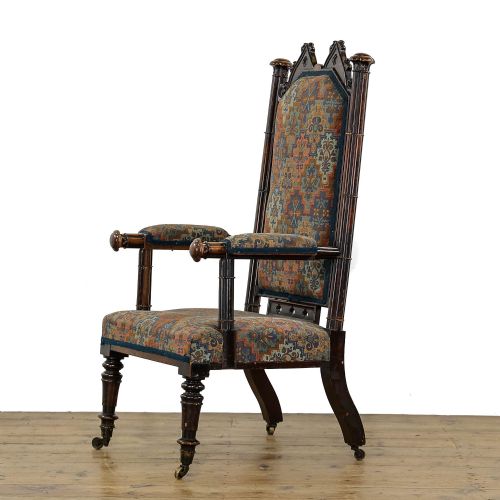


Vintage Carved Wood Throne
A vintage carved wood throne commands attention in any room, offering heavy timber construction, elaborate ornamentation and deep historical presence.
Vintage Carved Wood Throne
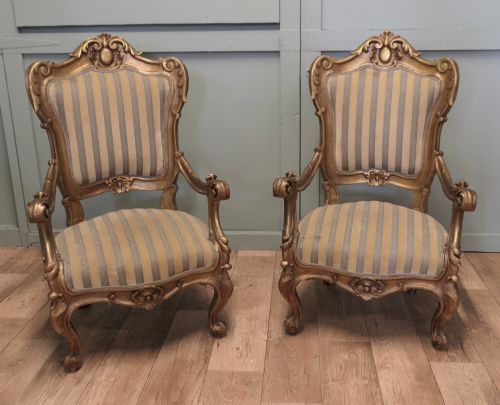
When you search for a vintage carved wood throne, you encounter heavy armchairs, hall seats and imposing accent chairs defined by ornate woodwork. The selections span centuries from the seventeen hundreds through the nineteen thirties, drawing on diverse global workshops.
You frequently meet revival styles on this page, including Jacobean, Carolean, Tudor and Renaissance interpretations alongside Chinese export and Anglo-Indian designs. These seating forms served ceremonial, domestic and regional functions, utilising substantial frames and high backs.
Makers shaped elm, oak, walnut, teak and blackwood into sturdy seating, sometimes pairing the timber with cane, velvet, leather or tapestry upholstery. The surviving examples demonstrate regional carving traditions from Europe, Asia and the Indian subcontinent.
How they were made
Cabinetmakers and regional carvers utilised solid hardwoods such as oak, walnut, elm, teak and blackwood to construct the primary frames of these chairs. Joinery relied on traditional pinned mortise and tenon joints to support the heavy weight of the timber and withstand daily use.
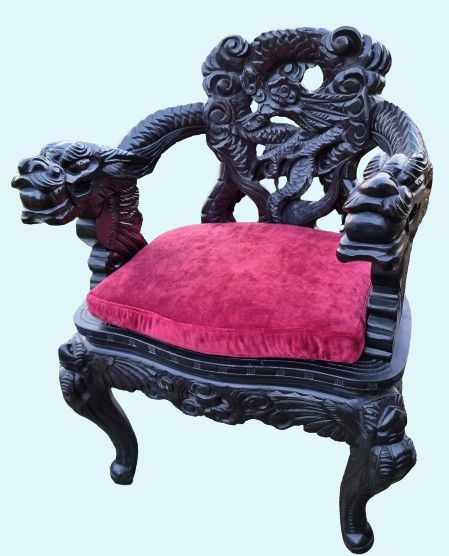
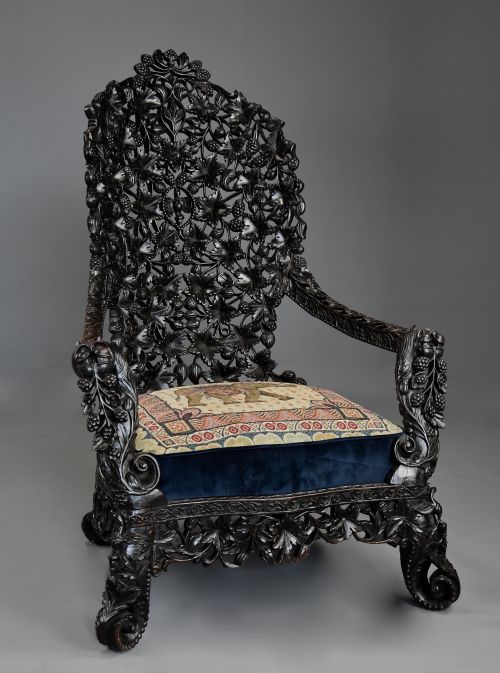
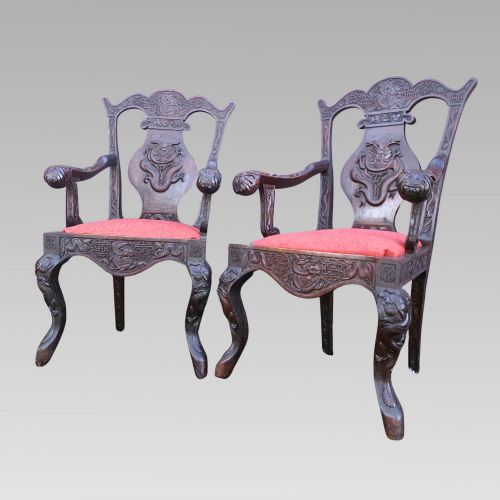
Craftsmen applied hand-carving techniques directly to the structural wood, rendering intricate floral motifs, geometric panels, dragons and scrollwork across crest rails and arms. Secondary materials like brass studs, cane panels, velvet, leather and tapestry were integrated to finish the seats and backrests.
Vintage Carved Wood Throne Retail Price Guide 2026
Typical asking prices for vintage carved wood throne among the pieces listed under this phrase on Sellingantiques today, from the lower quarter to the upper quarter. They describe what is for sale here now, not the wider market.
Several chairs feature carved wooden dragons that appear to be guarding the armrests against unwelcome sitters.
What varies in quality
The depth, crispness and definition of the hand-carving separate standard regional joinery from masterwork examples across these seating forms. Superior pieces display fluid, deeply undercut motifs where every leaf, panel or dragon shows deliberate artistic intent.
The choice of dense, highly figured hardwoods and the preservation of original structural timber determine the longevity and integrity of the chair. Chairs retaining period upholstery elements or high-grade secondary materials like brass hardware and cane hold greater historical interest.
The Vintage Carved Wood Throne Glossary
- Carolean style
- An English design aesthetic spanning the mid to late seventeenth century, noted for rich carving, scrollwork and crown motifs. Pieces from this movement often feature high cane backs and twisted woodwork.
- Anglo-Indian
- Furniture produced in India by local artisans using traditional carving techniques adapted to British colonial tastes. These items typically employ dense tropical hardwoods like teak and blackwood.
- Wainscot chair
- An early wooden armchair constructed primarily from panelled oak, taking its name from imported oak boards used in panelling rooms. They feature solid panel backs and sturdy armrests.
- Fauteuil
- An open-armed upholstered armchair with exposed wooden framing, originating in France. Walnut and other fine timbers form the polished structures of these seating pieces.
- Cane
- Material woven from peeled rattan palm used to create breathable panels for chair seats and backs. This technique lightens heavy wooden frames while offering flexible support.
Vintage Carved Wood Throne: Frequently Asked Questions
What is a vintage carved wood throne?
A vintage carved wood throne is an imposing armchair or hall seat featuring heavy timber construction and elaborate hand-carved ornamentation. These pieces draw on historical revival movements and global craft traditions.
They function as statement seating in domestic interiors, combining robust joinery with decorative woodwork spanning several centuries of design.
How were these chairs used historically?
Historically, heavily carved wooden armchairs served as seatings of authority in domestic halls, civic spaces and ceremonial settings. Their elevated backs and decorated arms denoted status and importance within a household.
Over time, variations like veranda chairs, wedding chairs and hall seats adapted these grand forms for regional domestic rituals and daily lounging.
How do I live with a throne chair?
Living with a large carved wooden armchair requires positioning it as a focal point in a room where the back and arms remain visible. Pair the substantial timber frame with open space to let the intricate carving stand out.
Maintain the wood using appropriate waxes or oils according to the timber type, and protect any delicate cane or fabric elements from direct sunlight and heavy wear.
How do I tell different periods apart?
Distinguishing periods involves examining the carving styles, structural joinery and timber choices characteristic of specific eras. Seventeenth-century and revival pieces often display geometric panelling and crown motifs, while nineteenth-century Asian and Indian works show deep relief carvings of dragons or foliage.
Comparing the tool marks, patination of the wood and integration of secondary materials like brass or cane helps narrow down the origin and date.