



Vintage Carved Wall Brackets
Vintage carved wall brackets bring architectural presence to a room, offering both decorative support and distinct period character.
Vintage Carved Wall Brackets
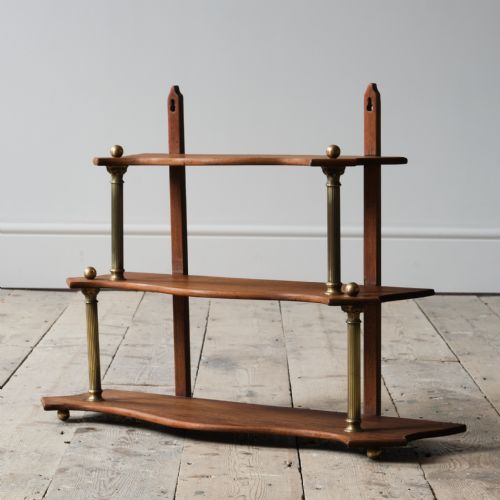
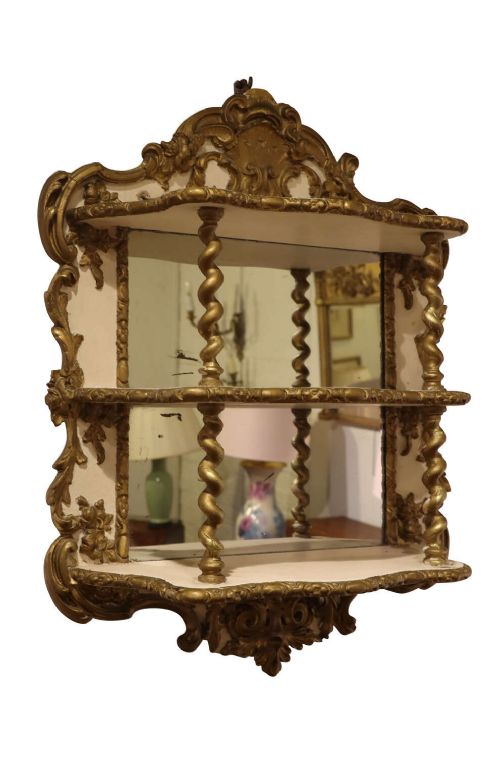
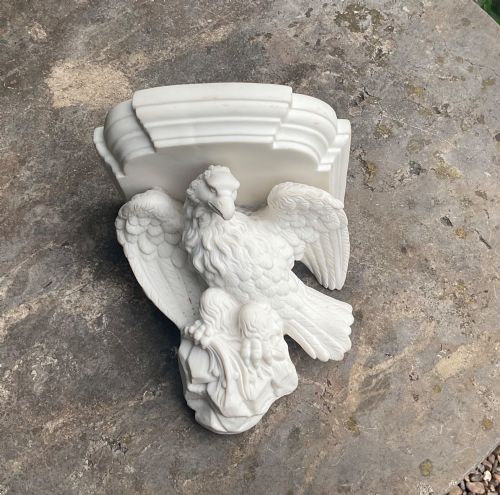
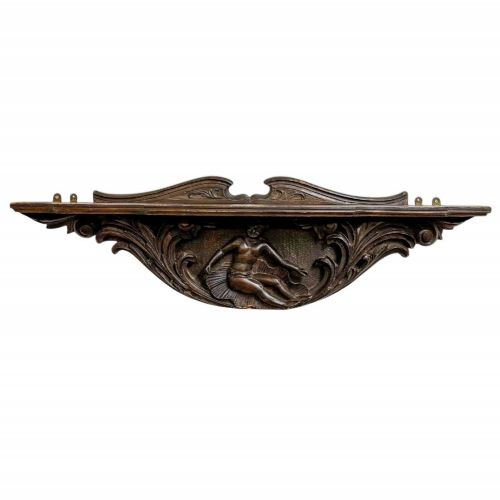
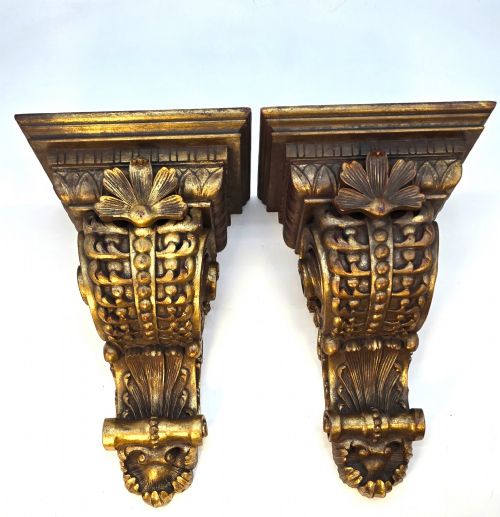
Vintage carved wall brackets encompass a diverse selection of architectural supports, shelves, and ornamental ledges designed to project from vertical surfaces. When searching for vintage carved wall brackets, buyers encounter forms ranging from simple wooden ledges to elaborate Rococo revival consoles and structural corbels.
The pieces appearing in this selection span multiple eras, with strong representation from the nineteenth and early twentieth centuries. Italian and French regional styles predominate, often featuring intricate gilding, polychrome finishes, or rich natural timber grains.
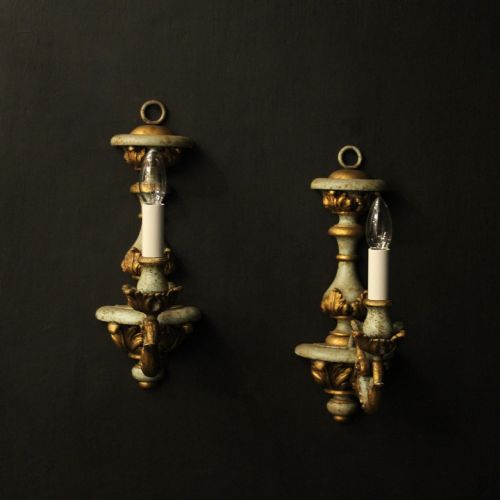
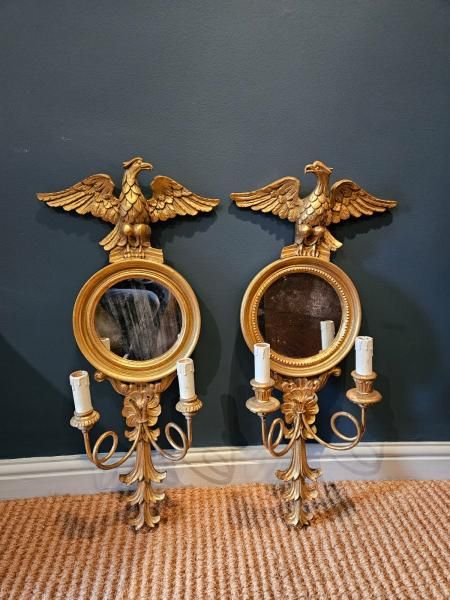
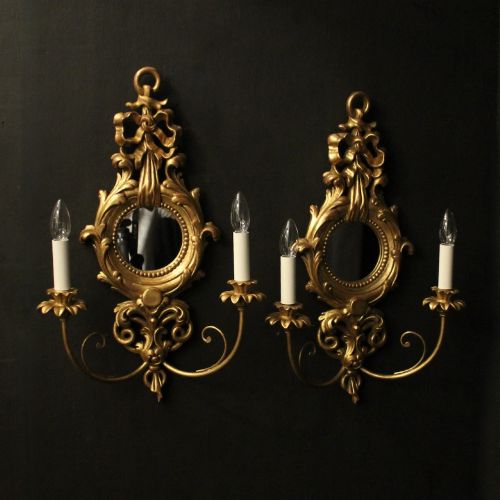
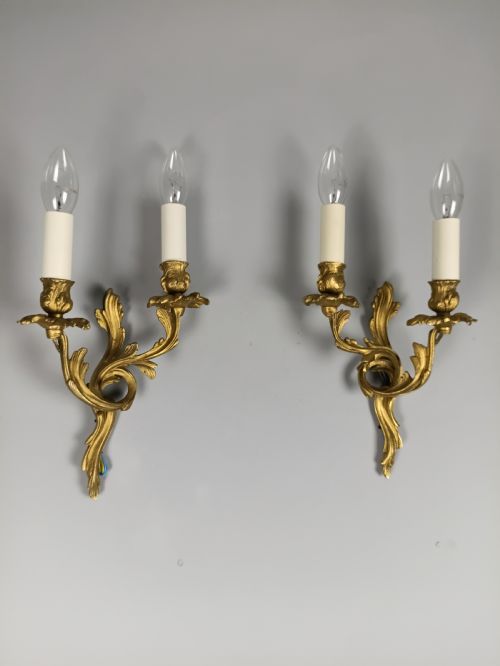
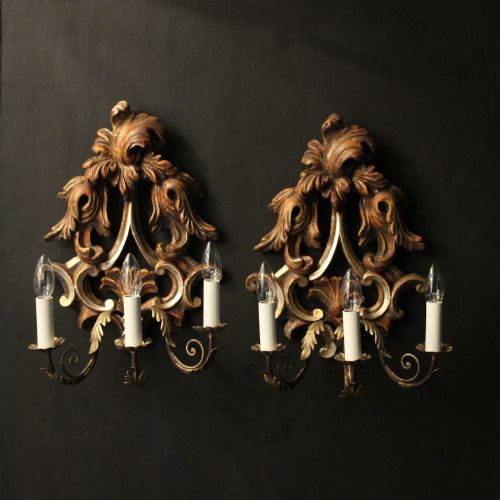
Beyond standalone brackets, the selection includes related wall-mounted fixtures such as sconces, girandoles, and small étagères that serve a similar display purpose. These items reflect traditional craftsmanship adapted for domestic interiors across various historical periods.
Materials and construction methods
Makers primarily utilised traditional timbers such as mahogany, walnut, oak, and pine as the structural base for carved items. These woods provided the necessary density and grain stability for intricate hand-carved detailing.
Surface ornamentation frequently involved layers of gesso applied over wood, which was then gilded with gold leaf or painted in polychrome schemes. Metal elements in brass and bronze also appear, particularly on pieces incorporating candle arms or structural reinforcement.
Construction techniques relied heavily on traditional joinery combined with hand-chiselled carving. Artisans shaped organic motifs such as foliage, scrolls, and figural elements directly into the solid material before applying decorative finishes.
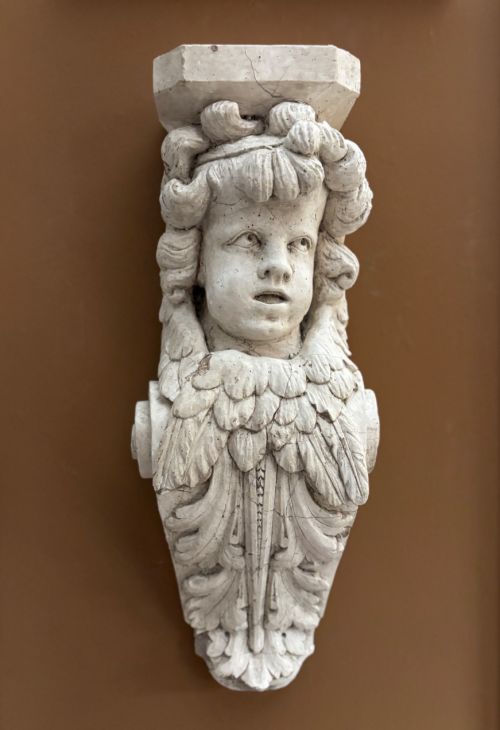
Among the architectural supports, small wooden cherubs and putti peer out from centuries past to hold up your ornaments.
Factors determining quality
The crispness and depth of the hand-carving distinguish finer pieces from simpler production work. Superior examples exhibit sharp undercut details in foliage or figures, whereas lesser items show softer, shallower moulding.
The integrity of the original surface finish plays a central role in character and authenticity. Pieces retaining their authentic period gilding, polychrome paint, or natural timber patina hold greater integrity than those with unsympathetic later repainting.
Structural heft and the quality of the underlying timber or gesso foundation also dictate standard. Heavier woods and robust joinery ensure the bracket can support weight safely while maintaining its decorative form over decades.
Connell of London
The Vintage Carved Wall Brackets Glossary
- Corbel
- A projecting bracket of stone, wood, or metal supporting a weight above it. In decorative contexts, it often mirrors classical architectural forms.
- Giltwood
- Wood that has been coated with fine gold leaf or powder. This finish is characteristic of many ornate Italian and French wall pieces.
- Gesso
- A plaster mixture used as a smooth base for paint or gold leaf on wood. It allows for intricate moulded relief work before gilding.
- Polychrome
- Painted or decorated in several colours. This treatment is frequently found on Italian and continental wooden wall fixtures.
- Girandole
- An ornamental branched candlestick or light holder fitted with a mirror back. The glass reflects the candlelight to increase illumination.
Vintage Carved Wall Brackets: Frequently Asked Questions
How do I hang heavy wall brackets?
Heavy wall brackets require secure fixing directly into wall studs or masonry using appropriate wall anchors. The weight of the timber and any displayed object places significant leverage on the mounting screws.
Ensuring the bracket is level and properly anchored prevents structural failure. Consult a professional if the wall construction is uncertain.
What rooms suit vintage wall brackets?
These pieces suit hallways, living rooms, and dining areas where they provide a focal point or display surface. They function well above sideboards or flanking mirrors.
Smaller brackets hold porcelain or clocks, while larger corbels provide architectural emphasis. Their placement depends on the scale of the room and the items displayed.
How do I clean gilded wood?
Gilded wood requires gentle dusting with a soft, dry brush or feather duster. Moisture and harsh cleaning agents can damage the delicate gold leaf layer.
Avoid rubbing the surface, as gilding is thin and easily worn away. Regular, careful maintenance preserves the original finish.