



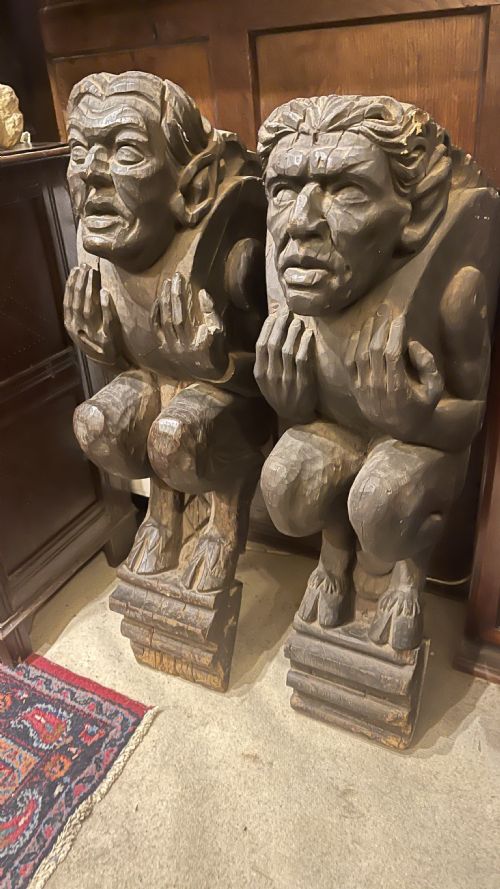


Antique Oak Corbels
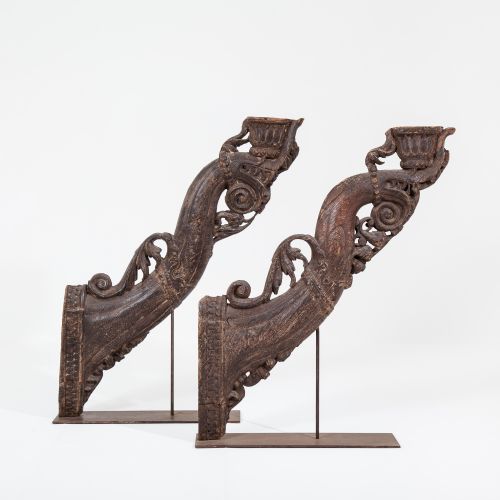
These antique oak corbels are architectural supports and wall brackets carved from timber across several centuries, offering structural weight and sculptural presence.
Antique Oak Corbels
When you search for antique oak corbels, you are looking at architectural salvage and decorative wall brackets harvested from historic buildings and libraries. The examples met on this page span from the sixteenth century through to the nineteenth century, including styles labelled as Georgian, Victorian, and Jacobean.
Many items function as structural supports, ceiling boss panels, or wall sculptures, while larger pieces emerge integrated into library bookcases. They appear as single items or balanced pairs, originating from England, the Continent, and specific traditions like Black Forest carving.
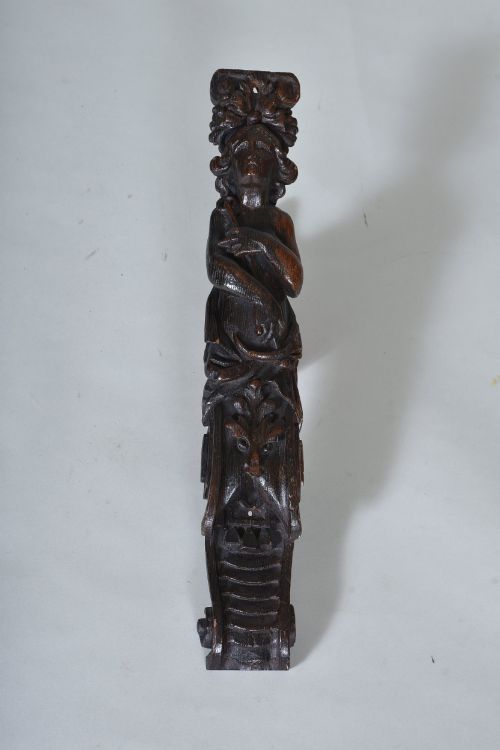
Makers shaped these solid oak timbers into figurative designs, including angels, caryatids, and medieval men, alongside foliage patterns such as oak leaves. Forms range from compact building brackets to huge ecclesiastical carvings.
Judgement of quality
Depth and clarity of the chisel work separate ordinary timber blocks from master figurative carvings. Pieces depicting complex anatomy like caryatids or angels demonstrate a higher sculptural ambition than simple geometric brackets.
The integrity of the original oak surface, whether aged dark oak or traces of historic gilt, preserves the visual weight of the carving. Scale also defines the tier, with large matched pairs commanding greater architectural significance than single fragments.
Object types include architectural salvage, bookcases, wall brackets, ceiling boss panels, and wall sculptures.
The Antique Oak Corbels Glossary
- Corbel
- A structural piece of stone or wood projecting from a wall to support a weight inside. In timber, these brackets often double as decorative wall sculptures.
- Caryatid
- A sculptured female figure serving as an architectural support taking the place of a column or a pillar. These figures add classical or figurative depth to timber brackets.
- Ceiling Boss
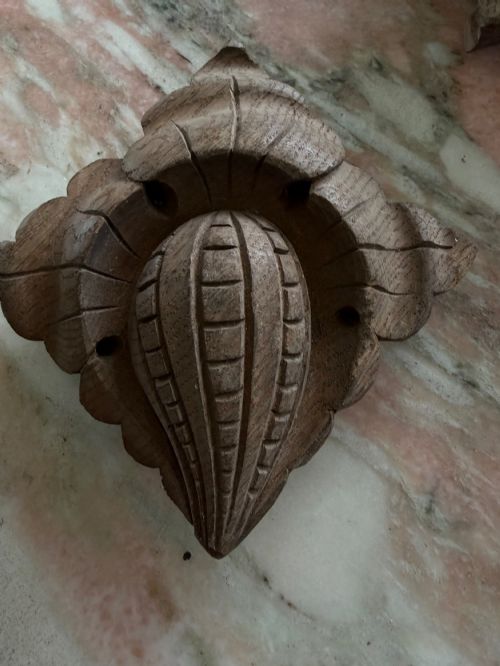
- A decorative projecting block at the intersection of ribs in a ceiling or vault. These carved panels frequently transition into wall displays.
- Architectural Salvage
- Building materials rescued from demolition or alteration for reuse in interior design. This category includes fragments from medieval and later structures.
- Black Forest Carving
- Detailed woodwork originating from the mountainous region of central Europe during the nineteenth century. These items often feature naturalistic foliage and animal forms.
Antique Oak Corbels: Frequently Asked Questions
What is an oak corbel?
An oak corbel is a projecting bracket carved from timber to support beams, mantels, or shelves. They combine load-bearing function with decorative carving.
Over centuries, these architectural elements evolved from structural necessities into standalone wall sculptures and decorative library fittings.
How old are these corbels?
The pieces span from the sixteenth century through the nineteenth century, encompassing medieval, seventeenth-century Jacobean, Georgian, and Victorian periods.
Date attribution relies on the tool marks, timber oxidation, and stylistic conventions typical of each distinct era.
Where were corbels used?
Historic corbels originated inside ecclesiastical buildings, grand country houses, and libraries where they supported ceilings, bookcases, or heavy lintels.
Today, collectors mount them directly onto walls as sculptural accents or incorporate them into period interior schemes.
Are they sold in pairs?
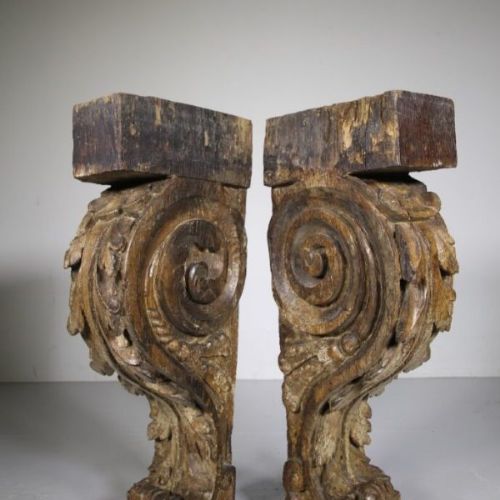
Many corbels appear as matched pairs, particularly those removed from symmetrical architectural settings like library bookcases or grand fireplaces.
Single brackets also occur frequently, representing individual architectural fragments salvaged from historic structures.