
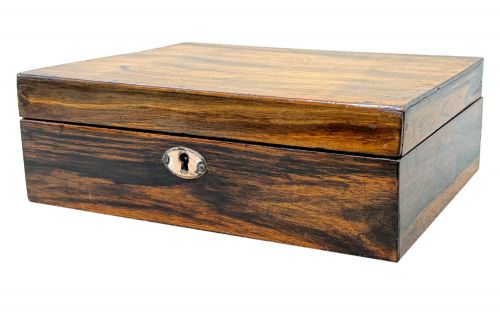
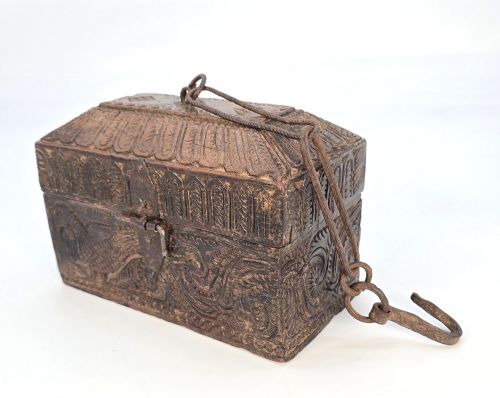
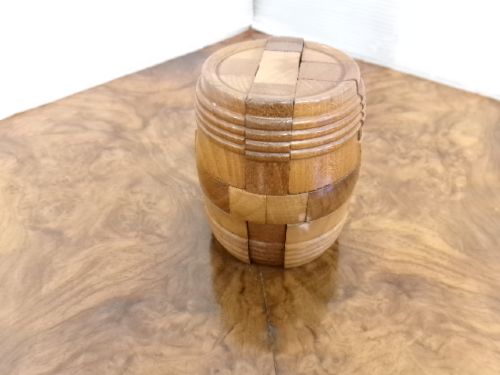


Vintage Carved Timber Box
A vintage carved timber box offers a tangible link to past domestic lives, holding everything from documents to spices within worked surfaces.
Vintage Carved Timber Box
Every vintage carved timber box found here spans a broad chronological range, including pieces from the eighteenth and nineteenth centuries alongside early twentieth-century examples. The forms vary considerably, ranging from intimate snuff boxes and nutmeg graters to substantial dowry chests, blanket boxes, and stationary boxes.
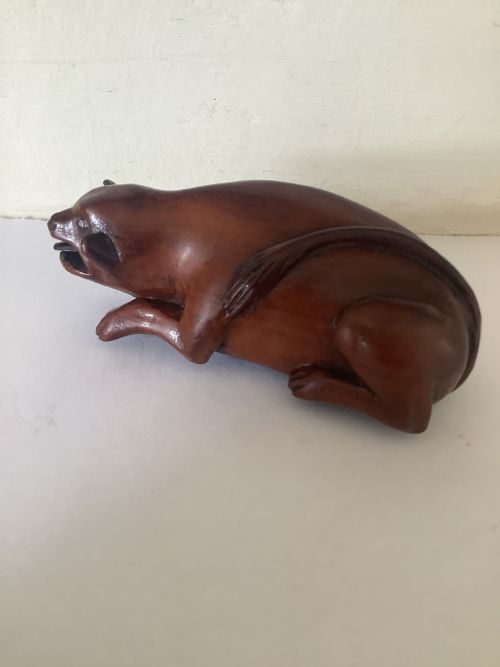
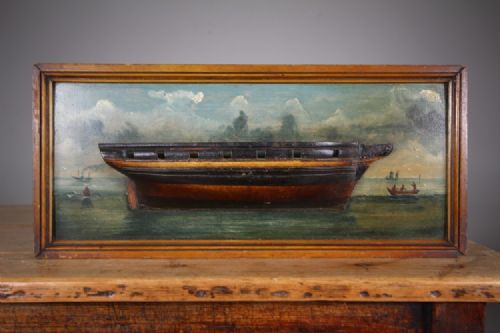
Regional origins and stylistic influences dictate the character of these items, with Scandinavian folk art, Anglo-Indian colonial pieces, and Victorian maritime work frequently appearing. Buyers encounter both utilitarian storage vessels and highly decorative containers shaped as items like wine bottles or footballs.
The materials utilised reflect both local European timbers and exotic Asian woods, demonstrating the global reach of nineteenth-century trade and craftsmanship. Whether selecting a small puzzle box or a massive iron-bound trunk, the focus remains on hand-worked timber.
Materials and construction methods
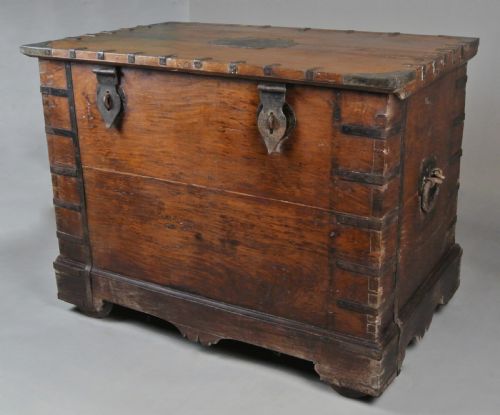
Makers utilised a wide array of hardwoods and softwoods, including teak, camphor wood, sandalwood, mahogany, padouk, satinwood, elm, oak, and pine. These were frequently combined with structural elements in brass and iron, such as heavy hinges, straps, and corner bindings.
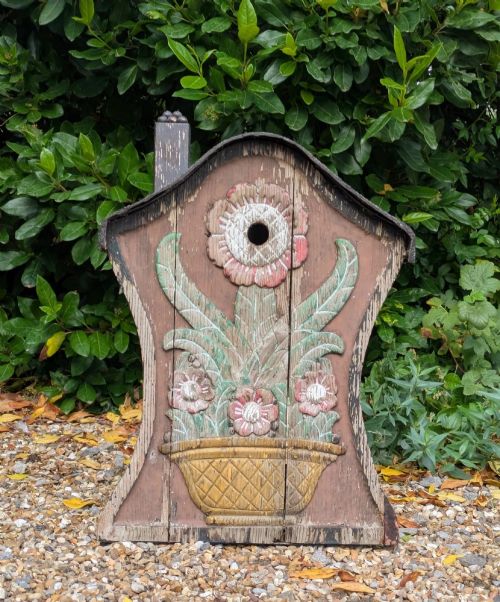
Surface ornamentation relies on hand carving, turning, and occasional painted finishes, creating tactile relief across lids and panels. Joinery techniques varied from naive folk construction to precise cabinet-making appropriate for campaign furniture and formal work boxes.
Current listings feature timber boxes utilising exotic woods like camphor, teak, and sandalwood alongside traditional oak and mahogany.
Evaluating quality and execution
The distinction between standard examples and superior pieces rests on the depth and crispness of the carving, as well as the selection of figured timber. Denser woods like coromandel and sandalwood often display sharper detail and finer grain than simpler pine or general hardwood items.
Structural integrity and the retention of original brass or iron hardware heavily influence the standing of any given container. Finer items demonstrate a harmonious balance between utilitarian function and decorative ambition, whereas lesser pieces rely on simple repetition of basic motifs.
The Vintage Carved Timber Box Glossary
- Dowry chest
- A large storage box traditionally prepared for a bride's household linen and possessions. These massive trunks often feature extensive carving and iron bindings.
- Treen
- Small handmade wooden domestic objects produced from the sixteenth century onwards. Items such as nutmeg graters and snuff boxes fall into this category.
- Campaign box
- Portable furniture made for military officers on active service. These pieces usually incorporate robust brass mounts and recessed carrying handles.
- Snuff box
- A small pocket-sized container used for holding powdered tobacco. They often feature intricate miniature carvings and tightly fitted lids.
Vintage Carved Timber Box: Frequently Asked Questions
What were camphor wood chests used for?
Camphor wood chests were primarily utilised to store garments, blankets, and valuable textiles during transit or long-term domestic keeping. The natural aroma of the timber provided a practical defence against moths and insects.
These large trunks were frequently brought back by travellers from Asian trade routes, becoming prized household fixtures in European homes for their aromatic qualities and decorative carved exteriors.
How can I date an old wooden box?
Dating relies heavily on examining the timber species, construction joints, hardware, and stylistic motifs present on the exterior. Eighteenth-century pieces often display hand-sawn boards and simpler wrought iron, while Victorian examples frequently utilise machine-sawn components and brass fittings.
Changes in fashion, such as the rise of Anglo-Indian colonial carving or Scandinavian folk art, also provide reliable chronological markers for narrowing down the decade of manufacture.
What is a bible box?
A bible box is a small, sloped-lid desk container designed to securely hold sacred texts and writing implements. They were typically placed on tables or stands in seventeenth and eighteenth-century homes.
Many feature fitted interiors and heavy oak construction, reflecting their dual purpose as portable writing surfaces and secure storage units for domestic records.
Are these boxes suitable for daily use?
Most sturdy trunks, blanket boxes, and stationary containers remain fully functional for modern storage needs. Their durable hardwood construction allows them to endure regular handling while keeping contents organised.
Delicate items like naive snuff boxes or intricate puzzle boxes are better suited for display and careful occasional handling rather than rugged everyday service.