

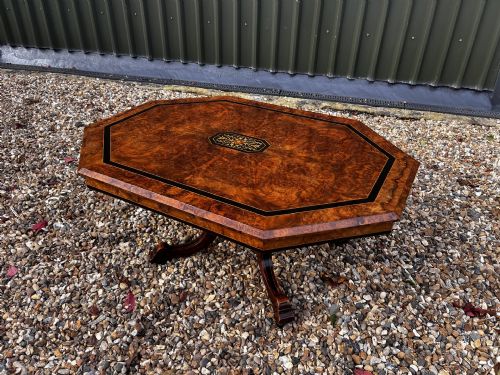
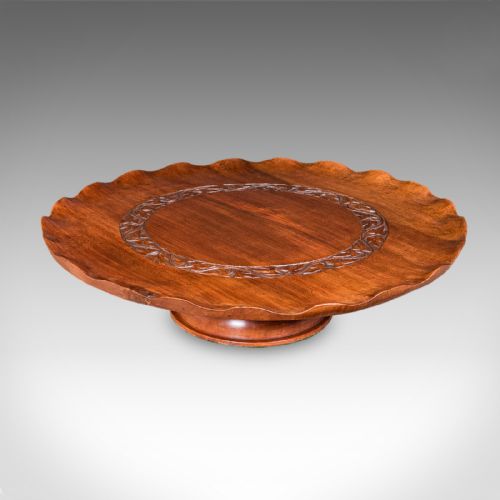
Vintage Carved Table
A vintage carved table brings texture and historical weight to a room through traditional hand woodworking.
Vintage Carved Table
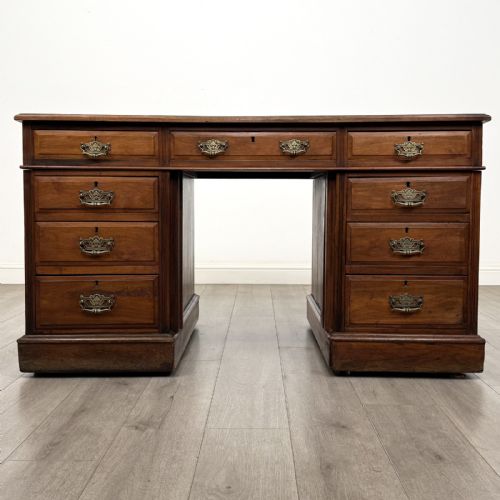
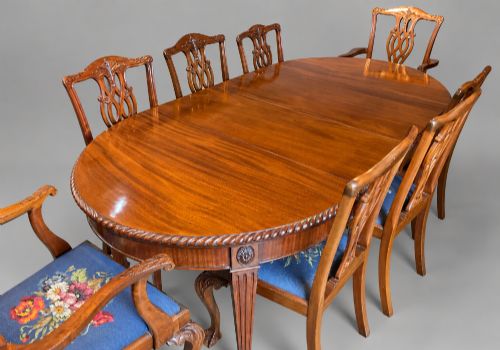
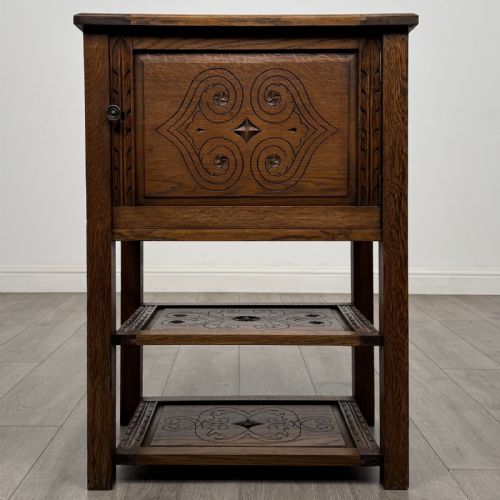
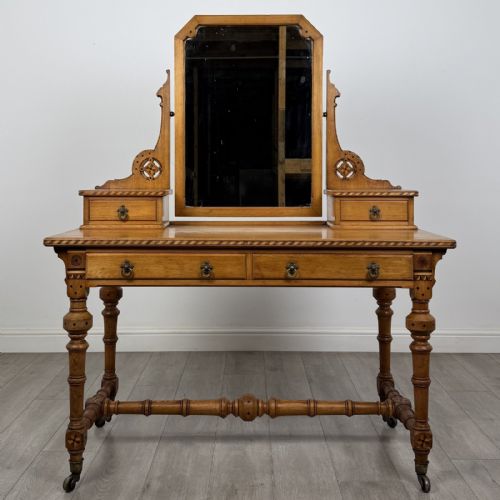
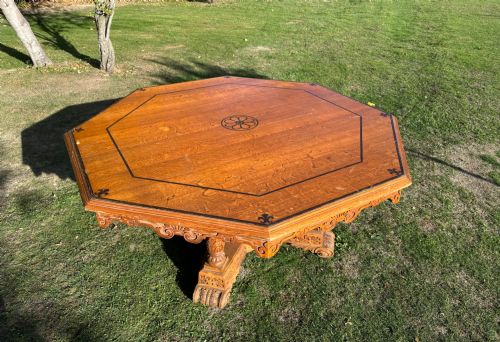
A vintage carved table encompasses side tables, occasional tables, and refectory dining pieces spanning the Victorian, Edwardian, and early twentieth-century periods. These items draw on styles such as Jacobean Revival, Arts and Crafts, and Queen Anne Revival to provide functional surface space with decorative detail.
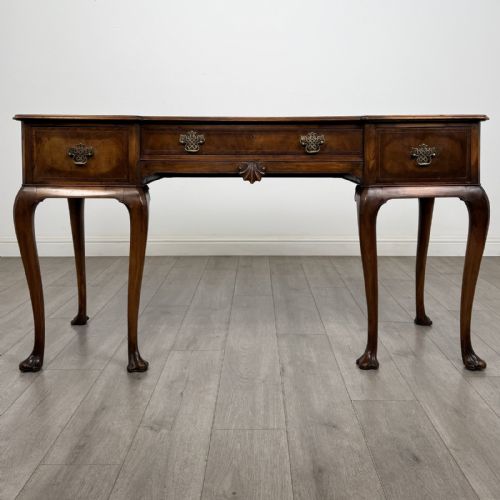
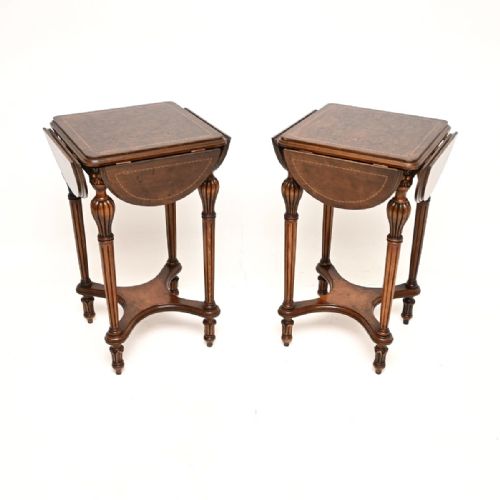
The selections on this page lean heavily towards oak and mahogany constructions, alongside walnut, burr walnut, and rosewood alternatives. Buyers encounter forms ranging from drop-leaf gateleg tables to octagonal plant stands and serpentine dressing tables.
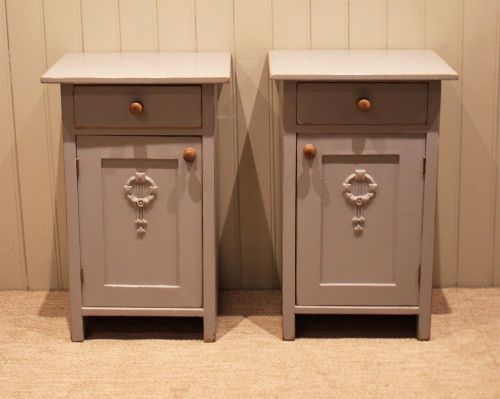
Origins stretch from British workshops to continental Europe, India, and East Europe, introducing painted pine and exotic hardwoods alongside native timbers. Each piece reflects the domestic requirements of its era, from formal dining to compact bedside utility.
How they were made
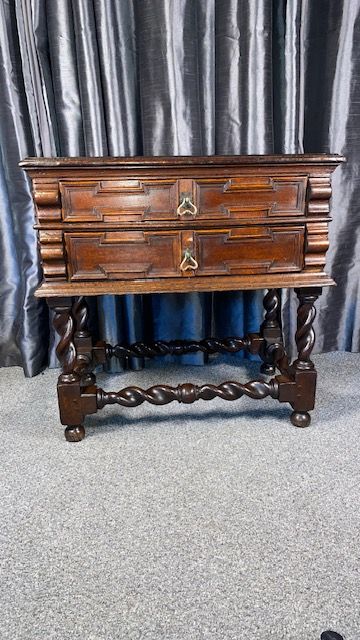
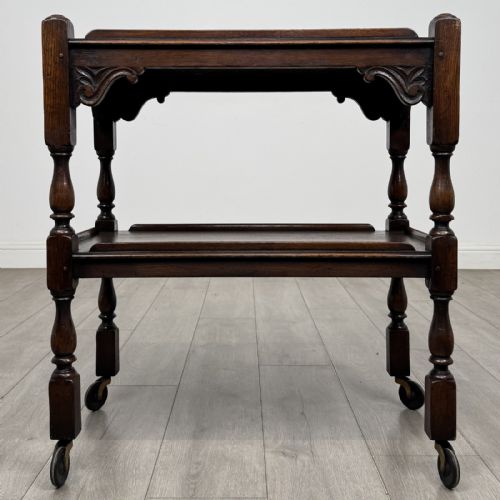
Cabinet makers utilised dense hardwoods like oak, mahogany, walnut, and rosewood, often selecting burr walnut for figured grain patterns on visible surfaces. Construction relied on traditional joinery techniques, paired with turned elements such as barley twist legs and carved stretchers.
Surface ornamentation involved hand carving directly into the timber, complemented by marquetry inlay, marble tops, glass inserts, and brass hardware. Painted pine variations incorporated colour directly onto the wood, while tilt-top mechanisms utilised metal hinges and catches.
Vintage Carved Table Retail Price Guide 2026
Typical asking prices for vintage carved table among the pieces listed under this phrase on Sellingantiques today, from the lower quarter to the upper quarter. They describe what is for sale here now, not the wider market.
Listings feature oak, walnut, mahogany, rosewood, and pine, spanning periods from the 19th century through the 1930s.
What varies in quality
Quality rests upon the crispness of the hand carving and the selection of timber veneers, where richly figured burr walnut or dense solid oak commands greater visual depth. The integration of structural elements, from stretchers to drop-leaf hinges, dictates the long-term stability of the frame.
Refinement in proportion and decorative restraint distinguish finer examples from mass-produced items of the twentieth century. Original surfaces, whether polished mahogany, patinated oak, or painted pine, retain the visual integrity valued by collectors.
Liberty and Co
The Vintage Carved Table Glossary
- Drop Leaf
- A table with hinged flaps on one or both sides that fold down to save space or lift up to extend the surface area.
- Gateleg Table
- A table featuring hinged legs that swing out like a gate to support drop leaves when raised.
- Refectory Table
- A long, narrow dining table traditionally used in monasteries and large halls, characterised by stretcher bases.
- Marquetry
- Decorative woodwork where thin pieces of veneer are fitted together to form geometric or floral pictorial patterns.
- Barley Twist
- A turning style resembling a twisted rope, commonly found on the legs and supports of furniture from the seventeenth century onwards.
Vintage Carved Table: Frequently Asked Questions
What periods do these tables come from?
The listings span the Victorian, Edwardian, and early twentieth-century eras, incorporating periods such as the nineteenth century up to the nineteen-thirties.
Styles within these dates draw heavily on earlier revivals, including Jacobean and Queen Anne motifs.
What timbers were used for construction?
Makers predominantly used oak, mahogany, walnut, burr walnut, and rosewood for structural frames and decorative surfaces.
Additional materials include painted pine, brass, marble tops, and glass inserts found on specific European and British items.
How were drop leaf tables utilised?
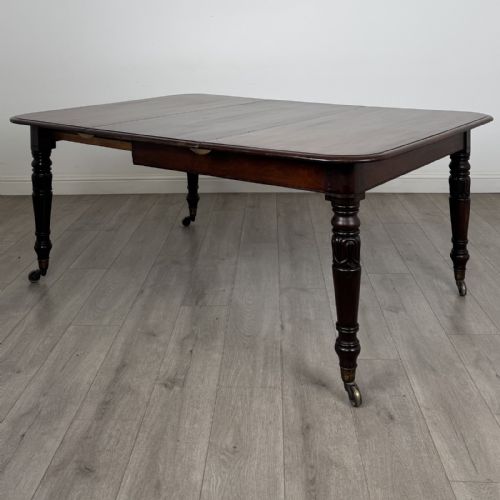
Drop leaf tables provided adaptable surface space in smaller rooms, allowing owners to fold down the flaps when not in dining use.
Gateleg mechanisms supported the extended leaves securely during meals or gatherings.
What distinguishes Arts and Crafts tables?
Arts and Crafts pieces emphasise simple structural honesty, visible joinery, and the natural grain of timbers like oak and elm.
Decoration is typically minimal, relying on the quality of the handcrafting rather than heavy historical revivals.