
Vintage Carved Storage Box
A vintage carved storage box brings centuries of hand-carved tradition into a room, offering deep space beneath robust wooden lids.
Vintage Carved Storage Box
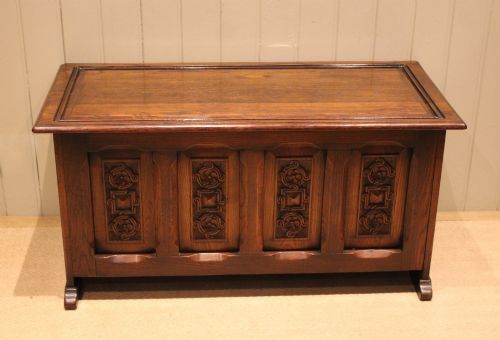
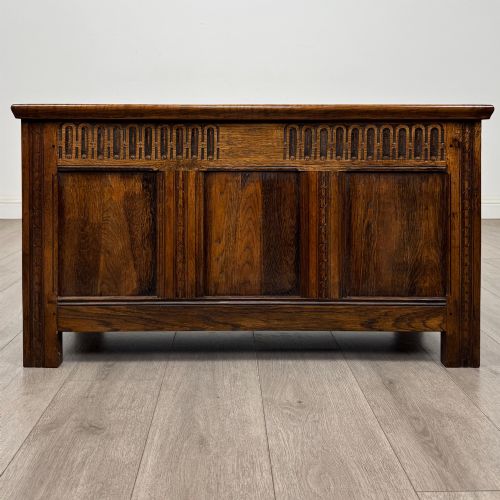
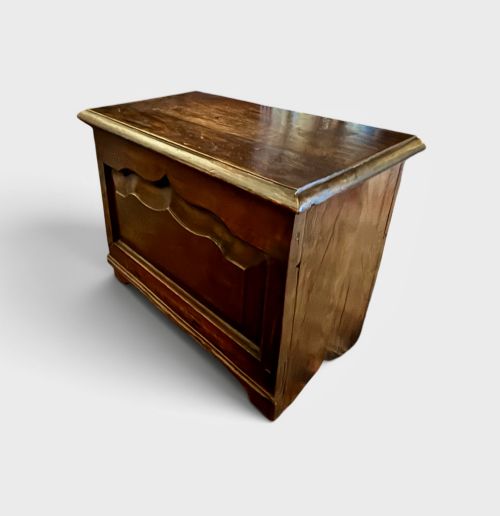
Buyers seeking a vintage carved storage box encounter a diverse selection of coffers, blanket chests, and trunks dating from the seventeenth century through the early twentieth century. These pieces serve practical household storage while displaying prominent relief carving across solid timber panels.
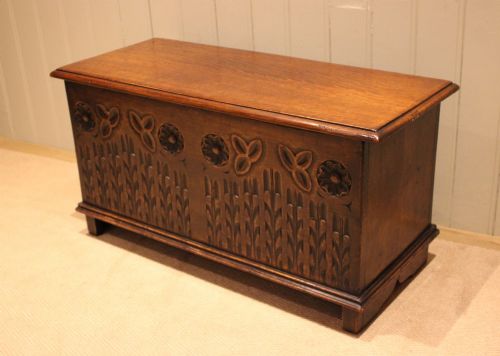
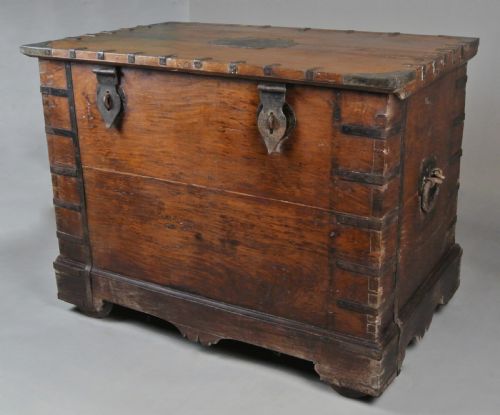
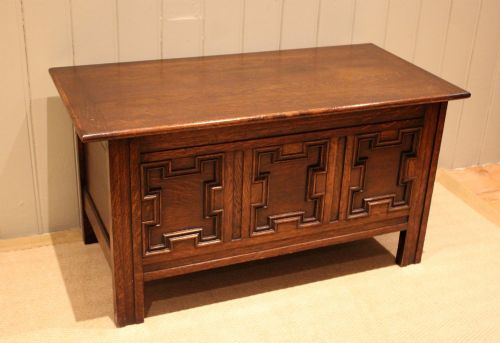
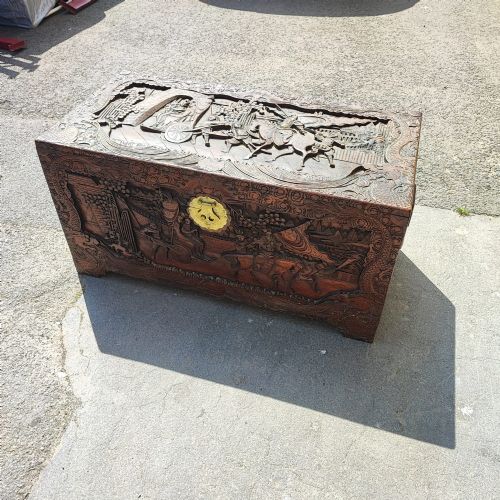
The most common examples on this page are solid oak coffers and blanket chests from the Victorian, Edwardian, and 1930 periods. Alongside these British country styles appear imported hardwood trunks, including Chinese camphorwood chests and Indian dowry chests featuring brass studs or intricate floral motifs.
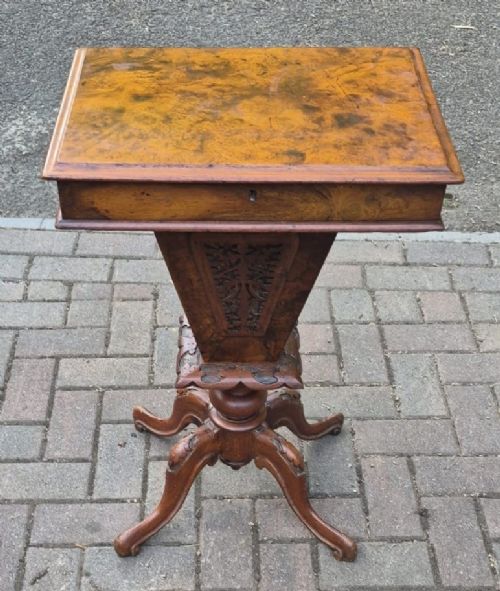
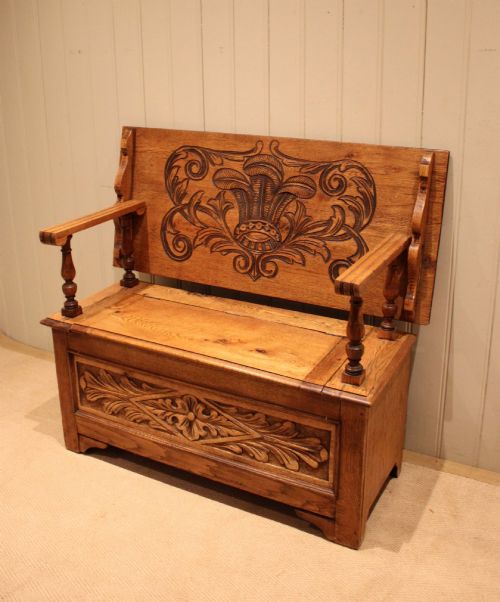
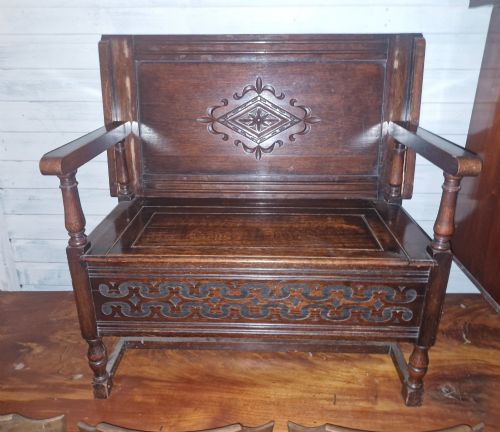
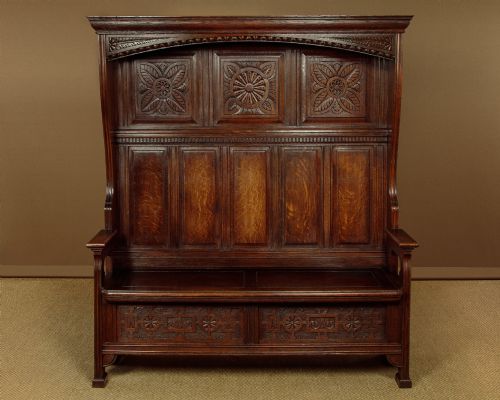
Form follows function closely in these items, varying from small table-top spice boxes and sewing tables to monumental teak dowry chests and box settles with lift-up seats. Each variant utilises heavy-duty hinges and deep cavities designed originally to secure textiles, valuables, or household fuel.
Materials and construction methods
Makers relied primarily on indigenous and exotic timbers, constructing carcasses from solid oak, walnut, teak, mahogany, and hardwood. These dense woods were joined using traditional framing techniques to withstand the heavy weight of stored goods.
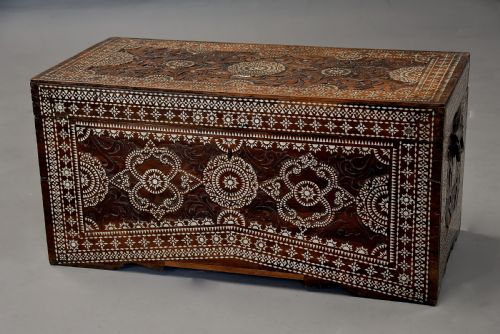
Surface ornamentation relied heavily on hand-chiselled relief carving, geometric paneling, and occasional inlays of mother of pearl. Trunks originating from overseas trade routes incorporated functional iron banding and decorative brass studs to reinforce structural joints.
Lids and interiors were fitted with sturdy wooden hinges, till boxes, or compartmentalised trays for smaller items. Finishes were kept simple, allowing the natural grain of the oak or teak to show through decades of domestic use.
Assessing quality in carved storage pieces
Quality rests primarily on the integrity of the timber and the depth of the hand-carved relief. Pieces fashioned from solid oak or dense teak hold their structural rigidity far better than lighter substitutes.
The precision of the joinery and the originality of the hardware, such as brass studs, strap hinges, and lock plates, determine the piece's integrity. Superior examples display crisp tool marks from the carver rather than machine-moulded uniformity.
Proportion and scale also dictate worth, as smaller cottage-size blanket chests and monumental dowry trunks require distinct architectural balance. The harmony between the carved panels and the foundational frame separates standard utility furniture from finer decorative works.
The Vintage Carved Storage Box Glossary
- Coffer
- A traditional heavy wooden chest used for storing valuables or household goods. Most examples feature a hinged lid and panelled construction.
- Damchiya
- An ornate Indian dowry chest or storage cabinet featuring deep teak carving. These pieces traditionally formed part of a bride's household belongings.
- Mule chest
- A traditional chest fitted with one or more drawers beneath the main storage compartment. They bridge the functional gap between a standard coffer and a chest of drawers.
- Cellarette
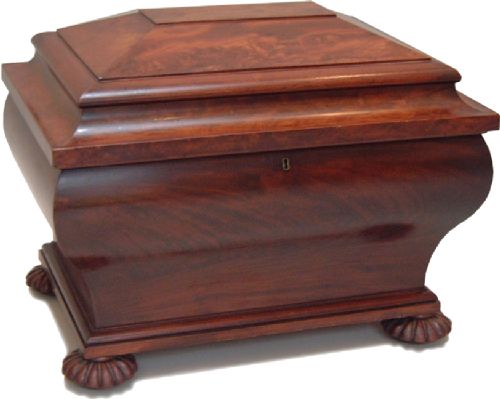
- A lockable container designed specifically for holding bottles of wine or spirits. They often appear in fine mahogany during the Georgian period.
- Camphorwood
- An aromatic oriental hardwood prized for its insect-repellent properties. It is commonly found in carved trunks imported from China.
Vintage Carved Storage Box: Frequently Asked Questions
What is the difference between a coffer and a blanket chest?
A coffer generally denotes an older, heavily panelled wooden chest built with thick stiles and rails, often displaying formal architectural or Jacobean carving.
A blanket chest usually refers to simpler domestic storage boxes from later periods, designed explicitly for soft furnishings at the foot of a bed.
How do I care for antique carved wood?
Maintain stable indoor humidity levels and keep wooden storage pieces away from direct heat sources to prevent the timber from splitting.
Apply a traditional bees-wax polish occasionally to nourish the dry grain and preserve the rich patina built up over decades.
Where were overseas trading chests made?
Trading chests originate from global shipping hubs and colonies, particularly Zanzibar, India, and China, during the nineteenth century.
Local craftsmen utilised regional timbers like teak and camphorwood, decorating the surfaces with brass studwork or intricate floral relief.
Can these boxes be used as coffee tables?
Sturdy oak and walnut coffers offer flat, broad lids that adapt well to serving as alternative coffee tables in living spaces.
Ensure the antique hinges and lid supports remain stable before placing heavy items or drinks on the surface.