




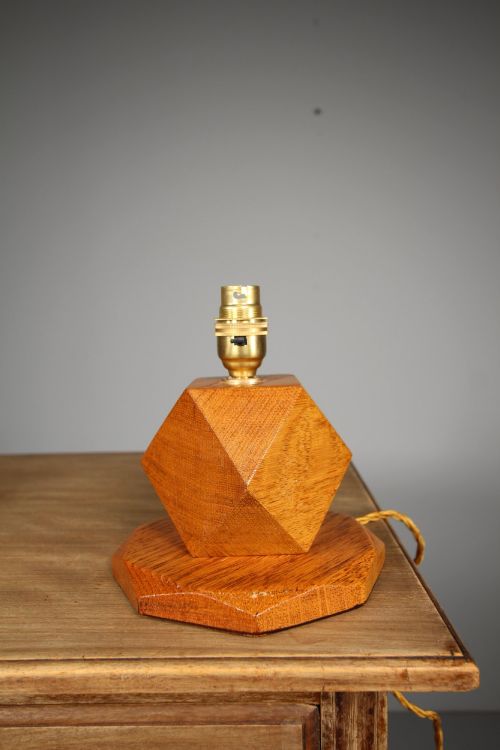
Vintage Carved Oak Table
When you search for a vintage carved oak table, you enter a world of heavy timber, deep grain, and centuries of revivalist craft.
Vintage Carved Oak Table
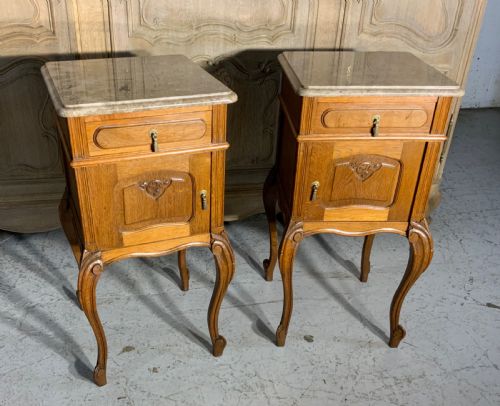
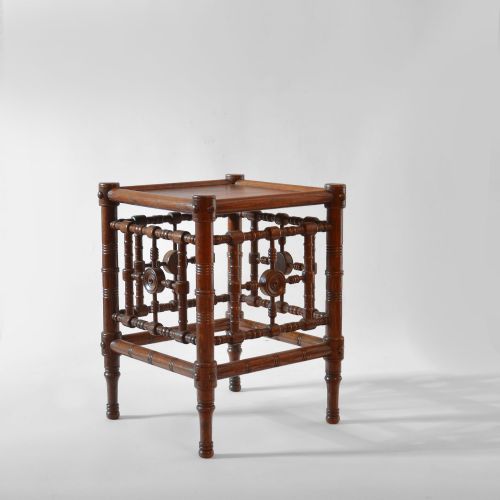
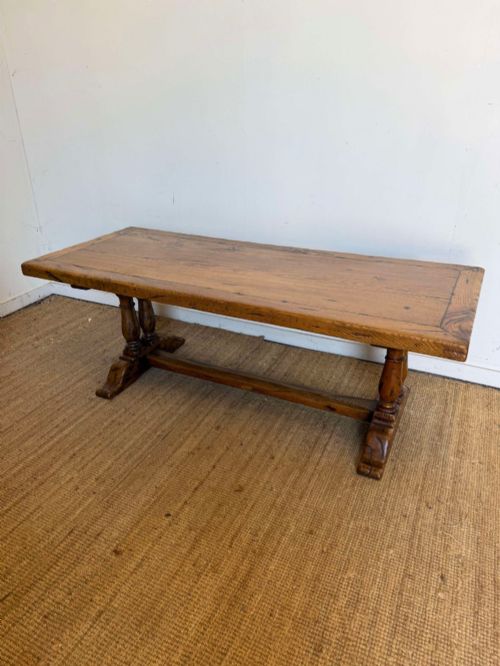
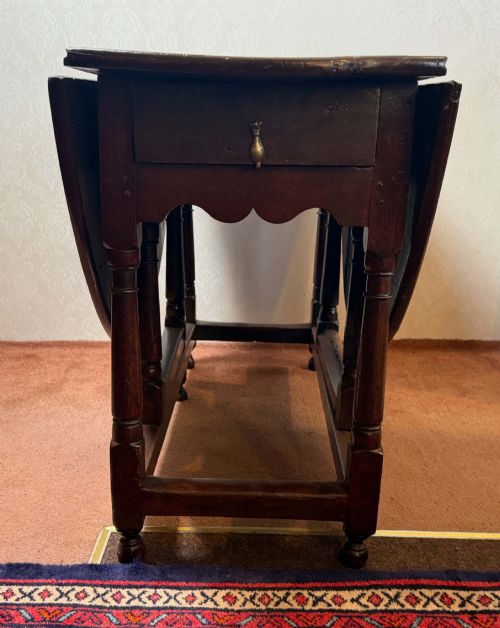
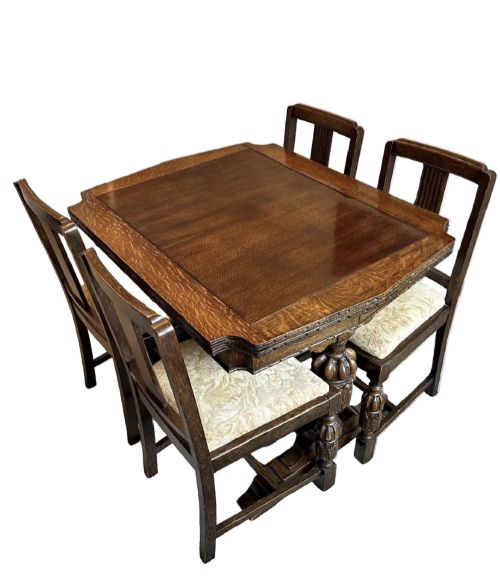
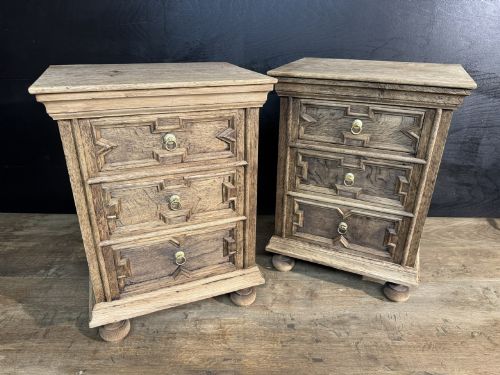
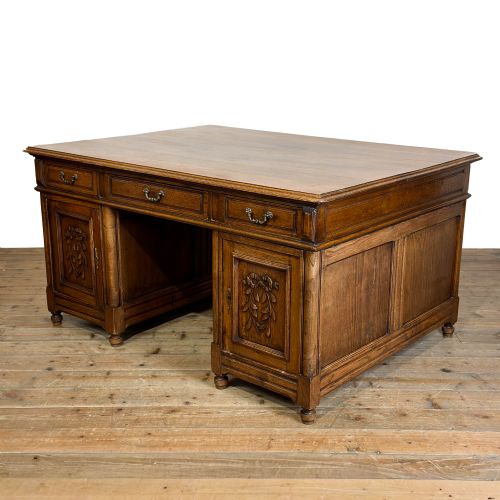
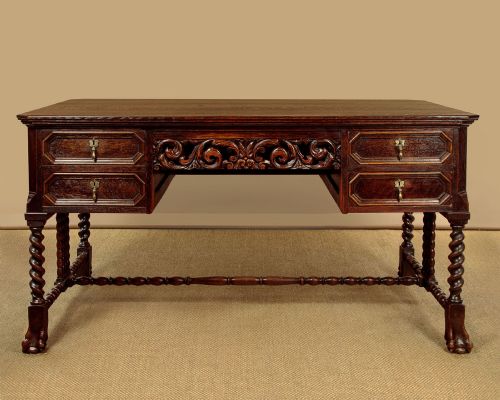
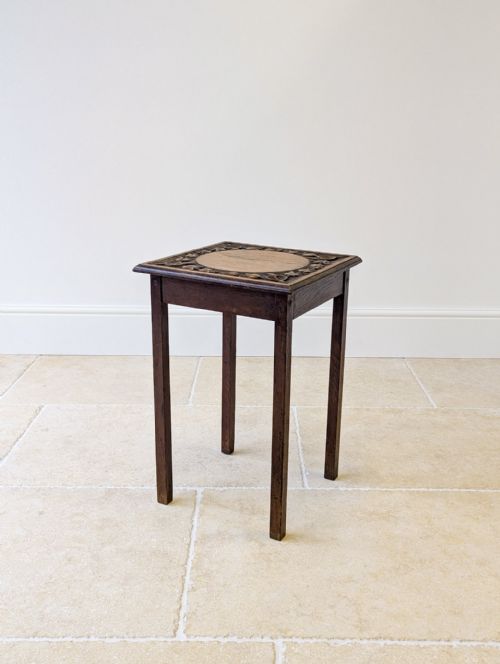
A vintage carved oak table brings solid construction and rich timber figure into domestic spaces, drawing from periods ranging through the Victorian era, Edwardian years, and the early twentieth century. When seeking a vintage carved oak table, buyers encounter forms that span refectory dining tables, drop leaf gateleg formats, writing desks, and small occasional tables.
The aesthetic leans heavily on historical revivals, particularly Jacobean and Arts and Crafts movements, alongside rustic farmhouse traditions. Surviving examples often display deep moulding, turned legs, and elaborate relief carving across aprons and borders, reflecting the enduring popularity of oak furniture in British and European interiors.
How they were made
Construction relies primarily on solid oak, selected for durability and pronounced medullary rays, often joined with traditional pegged mortise and tenon methods. Secondary materials such as brass handles, iron hinges, and occasional glass inserts appear where hardware or function demands.
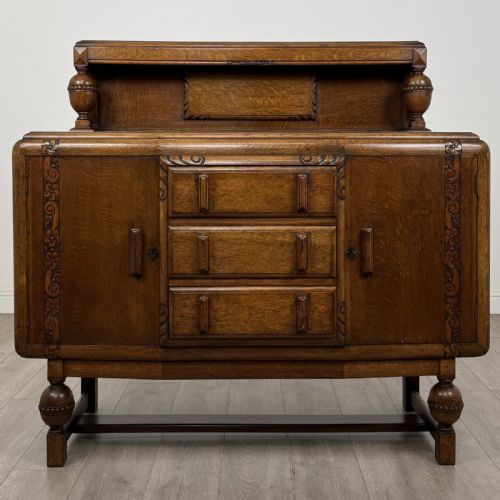
Carving is executed by hand directly into the timber, utilising gouges and chisels to create strapwork, foliate patterns, and geometric panels. Surface treatments vary from natural wax finishes to darker ebonised or limed applications, sealing the wood while accentuating the grain.
Vintage Carved Oak Table Retail Price Guide 2026
Typical asking prices for vintage carved oak table among the pieces listed under this phrase on Sellingantiques today, from the lower quarter to the upper quarter. They describe what is for sale here now, not the wider market.
Several dining tables hide their folding mechanisms entirely beneath heavy leaves, ready to transform a tea room in seconds.
What varies in quality
The standard of a vintage carved oak table rests on the crispness of the hand carving and the selection of the timber, where dense quarter-sawn oak displays superior figuring compared to plain-sawn boards. Structural integrity depends on tight joints and the stability of the timber over decades of atmospheric change.
Execution of revival styles distinguishes workshop production from mass manufacturing, with finer pieces exhibiting balanced proportions and deeply recessed panels rather than shallow applied ornamentation.
G.T. Rackstraw·Heals
The Vintage Carved Oak Table Glossary
- Jacobean Revival
- A style popular in the nineteenth and twentieth centuries that mimics seventeenth-century English furniture through heavy proportions, geometric mouldings, and split-spindle turnings.
- Refectory table
- A long, narrow dining table traditionally used in monastic dining halls, characterised by sturdy legs connected by low stretchers.
- Gateleg table
- A drop leaf table where the hinged leaves are supported by swing-out legs that resemble the opening of a gate.
- Quarter-sawn
- A method of cutting logs radially from the centre, producing boards with characteristic medullary ray figuring and enhanced dimensional stability.
- Arts and Crafts
- A design movement emphasising handcraft, traditional materials, and simple forms as a reaction against industrial manufacturing.
Vintage Carved Oak Table: Frequently Asked Questions
How do I clean a vintage carved oak table?
Dust regularly with a soft, dry cloth to prevent dirt settling into the carved recesses of the timber. Apply a traditional beeswax periodically to nourish the wood and maintain a protective sheen.
Avoid silicone-based sprays or excessive moisture, which can degrade the finish and damage the grain over time.
Can I use an antique oak table every day?
These tables were built from solid hardwood to withstand generations of domestic use and function reliably in modern rooms. Using coasters and placemats helps protect the historical surface from heat and liquid rings.
Placing the table away from direct heat sources and strong sunlight prevents the oak from drying out or splitting.
How do I identify the period of an oak table?
Examination of construction methods, such as hand-cut dovetails, tool marks, and fastening types, provides the clearest indication of age. Stylistic clues like the heavy geometry of Jacobean revival or the simpler lines of Arts and Crafts pieces also point to specific decades.
Comparing the timber patination and wear patterns around the edges helps confirm whether a piece originates from the Victorian era, the Edwardian period, or later.
What is the difference between refectory and gateleg tables?
Refectory tables feature a fixed, elongated top supported by a solid frame and stretchers, designed to remain stationary in a dining room. They offer a stable surface intended for large gatherings and daily meals.
Gateleg tables incorporate folding leaves supported by pivoting legs, allowing the footprint to expand or contract depending on the available space.