
Vintage Carved Footstool
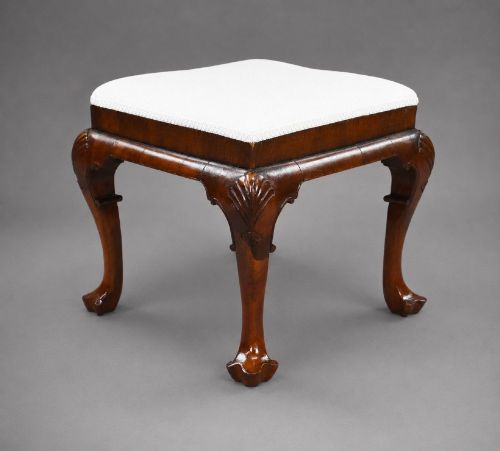
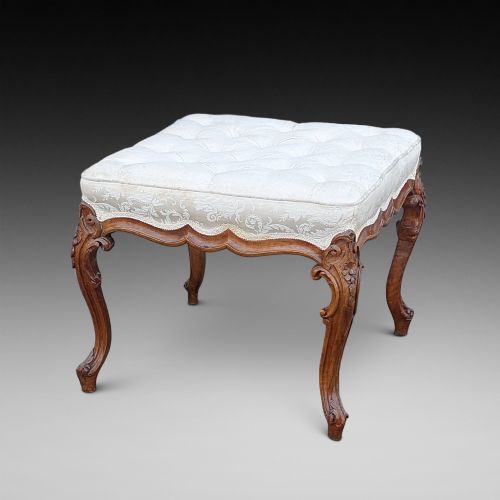
A vintage carved footstool grounds a room with timber frame and textile top, spanning Victorian walnut to Queen Anne revival.
Vintage Carved Footstool
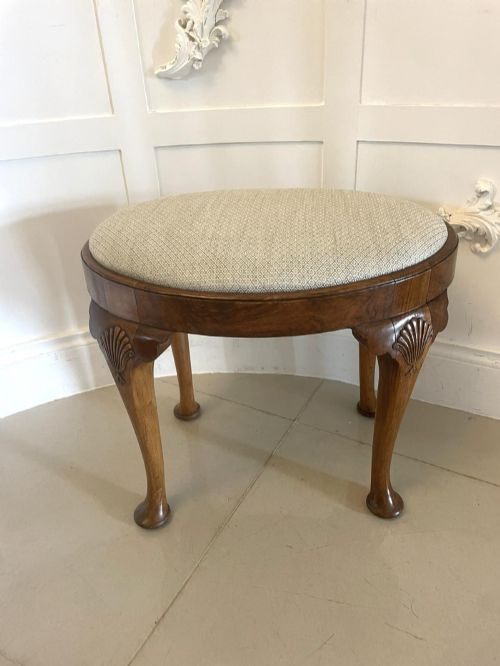
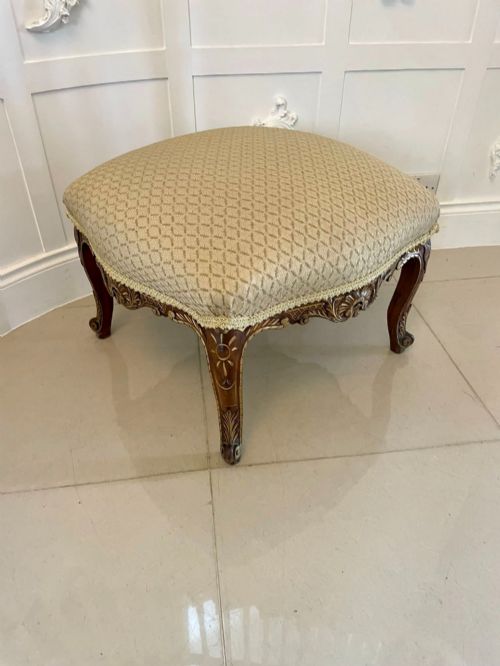
A vintage carved footstool is a low seat designed to support the feet or serve as a small occasional stool, appearing in forms ranging from fireside stools and dressing table seats to larger hearth pieces. When you search for this phrase, you encounter pieces spanning the nineteenth century through to the nineteen-thirties, covering periods such as Victorian, Regency, and Georgian alongside revival styles like Queen Anne and Chippendale.
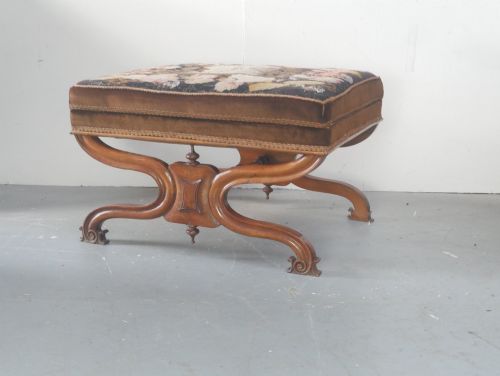
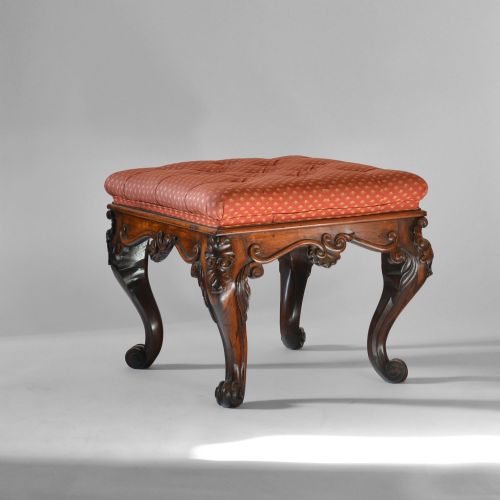
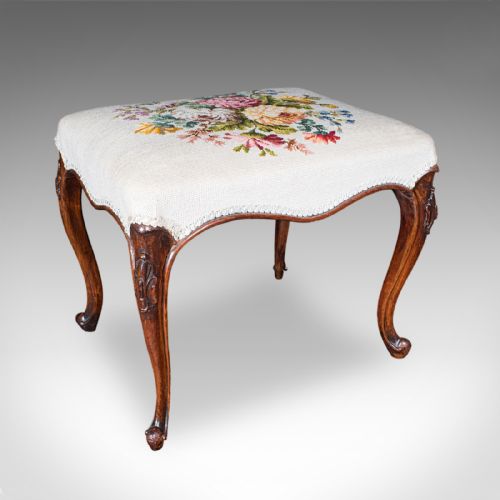
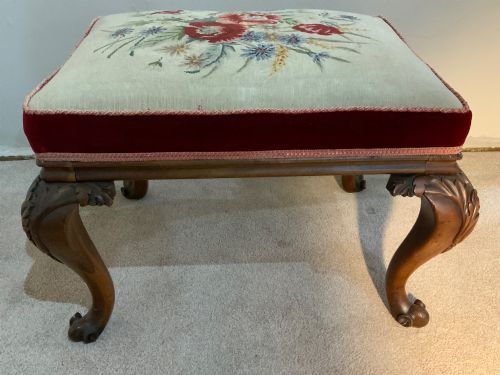
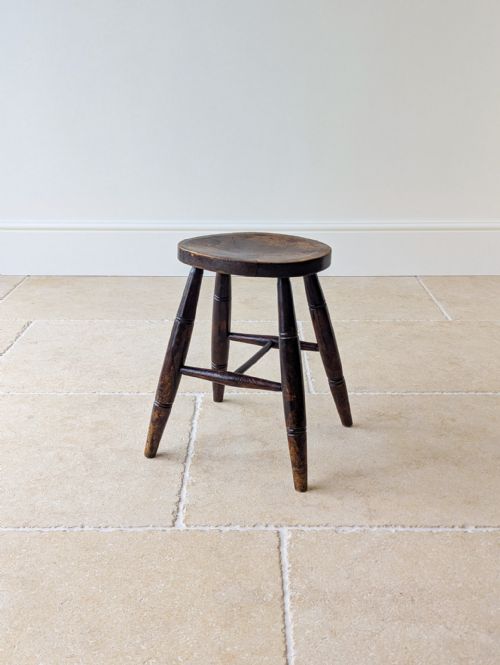
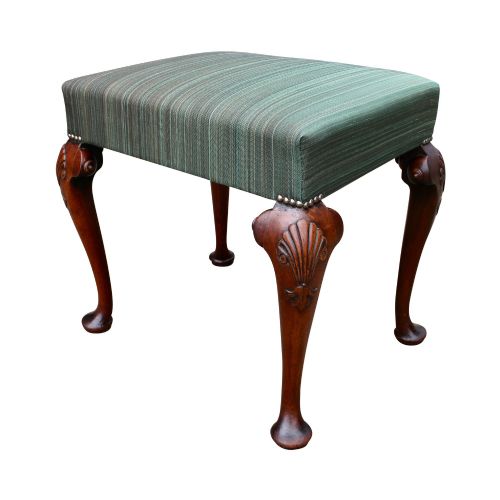
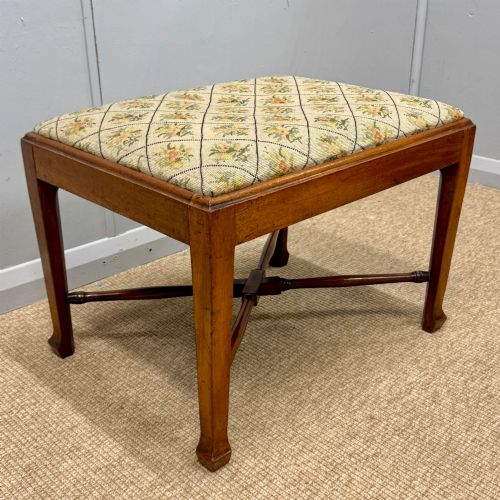
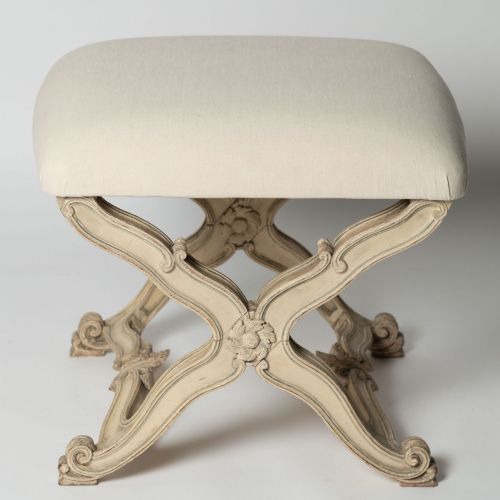
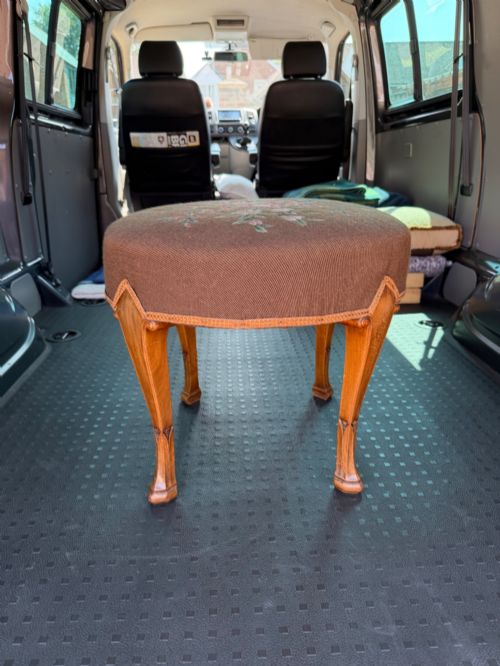
The most common versions on this page are walnut and mahogany frames shaped with cabriole legs, cross stretchers, or spiral turnings, often topped with needlepoint, tapestry, velvet, fabric, or leather. You also find vernacular country examples in oak, pine, and beech, demonstrating simpler regional construction alongside ornate giltwood French-style pieces.
Materials and construction
Makers shaped these frames from dense hardwoods, predominantly walnut and mahogany, though oak, rosewood, beech, and painted pine also appear in country and continental pieces. Timber frames relied on traditional joinery, incorporating carved details like cabriole legs, scrollwork, and spiral turnings.
Upholstery involved supportive webbing, stuffing, and outer textiles such as needlepoint, wool tapestry, velvet, and hand-dyed leather, sometimes secured with buttoning or decorative trim.
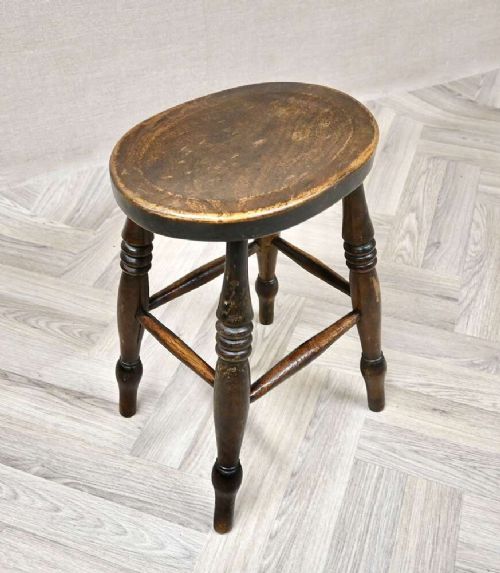
A sturdy nineteenth-century pine vernacular stool proves that even the humblest chunk of wood deserves a quiet corner to rest tired feet.
Judging quality and craftsmanship
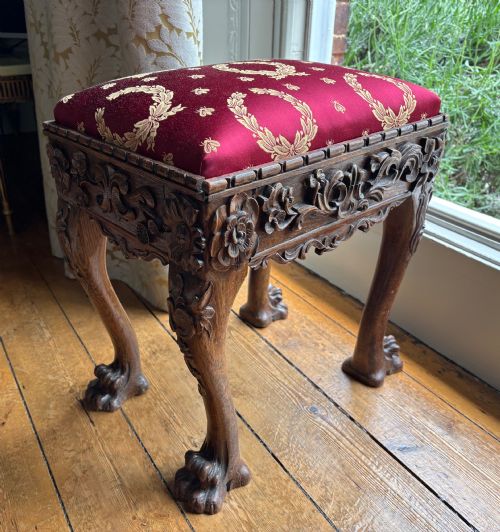
The distinction between ordinary and superior pieces rests on the crispness of the timber carving and the integrity of the frame construction. Hand-carved walnut and mahogany frames with balanced proportions, such as well-defined cabriole legs or spiral rope stretchers, indicate higher workshop skill.
Originality of the wooden frame and the quality of the upholstery materials, whether period needlepoint, velvet, or hand-dyed leather, separate standard utility seating from finer decorative pieces.
The Vintage Carved Footstool Glossary
- Cabriole leg
- A furniture leg that curves outward at the knee and tapers inward to an ankle, common on Victorian and Queen Anne style stools.
- Cross stretcher
- A pair of diagonal wooden stretchers intersecting beneath a stool to provide structural rigidity and decorative support.
- Needlepoint
- A form of canvas work embroidery used historically for durable, decorative upholstery on fireside footstools.
- Hearth stool
- A long, low stool traditionally placed before an open fireplace for seating or resting feet.
- Giltwood
- Timber treated with gold leaf or gilt finish, characteristic of French style and Victorian decorative stools.
Vintage Carved Footstool: Frequently Asked Questions
Where were footstools placed?
These low seats functioned primarily beside firesides, dressing tables, and deep hearths throughout the home.
Their compact dimensions allowed them to sit easily beneath windows or serve as low occasional seating.
How do I identify a Victorian stool?
Victorian examples typically feature dark hardwoods like walnut or rosewood paired with cabriole legs or buttoned leather.
They often display heavy carving or elaborate textile upholstery reflecting mid to late nineteenth-century tastes.
What is a Queen Anne style stool?
Queen Anne style pieces rely on characteristic curves, pad feet, and walnut frames that emulate early eighteenth-century design.
Revival versions produced later in the nineteenth and twentieth centuries recreate these classic graceful silhouettes.
Can I use these as coffee tables?
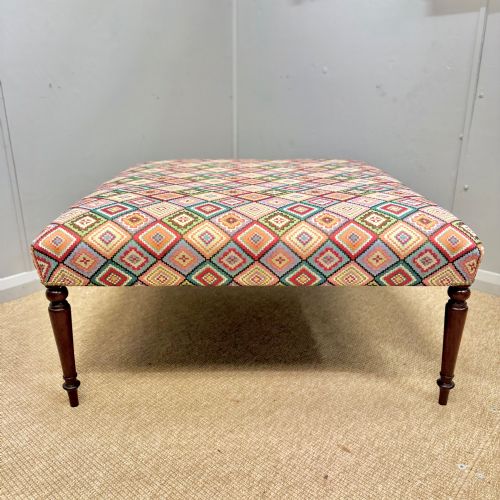
Large upholstered stools, particularly sturdy rectangular examples with leather tops, adapt well to serving as low coffee tables.
Their padded surfaces and solid wooden frames provide a stable, alternative centrepiece for a living space.