




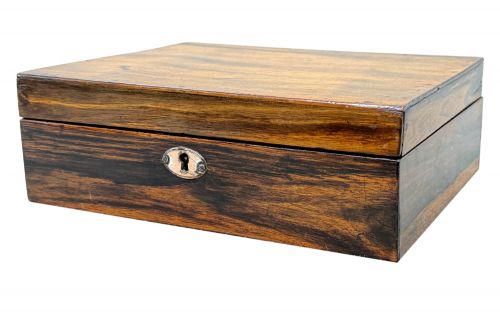


Vintage Carved Casket
A vintage carved casket holds small treasures and brings the texture of past centuries directly onto a modern desk or dressing table.
Vintage Carved Casket
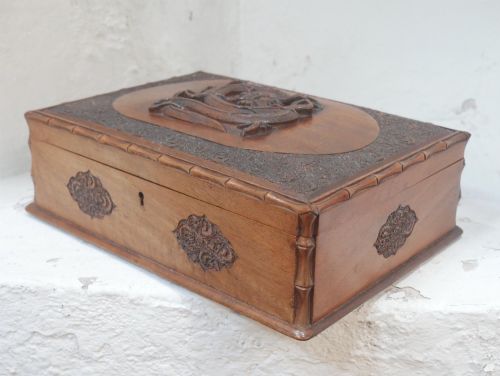
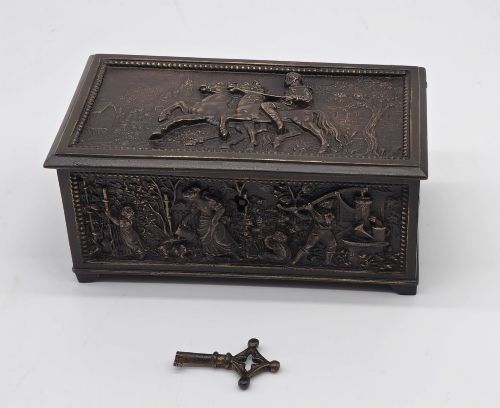
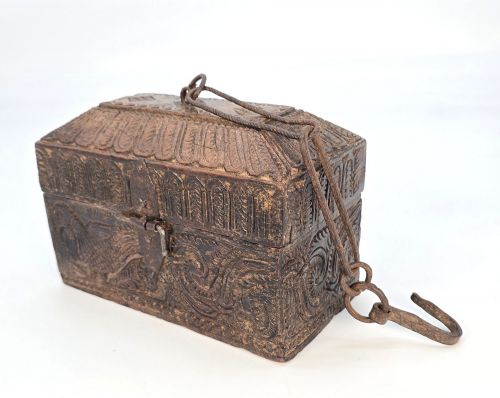
A vintage carved casket encompasses utilitarian and decorative receptacles designed for personal keepsakes, jewellery, documents, and correspondence. The pieces meeting this description span several centuries, with the nineteenth century producing a notable share of the surviving examples found in these listings.
The functional forms vary widely according to their original domestic purpose, appearing as document bible boxes, sewing chests, stationery holders, and dedicated jewellery caskets. Regional origins stretch across Britain, continental Europe, and various global trade routes, yielding distinct stylistic idioms from Anglo-Indian workshops to French provincial makers.
Materials dictate the character of each piece, ranging from domestic hardwoods like oak and walnut to exotic imports such as coromandel, ebony, and sandalwood. Certain examples incorporate bone, mother-of-pearl, or silver plating to accentuate the carved surfaces.
Materials and Technique
Cabinetmakers utilised both native and imported timbers, selecting dense woods capable of holding crisp chisel work and intricate relief carving. Walnut, oak, teak, and rosewood provide structural integrity while responding well to hand tools and surface polishing.
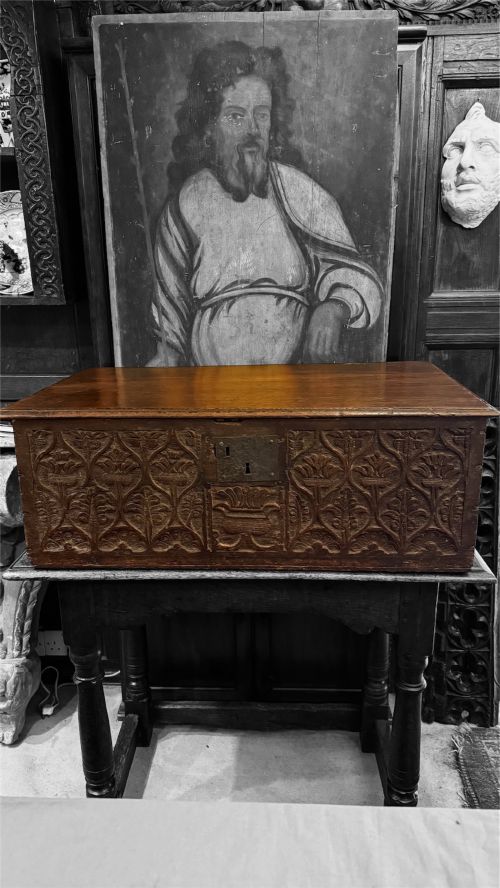
Carving techniques vary by origin and period, from deep chip carving on seventeenth-century oak panels to minute floral and figurative reliefs on sandalwood and coromandel. Secondary materials like bone inlay, tortoiseshell motifs, and silver elements are integrated directly into the timber chassis using traditional adhesives and mechanical pins.
Vintage Carved Casket Retail Price Guide 2026
Typical asking prices for vintage carved casket among the pieces listed under this phrase on Sellingantiques today, from the lower quarter to the upper quarter. They describe what is for sale here now, not the wider market.
The listings show a geographic sweep from British oak bible boxes to intricate sandalwood and ebony pieces originating from Indian and Ceylonese workshops.
Standards of Execution
Quality rests upon the crispness of the carving and the selection of the timber, where dense, evenly grained woods support deeper and more coherent relief work than softer substitutes. Superior examples demonstrate rigorous control in the alignment of joints, flush lids, and the secure integration of decorative inlays.
The interior fit-out often separates ordinary utility boxes from finer commissions, revealing silk linings, compartmented trays, and well-fitted lock mechanisms. Original hardware, such as brass hinges and working locks with functional keys, elevates the integrity of a piece above those altered or repaired with later components.
Wang Hing And Co·Gillows Of Lancaster
The Vintage Carved Casket Glossary
- Bible box
- A small, sloping-lidded wooden container originally built to hold a family Bible or important household documents in the seventeenth century. These pieces often rest on flat surfaces and display robust chip carving.
- Coromandel
- A dense, heavy tropical hardwood featuring dark brown colouring with dramatic black stripes, frequently utilised for luxury nineteenth-century work boxes. It requires expert seasoning to prevent splitting.
- Tramp art
- A style of woodwork created by itinerant artisans using simple pocket knives to notch and layer salvaged cigar boxes and packing crates into geometric relief patterns. This vernacular technique produces highly textured surfaces.
- Tunbridge Ware
- Small wooden items decorated with precise mosaic veneers built from thousands of tiny coloured wood blocks to form pictorial or geometric designs. The technique originated in Kent during the nineteenth century.
- Porcupine quill box
- A luxury souvenir box surfaced with clustered porcupine quills interspersed with bone or ebony spacers, typical of nineteenth-century Ceylonese craftsmanship. These delicate exteriors demand careful handling.
Vintage Carved Casket: Frequently Asked Questions
What were vintage carved caskets used for?
These boxes served domestic roles for securing valuables, letters, sewing implements, and personal documents before modern banking and storage solutions became common. Their internal compartments allowed owners to organise small personal effects safely away from dust and casual view.
Over time, many transitioned into pure display objects or kept their utility as specialised catch-alls for modern jewellery and keepsakes on household furniture.
How do I care for wooden carved caskets?
Keep wooden and inlaid boxes away from direct sunlight and fluctuating radiator heat to prevent the timber from drying and the glue holding delicate inlays from failing. Occasional dusting with a soft, dry cloth maintains the surface without stripping historical polishes.
Avoid applying modern liquid silicone polishes, which can seep into deep carved recesses and attract dust over time.
How can I tell the period of a box?
Dating relies on examining the construction methods, such as hand-cut dovetails, the nature of the hinges, and the specific timber choices popular during particular decades. Seventeenth-century pieces typically show heavy oak framing and chip carving, whereas Victorian examples favour exotic woods and elaborate internal velvet trays.
Hardware styles, lining materials, and regional carving motifs provide additional clues to narrow down the decade of manufacture.
Are these boxes suitable for daily use?
Sturdier hardwood boxes handle daily opening and closing for jewellery or desk supplies quite well, provided the hinges and locks remain sound. Delicate specimens featuring porcupine quills, extensive bone inlay, or fragile Tunbridge Ware mosaic work require gentle handling as decorative display items.
Assessing the physical stability of the lid and interior partitions helps determine whether a piece can safely accommodate active service today.