


Vintage Caned Bedstead
These vintage caned bedstead examples bring open-weave texture and carved wooden frames into the bedroom, offering lightness alongside traditional presence.
Vintage Caned Bedstead
A vintage caned bedstead combines wooden structural framing with woven panels, most frequently seen in single, double, king, and super king sizes across this selection. These pieces originate from periods such as the Victorian era, the nineteenth century, and the nineteen-tens and nineteen-twenties.
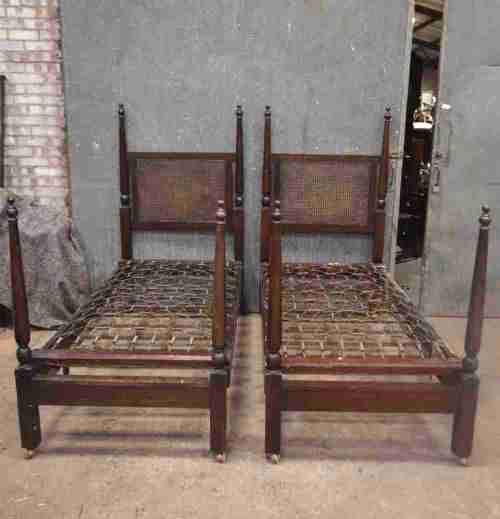
The forms range from pairs of single four-poster beds and platform beds to folding campaign beds and extensive bedroom suites complete with bedsides and drawers. Stylistic influences draw heavily on French Neoclassical, Louis XVI, Colonial Revival, French Chateau, and Art Deco traditions.
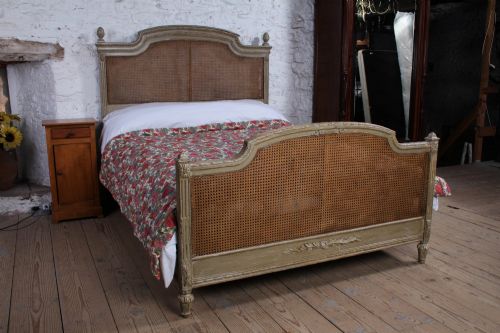
Buyers browsing this phrase encounter carved wooden frames finished in natural wood tones, paint, or gilding, paired with woven cane, rattan, and natural cane panels. The variety spans daybeds and standard bed frames designed to anchor traditional or eclectic bedroom schemes.
How they were made
Construction relies on solid timbers such as oak, mahogany, and beech, which form the structural load-bearing frames, headboards, and footboards. Woodworkers shaped these timbers through traditional carving and joinery techniques to achieve styles ranging from geometric Art Deco lines to ornate Louis XVI flourishes.
Panels utilise cane and rattan materials woven into open patterns, mounted into channels within the wooden frames. Surface treatments involve applied paint finishes, gilding, or polished natural wood surfaces to protect the timber and define the aesthetic.
Listings span the nineteenth century, Victorian era, nineteen-tens, and nineteen-twenties, incorporating oak, mahogany, beech, paint, and natural cane.
What varies in quality
The standard of carving and timber selection determines the visual weight of the frame, with dense hardwoods like mahogany and oak offering greater substance than softer painted alternatives. Crisp detailing in the woodwork separates standard production from finely executed revival pieces.
The tightness and regularity of the woven cane panels influence the overall finish, alongside the preservation of original painted or gilded surfaces. Complete suites featuring matching elements like chairs or bedside tables demonstrate higher initial ambition than isolated bed frames.
The Vintage Caned Bedstead Glossary
- Bergere
- A type of enclosed upholstered or caned armchair or bed frame featuring wooden sides. The style originates from eighteenth-century France and appears in later revival pieces.
- Cane
- Material woven from the outer bark of the rattan palm, creating a flexible and strong mesh. It provides breathable panels for headboards and footboards.
- Campaign bed
- A portable bed designed for travel, often featuring folding timber elements and metal hinges. Nineteenth-century examples frequently utilise mahogany and rattan.
- Platform bed
- A low-profile bed frame designed to support a mattress directly upon a solid or slatted base. Art Deco examples often emphasise horizontal geometry.
- Louis XVI style
- A neoclassical design vocabulary characterised by straight lines, symmetrical proportions, and classical carving motifs. Frames often feature painted or gilded finishes.
Vintage Caned Bedstead: Frequently Asked Questions
How do I choose the right size?
Measure your bedroom space carefully, accounting for the projecting corner posts or carved headboards found on larger frames. Options range from single and double dimensions up to king, super king, and specific width variations.
Consider whether you require an isolated frame or a complete suite that includes matching bedside tables and drawers to furnish the entire room cohesively.
Are these beds suitable for daily use?
These historical frames accommodate modern mattresses, though specific designs may require particular base supports or adjustments. Platform beds and standard bedsteads integrate contemporary sleeping arrangements within period structures.
Review the listed dimensions and included components, such as bed bases, to ensure compatibility with your existing mattress and bedroom layout.
How do I care for the cane panels?
Maintain woven cane by keeping the material clean with a soft brush and preventing it from drying out excessively in heated rooms. The natural flexibility of rattan benefits from occasional light dusting and stable indoor humidity.
Avoid placing heavy direct pressure against the woven mesh centres when moving or adjusting the bed frame.
How do I identify the period?
Examine the timber species, decorative carving details, and structural joinery to connect the piece to stylistic eras like the Victorian period, Art Deco, or Louis XVI revival. Paint finishes, gilding techniques, and overall silhouette offer further clues to the date of manufacture.
Nineteenth-century campaign pieces display distinct folding mechanisms, whereas nineteen-twenties suites often incorporate painted surfaces or specific king size proportions.