




French Caned Bed
A French caned bed brings lightness and classic proportion to a bedroom through woven cane panels and carved wooden frames.
French Caned Bed
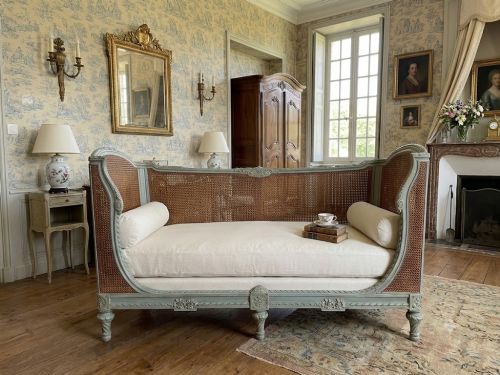
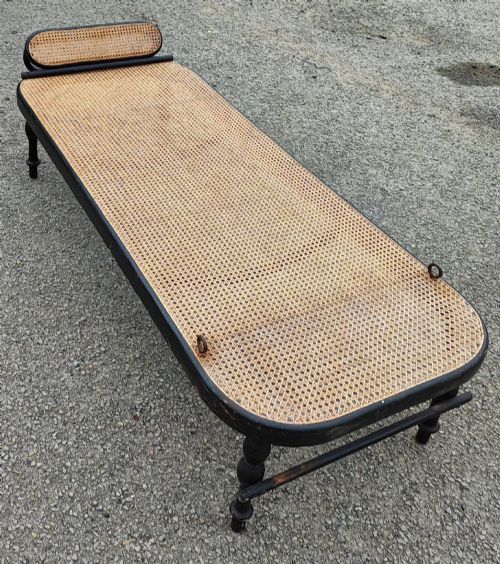
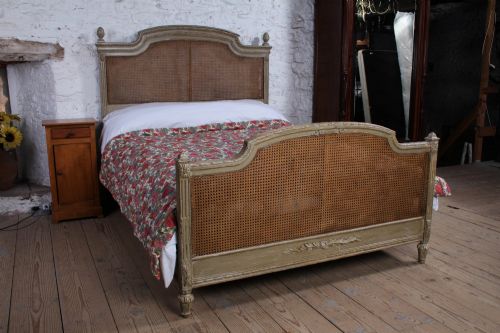
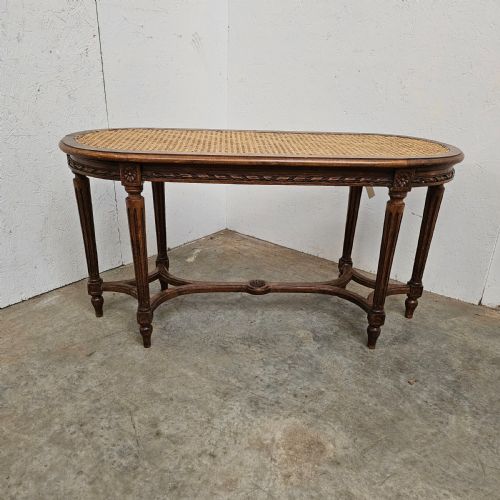
A French caned bed typically appears in larger sizes such as king and super king, alongside double and single variants, daybeds, and benches. These pieces emerge from the nineteenth century, nineteen hundred, and decades up to nineteen twenty.
The aesthetic draws heavily on Louis XVI style and French chateau influences, with occasional Art Deco or Victorian interpretations. Alongside standard bed frames and bedsteads, buyers frequently encounter matching bedroom suites and occasional seating.
The inventory on this site spans natural wood finishes, painted surfaces, and gilded details. Frames range from simple structural forms to elaborately carved constructions incorporating panel work and window seats.
Quality differences
The distinction between standard examples and the finest pieces rests on the crispness of the wood carving and the integrity of the cane work. Superior frames display deeply undercut botanical and neoclassical motifs rather than shallow or mechanical shaping.
The preservation of original painted or gilded surfaces dictates the standing of a piece within its period. High-quality examples maintain harmonious patination across both the main bed structure and any accompanying matching furniture.
Several beds arrive accompanied by matching chairs, ensuring your bedside boots have somewhere stylish to sit.
The French Caned Bed Glossary
- Bergere
- An enclosed armchair or bed end with upholstered or caned sides set into a wooden frame. This form provides a solid yet visually light perimeter.
- Canapé
- A decorative French sofa or daybed style that shares the carved wooden framing and caned panels found on matching beds. These items often feature scrolled ends and exposed woodwork.
- Corbeille
- A French bed style featuring a curving, enveloping headboard and footboard that resembles a basket. This shape wraps around the sleeper for a distinct enclosed silhouette.
- Polychrome
- Painted in several distinct colours, often applied to highlight carved details and panels. This technique appeared on decorative bedroom suites from around nineteen hundred.
- Ebonised
- Wood finished with a dark stain or black lacquer to imitate ebony. This treatment creates a formal, high-contrast appearance on nineteenth-century frames.
French Caned Bed: Frequently Asked Questions
What size mattress fits these beds?
Many European models require specific continental mattress dimensions rather than standard British sizes. Checking exact internal frame measurements ensures a proper fit.
Custom or adapted bases sometimes accommodate standard local mattresses while preserving the antique frame.
How do I care for antique cane?
Natural cane requires occasional light dusting and cleaning with a damp cloth to maintain flexibility. Avoiding excessive dryness prevents the woven strands from snapping.
Weight distribution should remain even across the panel to protect the historic weaving from undue strain.
Are these beds structurally sound?
Period frames utilise traditional joinery designed to support modern sleeping loads when properly assembled. Modern bed bases or wooden slats often integrate discreetly inside the antique rails for extra stability.
Checking bolt connections periodically keeps the structure rigid and prevents movement in the joints.
How do I identify a Louis XVI style bed?
Louis XVI pieces display straight tapered legs, geometric symmetry, and neoclassical carvings such as fluting and acanthus leaves. This aesthetic contrasts with the curving asymmetry of earlier Louis XV designs.
Oval medallions and ribbon motifs frequently appear on the headboards of this specific tradition.