


Vintage Canal Scene Painting
A vintage canal scene painting captures the atmospheric charm of historic waterways, offering buyers a picturesque glimpse into bustling urban rivers and tranquil towpaths.
Vintage Canal Scene Painting
A vintage canal scene painting depicts waterways, locks, barges, and urban rivers from periods spanning the nineteenth century through the mid-twentieth century. Buyers searching this phrase typically encounter works originating from British, French, Dutch, and Italian traditions, capturing both quiet rural waterways and bustling Venetian canals.
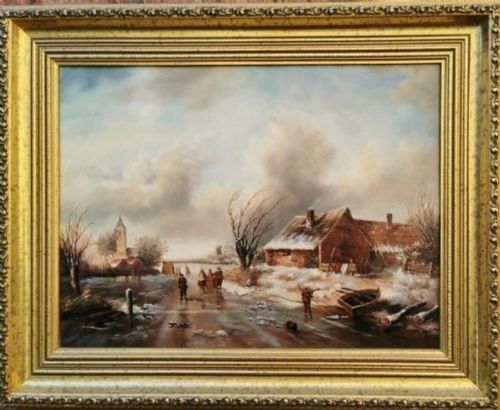
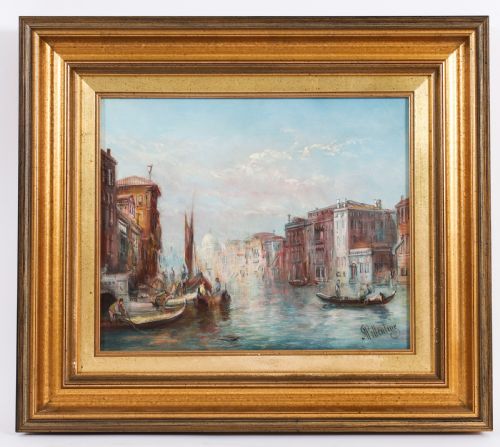
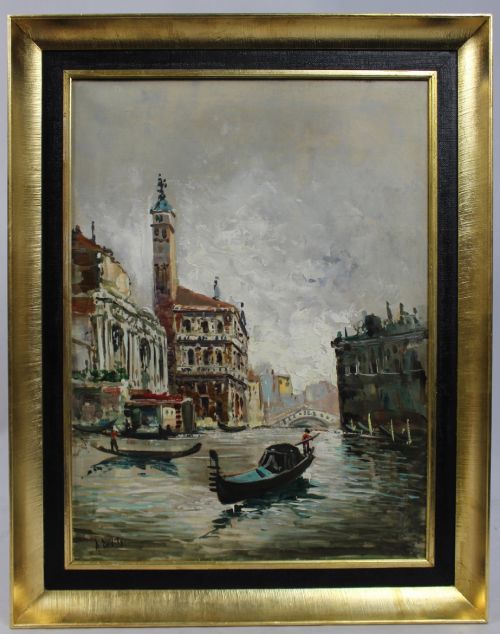
The selections on this page range from nineteenth-century academic and impressionist canvases to early twentieth-century watercolours and mid-century modern impressions. Common subjects include gondolas passing beneath historic bridges, winter landscapes with frozen canals, and moored barges along continental quaysides.
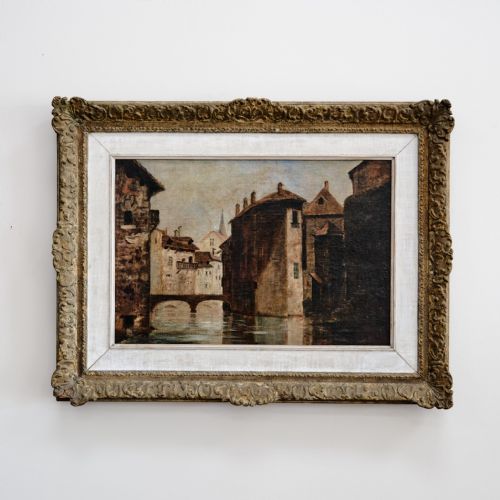
Compositions vary from detailed architectural townscapes to looser impressionistic interpretations of light and water. Works often feature specific locations such as Venice, Bruges, York, and various Dutch or French river networks, framed in wood and gesso.
Materials and technique
Artists utilise oil paint on canvas or board, alongside watercolour, gouache, and pastel on paper. Oil paintings often display textured impasto and rich layers, while watercolours rely on fluid washes and ink pen detailing to capture the reflective quality of water.
Substrates include stretched canvas, heavy art paper, and wood panels. Many works are housed in period wooden frames, occasionally finished with gilt and gesso ornamentation that complements the composition.
Listings feature works created across eight distinct decades and centuries, spanning from the nineteenth century to the 1960s.
What varies in quality
Quality rests primarily on the artist's ability to render the movement and reflection of light upon water. Superior works display a confident handling of perspective and atmosphere, particularly in architectural depictions and shifting sky-scapes.
The strength of the composition and the subtlety of the colour palette distinguish finer examples from standard decorative works. Original framing and clear provenance or signature also elevate the standing of a piece.
Alfred Pollentine·Antonio DeVity·Fred Lawson·Claude Jousset·Marc Aldine·Vittore Zanetti Zilla·Herbert Royle·Frank Wasley·William Knox·Ludwig Hermann·John D Walker·William Dommersen·Charles Clement Calderon
The Vintage Canal Scene Painting Glossary
- Impressionism
- A style of painting that focuses on capturing the visual impression of a moment, especially regarding shifting light and colour. Works in this style often use visible brush strokes rather than smooth blending.
- Gouache
- An opaque watercolour paint consisting of pigment mixed with a water-binding agent and a white filler. It creates a heavier, more solid finish than transparent watercolour.
- Gesso
- A plaster-like material applied to wood or canvas as a base for paint or gilding. It provides a smooth surface and is often moulded into decorative patterns on antique frames.
- Dutch School
- A collective term for seventeenth-century to twentieth-century painters working in the Netherlands, known for landscape, skyscape, and canal scenes. These works typically emphasise atmospheric light and flat horizons.
- Impasto
- The process of laying paint thickly on a canvas so that it stands out from the surface. This technique adds tactile depth and catches light across the painted water.
Vintage Canal Scene Painting: Frequently Asked Questions
What subjects appear in these canal paintings?
The artworks depict a diverse range of maritime and urban subjects, from Venetian lagoons with gondolas to frozen Dutch waterways and moored barges on French rivers.
Many pieces focus on architectural townscapes featuring historic bridges, quaysides, and European mansions alongside working industrial canals.
How do I date a canal painting?
Dating relies on stylistic clues, framing methods, and the medium used, with nineteenth-century works often showing academic precision and mid-century pieces favouring impressionistic strokes.
Signatures, artist biographies, and exhibition labels attached to the stretcher or frame also help narrow down the period of creation.
Where should I hang a canal painting?
These works suit traditional living spaces, studies, and hallways where their atmospheric lighting and historical subject matter can be appreciated up close.
Placement should avoid direct sunlight to protect watercolours and oil canvases from fading or drying out over time.
What is the difference between oil and watercolour canal scenes?
Oil paintings on canvas offer rich textures, deep layers of pigment, and robust durability, often capturing dramatic light effects on water.
Watercolours provide a lighter, more translucent quality on paper, requiring protective glass framing to preserve the delicate washes.