







Vintage Campaign Tallboy
These vintage campaign tallboy pieces bring rugged portability and rich mahogany into a room.
Vintage Campaign Tallboy
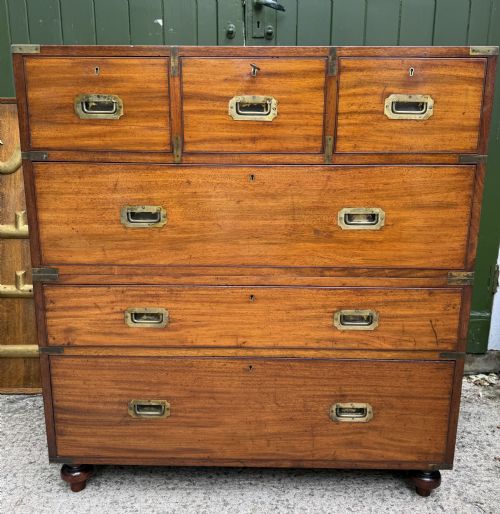
A vintage campaign tallboy represents a specialised category of storage furniture designed initially for travel and military life, often built in sections to simplify transport. When seeking a vintage campaign tallboy, buyers encounter pieces primarily shaped during the nineteenth century alongside later twentieth-century iterations.
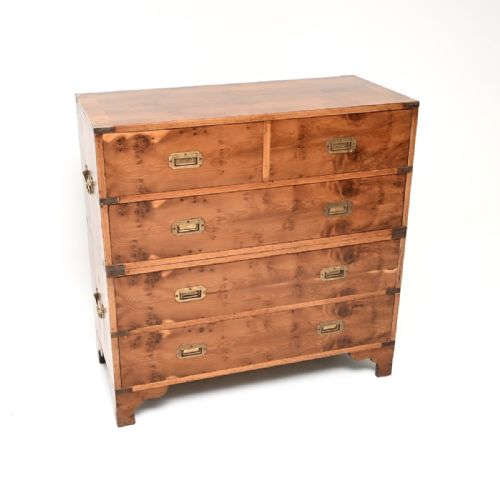
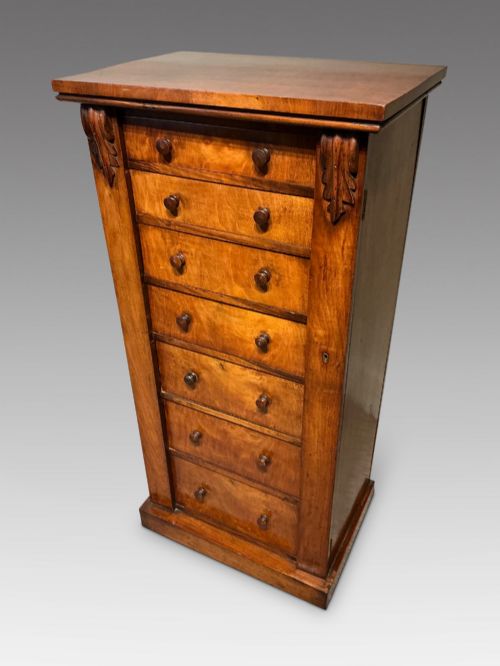
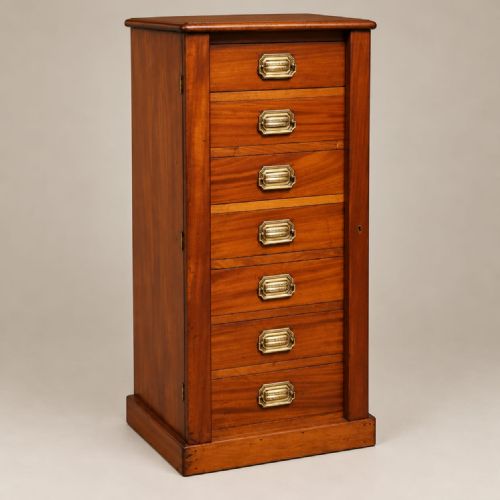
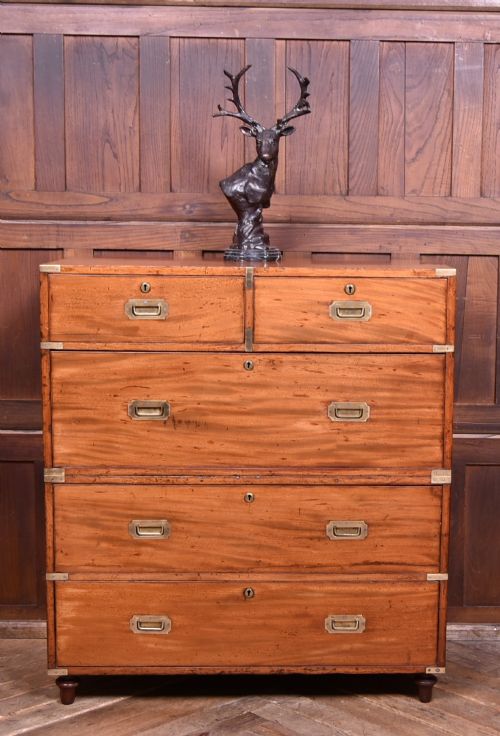
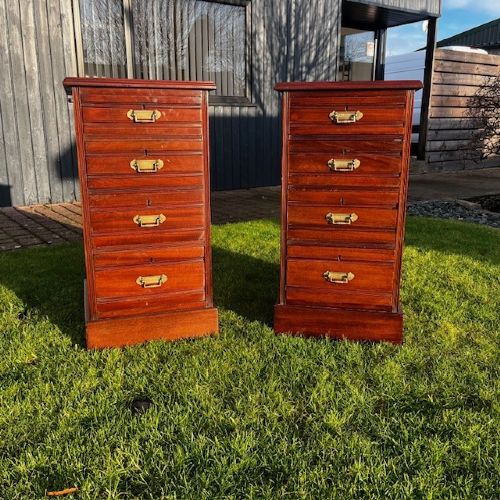
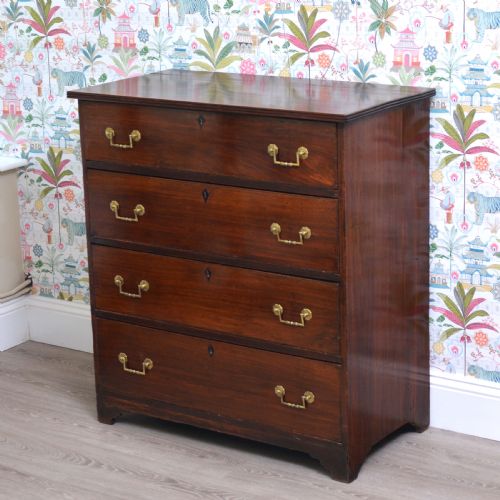
The selection on this page centres on chests of drawers, bedside chests, wardrobes, and secretaire cabinets reflecting Victorian, Georgian, and Regency styles. These items appear in formats ranging from traditional two-part stacking chests to folding designs and tall Wellington configurations.
How they were made
Carpenters constructed these pieces using dense hardwoods such as mahogany, walnut, burr walnut, padauk, yew, and pitch pine to withstand the rigours of transit. Timber selection prioritized both structural durability and striking grain patterns.
Brass corners, straps, flush-inset handles, and binding reinforced the edges and joints against heavy handling while protecting the wood from impact. These metal elements were fastened securely into the housing to maintain smooth exterior lines.
Vintage Campaign Tallboy Retail Price Guide 2026
Typical asking prices for vintage campaign tallboy among the pieces listed under this phrase on Sellingantiques today, from the lower quarter to the upper quarter. They describe what is for sale here now, not the wider market.
A pitch pine chest carrying the provenance of the steamship SS Orontes links domestic storage directly to early twentieth-century maritime travel.
What varies in quality
The degree of refinement in the brass hardware and the precision of the recessed fittings separate standard utilitarian storage from superior examples. Finely made pieces display tight joints and carefully integrated locking mechanisms that engage smoothly across stacked sections.
The choice of cabinet timber and the preservation of original polish influence the overall integrity of a piece. Substantial mahogany or figured walnut veneers combined with intact internal drawers demonstrate superior original workshop execution.
The Vintage Campaign Tallboy Glossary
- Tallboy
- A tall chest of drawers, often constructed in stacked sections for ease of movement. This form provides vertical storage capacity while maintaining a manageable footprint.
- Wellington chest
- A tall, narrow chest of drawers secured by a locking hinged side flap that bars access to the drawers. This design originated in the nineteenth century for secure document storage.
- Secretaire
- A piece of furniture incorporating a pull-down writing drawer fitted with small compartments and pigeonholes. It merges desk functionality with standard drawer storage.
Vintage Campaign Tallboy: Frequently Asked Questions
How were campaign chests transported?
These chests were constructed in two or more separate stacking parts so that officers and travellers could load them easily onto carts or ships. Each section was fitted with carrying handles and reinforced edges to prevent structural damage.
Once relocated, the sections stacked securely together to form a single tall unit of furniture. This modular approach remains the defining characteristic of campaign design.
What woods were used?
Cabinetmakers relied on durable hardwoods including mahogany, walnut, yew, padauk, and pitch pine to build these travel-ready pieces. These timbers offered resistance to splitting and warping in varied climates.
Surfaces were often polished to highlight the natural grain of the wood beneath the brass hardware. Some examples incorporate burr walnut veneers for a more decorative finish.
How do I style a tallboy?
A campaign tallboy provides substantial vertical storage, making it suitable for bedrooms, hallways, or studies where floor space is limited. The dark woods and brass fittings pair effectively with both traditional and modern interior schemes.
Allowing the piece to stand alone as a focal point lets the brass corners and modular lines remain visible. Placing lamps or decorative objects on the top surface completes the arrangement.