




Vintage Bronze Putti Figures
Vintage bronze putti figures are classical child-form sculptures cast in metal, bringing playful sculptural presence to domestic interiors.
Vintage Bronze Putti Figures
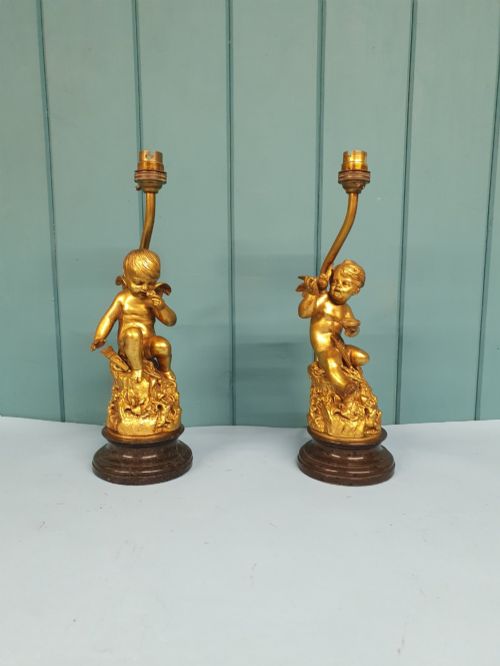
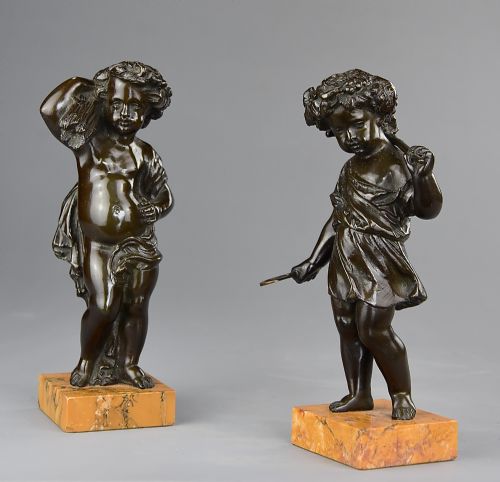
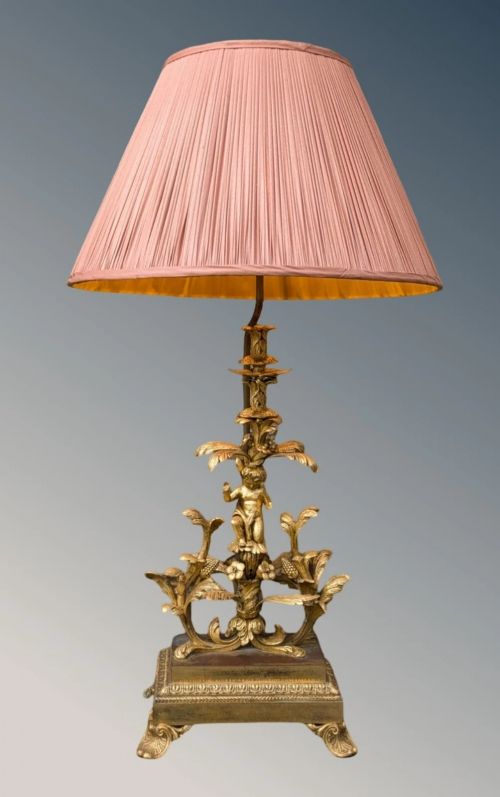
Vintage bronze putti figures span nineteenth-century and early twentieth-century interpretations of classical child forms, appearing across French, Italian, and English pieces. These decorative items frequently manifest as freestanding statuary, candelabra, and functional table lamps.
Buyers most often meet figures cast from bronze or gilt bronze, sometimes paired with marble bases or mounted as lighting. The forms draw heavily upon neoclassical and rococo revival vocabulary, depicting winged cherubs engaged in allegorical or harvest themes.
How they were made
Foundries produced these pieces using metal casting techniques in bronze, brass, and cast iron, often finishing surfaces with patination or gilding. Detail was achieved through chasing and hand-finishing the metal after casting.
Mounts incorporate supplementary materials such as marble plinths, porcelain bodies, and fabric lamp components. Assembly relies on threaded rods and pins to secure the metal figures to their bases or lighting hardware.
Object forms span table lamps, doorstops, and candelabra alongside standalone sculptural figures.
What varies in quality
The integrity of the original surface patination and the quality of secondary materials, such as heavy marble bases or well-cast bronze mounts, influence the overall character of the piece.
Claude Michael Clodion·Ferrand
The Vintage Bronze Putti Figures Glossary
- Putti
- Plural of putto, depicting a plump, often winged male child derived from classical art. They appear frequently in Renaissance revival and baroque decorative schemes.
- Patina
- The surface coloration and sheen developed through age or chemical treatment on bronze. This finish protects the metal and defines the visual depth of the contours.
- Candelabra
- Branched lighting fixtures designed to hold multiple candles. These often incorporate cast figures as central supports.
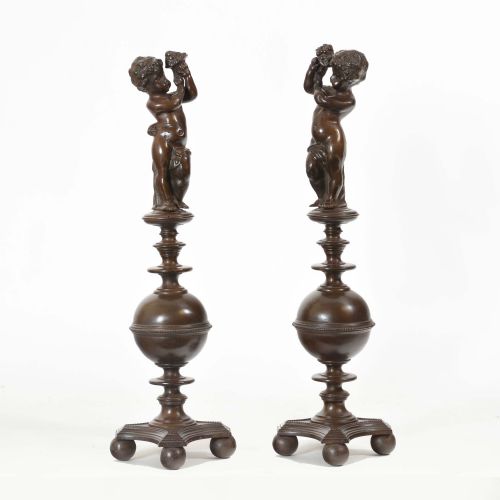
- Andirons
- Horizontal metal supports used in open fireplaces to raise firewood. They frequently feature decorative cast fronts facing the room.
- Chasing
- The manual tooling of a metal casting with punches and hammers to sharpen details and clean up the surface. This secondary process defines the precision of the final sculpture.
Vintage Bronze Putti Figures: Frequently Asked Questions
What is a putto?
A putto is a representation of a chubby, wingless or winged infant boy found in classical and revival art. The term originates from Italian and translates simply to boy.
These figures symbolize various allegorical themes, from harvest abundance to romantic love, and were widely adopted by nineteenth-century foundries for decorative objects.
How are lamps converted?
Many sculptural figures are adapted for modern electric lighting by running a cord through a drilled base or attaching wiring hardware to the top. This conversion process allows solid bronze statuary to serve functional roles as table lighting.
Original bronze surfaces and structural integrity are preserved where possible during these alterations.
Where were they placed?
In period interiors, these figures functioned as mantel ornaments, table centrepieces, and architectural hardware such as doorstops and andirons. Smaller statuettes occupied display cabinets and desks.
Their placement depended on the object type, with heavier bronze items utilised near hearths and lighter gilt pieces positioned in reception rooms.
How do I date them?
Dating relies upon stylistic markers, casting methods, and the accompanying materials like marble or tole peinte. Nineteenth-century pieces often reflect revival styles such as French rococo or neoclassicalism.
Signatures, foundry marks, and the specific wear patterns on the bronze surface also help establish the era of manufacture.