


Vintage Bridge Artwork
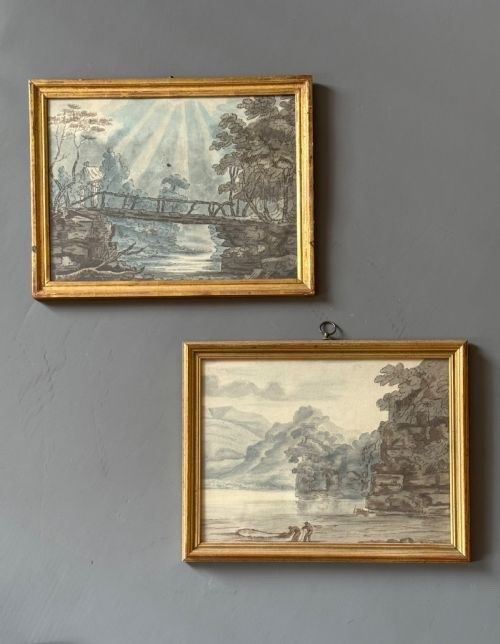
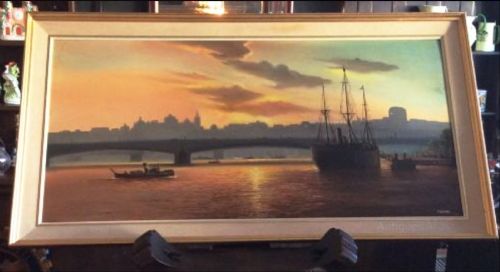
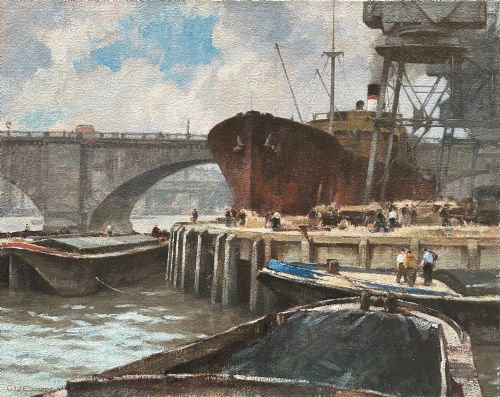
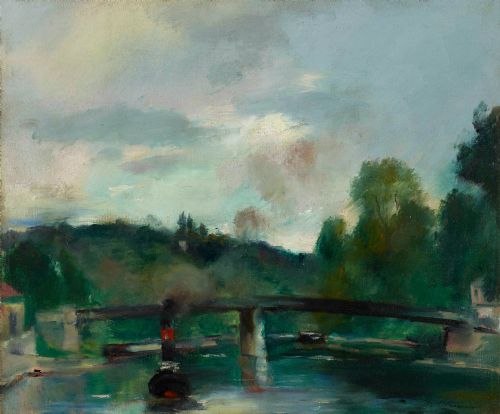
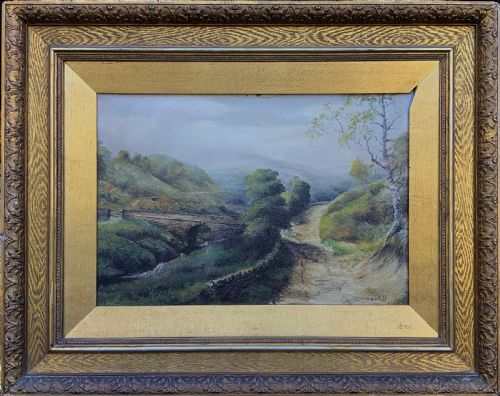
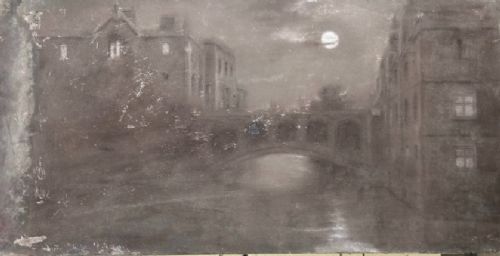
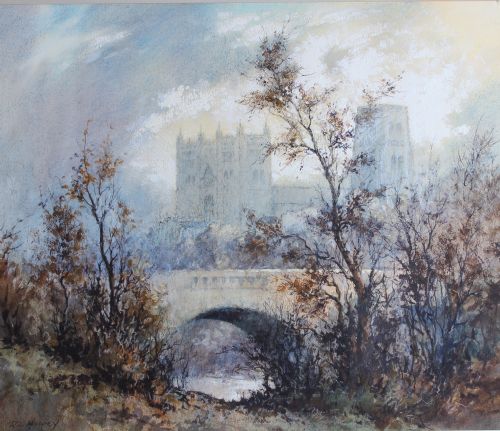
These vintage bridge artwork pieces capture spans and crossings in watercolours, oils, and etchings across several centuries.
Vintage Bridge Artwork
When you search for vintage bridge artwork, you encounter paintings, watercolours, and prints depicting architectural spans, river crossings, and urban waterways. The selection ranges from Victorian topographical scenes to mid-century British compositions capturing urban and rural bridges.
Most pieces on this page originate from the nineteenth and twentieth centuries, spanning periods such as Victorian, Edwardian, and post-war decades. Subjects vary from London Thames crossings like Waterloo and Tower Bridge to continental cityscapes in Venice and rural watermills.
Mediums vary widely, reflecting the preferences of past artists who recorded these architectural structures on paper, canvas, and wood panels. You find detailed architectural etchings alongside broad brushwork in oil and delicate transparent washes in watercolour.
Materials and technique
Artists record these architectural subjects using traditional drawing and painting materials, primarily watercolour on paper, oil paint on canvas or panel, and drypoint or etching on paper. Watercolours rely on pigment suspension in water applied to heavy rag paper to capture light on river surfaces, while oils utilise rich binders for layered depth.
Etchings and drypoint works involve incising lines directly into metal plates before pulling impressions on paper, allowing for fine architectural detail on urban bridge structures. Support panels of wood appear alongside woven canvas stretched over wooden frames for heavier oil compositions.
Several artists painted famous bridges while standing on damp Thames riverbanks, occasionally capturing stray boats and curious gondoliers drifting past.
Factors of quality
The strength of the composition and the artist's command of perspective determine the standing of an individual piece. Works that capture the light and atmosphere of a river crossing with confident brushwork or precise line execution distinguish themselves from routine topographical illustration.
Material preservation also defines the piece, as works on paper remain susceptible to toning or foxing, whereas paintings on canvas or panel show the stability of the original ground and pigment layer. Signed works by documented painters or etchers carry distinct documentary weight compared to anonymous school pieces.
Cyril Walduck Edwards·Henri Ottmann·Robert Leslie Howey·Florence Adelina Hess·Percy Lancaster·Vittore Zanetti Zilla·Noel Harry Leaver·Franz Reder-Broili·Edgar J Maybery·Claude Muncaster·Fred Lawson·William A Macdonald·Herbert John Finn
The Vintage Bridge Artwork Glossary
- Topographical landscape
- A work depicting specific real-world locations with accurate architectural detail. These pieces serve as historical records of bridges and riverbanks.
- Drypoint etching
- A printmaking technique where an artist scratches an image directly onto a metal plate with a sharp needle. This method produces soft, velvety burr lines.
- Oil on panel
- A painting executed on a flat wooden board rather than stretched canvas. This rigid support provides a stable surface for detailed brushwork.
- Gouache
- An opaque water-based paint that uses pigment bound in water-soluble gum mixed with chalk. It provides solid, flat areas of colour in works on paper.
- Watercolour
- A painting method where fine pigments are suspended in a water-soluble vehicle. Artists utilise the white of the paper to let light pass through transparent washes.
Vintage Bridge Artwork: Frequently Asked Questions
What subjects appear in these bridge artworks?
These works depict architectural spans ranging from historic European stone bridges to industrial iron crossings over urban rivers. Many compositions focus on famous waterways in London, Venice, and rural British counties.
Artists record these structures from riverbanks, boats, and elevated viewpoints to emphasise the interplay between masonry, water, and surrounding townscapes.
How do I date an antique bridge painting?
Dating relies on stylistic evidence, artist signatures, framing materials, and inscriptions left on the reverse of canvases or panels. Victorian and Edwardian works often display specific handling of light and costume details in accompanying figures.
Archival records, exhibition labels, and stretcher inscriptions help narrow the decade of creation for unsigned topographical watercolours and oils.
Are these bridge pieces original works?
The selection includes unique hand-painted watercolours, original oil paintings on canvas or panel, and limited edition etchings created directly by the artists. Each medium carries distinct physical evidence of the creator's hand.
Printed reproductions are generally absent, with the inventory consisting of period graphic art and fine art paintings from the nineteenth and twentieth centuries.
How should I frame and display a watercolour bridge scene?
Works on paper require conservation mounting with acid-free materials and glass protection to prevent fading from direct sunlight and environmental moisture. Keeping the paper distanced from the glass preserves the delicate pigment washes.
Oil paintings on canvas or panel need stable indoor humidity and do not require glass, allowing the textured brushwork of river and bridge scenes to remain visible.